Key Points of Stone Frog Breeding Technology and Detailed Explanation of Daily Management Methods
StoneFrogBecause of its delicious meat, fast growth rate and large size, it is one of the main edible frog species. Traditional Chinese medicine holds that the meat of the stone frog is sweet, salty and neutral in nature, entering the lung, stomach and kidney meridians, and has the effects of strengthening the spleen and resolving stagnation, and nourishing and strengthening the body. It is used to treat symptoms such as indigestion and poor appetite with weakness. The stone frog is also a rising star in China's frog breeding industry and a new hotspot for increasing farmers' income, developing rapidly with promising prospects.
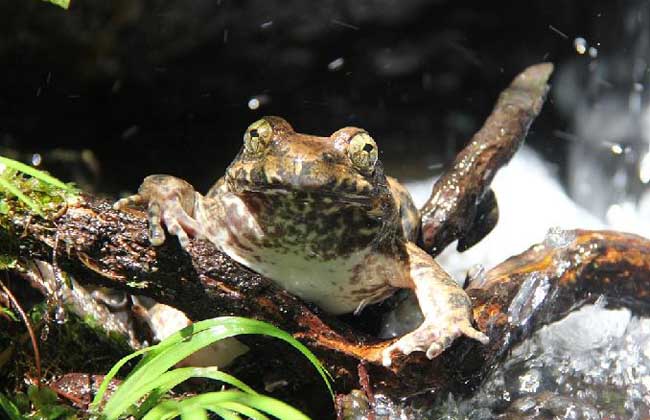
Living Habits of the Stone Frog
The stone frog belongs to the flowing-water life type. It often inhabits small streams with relatively slow flow in mountainous areas or in eddy pools of flowing streams, where the vegetation on both banks is abundant. They rarely leave the water, and their body color often adapts to their living environment. Their secondary sexual characteristics develop toward a strongly embracing mode; males are larger in body size, with extremely thick and strong forelimbs and highly developed nuptial spines. These characteristics are closely related to their reproductive traits. When spawning, the male and female must lay eggs at the streamside washed by flowing water. During mating, the male strongly embraces the female, and with the help of spines on the abdomen strengthens the male's grip so that they are not swept apart by the water current. The stone frog has an internal vocal sac, and its call is low, hoarse and loud; the male's call is "gu gu gu," and the female responds with "ka ka ka." Stone frogs have the habits of living in groups and foraging at night, often with several or dozens piled together in one place. In a quiet and suitable environment, stone frogs also come out of their burrows to forage during the day, and nighttime is the peak period of activity. Stone frogs are good at jumping and climbing. Normally their activity is relatively weak and steady, but during the peak breeding period they are frequently active and exhibit behaviors such as calling and amplexus.
Stone frogs prefer to eat moving animals and generally do not eat dead or motionless food. In the natural state, stone frogs have a wide diet. In addition to insects, centipedes, spiders, millipedes, snails, spiral shells, clams, earthworms and shrimp, they also prey on crabs, miscellaneous fish, loaches, young snakes and small birds. Stone frogs in different regions also differ in diet because the environment provides different bait. In nature, stone frogs generally swallow an amount equal to 9% of their body weight, sometimes reaching 12.8%.
Tadpoles: Stone frog tadpoles sometimes feed on streamside aquatic plants or water silk on the bottom. They use horny teeth to gnaw and scrape off soft plant tissues for food. The types gnawed by tadpoles include plant-based foods such as small Cyclotella, filamentous algae, water silk, mosses, diatoms, dinoflagellates, hornwort and plant debris; and animal-based foods such as paramecia, ciliates, water fleas and rotifers. Some people have also found that stone frog tadpoles feed on periphyton scraped from stones in the water, plankton in the water, tender leaves of plants falling into the water, or animal carcasses in the stream. They sometimes also gnaw on dead members of their own species.
Adult frogs: Their food is mainly animal-based, among which insects and their larvae account for the majority, mainly including insects, centipedes, spiders, millipedes, snails, spiral shells and clams, shrimp, crabs, miscellaneous fish, sand loaches, as well as earthworms, young snakes, small birds and so on.
The stone frog is a poikilothermic animal and has no ability to regulate body temperature or retain heat. Its body temperature changes with the external temperature. Generally speaking, the suitable growth temperature for stone frogs is 18-26°C, and the optimum temperature is 24-25°C. Spring and autumn are the seasons when they are most frequently active, consume the largest amount of food and grow most rapidly. April to June and August to September are the best periods for reproducing offspring. When the water temperature exceeds 30°C, feeding activity decreases. When the water temperature drops to 12°C, the frog's metabolism becomes very weak and it enters hibernation. During hibernation, the frog keeps both eyes tightly closed, does not eat or move, and relies on fat bodies to maintain life activities, and does not respond to external stimuli. During hibernation, if the water temperature rises to a suitable temperature, the frog will become active again. The lethal high temperature for adult stone frogs is about 31°C, with some variation in different seasons. Stone frogs can also endure a long-term 0°C environment, but the water must not freeze; freezing and lack of oxygen can cause the death of stone frogs.
Stone frog eggs are often laid in gently flowing shallow water, attached to stones and aquatic plants. The gelatinous membrane outside the eggs swells and thickens upon contact with water and is strongly adhesive, connecting into cords or grape-like clusters, sometimes about 20 cm long. The diameter of the eggs is generally 4 mm, with a maximum of 5 mm. Depending on the water temperature, the frog eggs usually hatch into tadpoles after 8-15 days. Tadpoles like to live in crevices of large stones or in gravel piles in stream pools. In a suitable environment, tadpoles generally grow for 50-78 days and metamorphose into young frogs.
Stone Frog Breeding Technology
Stone frog eggs are often laid in gently flowing shallow water, attached to stones and aquatic plants. The gelatinous membrane outside the eggs swells and thickens upon contact with water and is strongly adhesive, connecting into cords or grape-like clusters, sometimes about 20 cm long. The diameter of the eggs is generally 4 mm, with a maximum of 5 mm. Depending on the water temperature, the frog eggs usually hatch into tadpoles after 8-15 days. Tadpoles like to live in crevices of large stones or in gravel piles in stream pools. In a suitable environment, tadpoles generally grow for 50-78 days and metamorphose into young frogs.
1. Preparation of Stone Frog Bait
The bait for stone frogs is mainly earthworms, yellow mealworms, fly maggots and so on.
2. Construction of Stone Frog Ponds
Wild stone frogs live year-round near cool mountain stream ditches or near stone caves with waterfalls. Their living environment requires sufficient water flow, coolness, moisture and fresh water quality, and they like to live in groups in stone caves. Their growth and development, mating and reproduction have long been in a wild state. When stone frogs are artificially domesticated and changed from wild to domestic, tremendous changes have taken place in their living environment and other aspects. For artificial rearing of stone frogs, reasonable design must be adopted for the frog ponds so that the ponds are both similar to the natural environment and convenient for artificial management.
① Selection of breeding site: The quality of the environment directly affects the growth, development and reproduction of stone frogs. Frog ponds are not restricted by location. Generally speaking, the breeding site should be chosen in a place with good water quality, convenient drainage and irrigation, a quiet environment, warm winters and cool summers, neither drought nor flooding, convenient management, and prevention of escape and harm. Frog ponds can be built indoors or outdoors. Indoors, ventilation, coolness and no direct sunlight are required. Outdoors, a shade shed can be set up with frog ponds built below. Building ponds indoors, in courtyards or in the field in a simple way according to local conditions are all good living places for stone frogs.
② Specification requirements for frog ponds: Artificial breeding of stone frogs generally adopts intensive rearing. When building ponds, attention should be paid to conforming as much as possible to the frog's living habits, providing conditions such as water, land, stone caves and feeding, creating a good living environment, and also making it convenient for feeding and management.
Breeding frog pond: The area is generally preferably 4-10 sq m, the pond height is 0.8 m, the water depth in the pond is 0.1-0.15 m, the water-to-land area ratio in the pond is 3:1, and stone caves for resting are provided. The bottom of the pond is covered with relatively large pebbles, the light is dim, and the humidity is maintained at 80%, creating an ideal ecological environment for stone frogs to inhabit, promoting their growth and development, and thereby increasing the spawning rate and fertilization rate.