A Detailed Explanation of the Growth Process of the Stone Frog and Its Developmental Characteristics at Each Stage
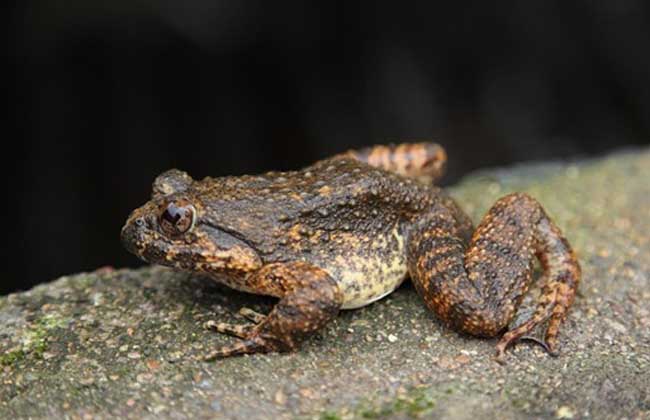
StoneFrogis a tailless amphibian frog of the family Ranidae, also known as stone clam, stone chicken, mountain chicken, stone jelly, flying fish, stone scale, stone toad, stone shrimp toad, stone pit frog, stone luan, etc. It is an animal with complete metamorphosis, and its growth process mainly goes through four stages: fertilized egg, tadpole, young frog and adult frog. Let us take a look at the growth process of the stone frog together below!
Fertilized Egg
Stone frog eggs are often laid in shallow water with gentle flow, attached to stones and aquatic plants. The gelatinous membrane outside the egg swells and thickens upon contact with water, is highly sticky, and connects into cords or grape-like clusters, sometimes about 20 cm long. The diameter of the egg is generally 4 mm, and can reach up to 5 mm. Depending on the water temperature, the frog eggs usually hatch into tadpoles after 8-15 days.
Tadpole
During the tadpole stage of the stone frog, the body is long and strip-shaped, the tail is thick and fleshy, the skin color is dark yellow and dotted with small black star-like spots, and at the junction between the body and the tail there is a black “V”-shaped pattern. The snout process is well developed and has a very strong sucking ability. It has no lungs, breathes with gills, and likes to live in large stone crevices or rubble piles in stream pools. In a suitable environment, it generally undergoes 50-78 days of growth and metamorphoses into a young frog.
Young Frog
The young frog resembles the adult frog in appearance. In the early stage of the young frog, it still carries the tail of the tadpole stage. As the young frog grows and develops, the tail will disappear. Its food is mainly mosquitoes, small insects and insect larvae, etc.
Adult Frog
The adult stone frog generally has a body length of 10-13 cm and a body weight of more than 150-250 g, and large ones can reach more than 500 g. Its skin is rough, and the skin on its back is dark gray and covered with many oil glands. The head of the stone frog is both wide and flat, the tip of the snout is round and protrudes beyond the lower jaw, and the distance between the two nostrils is almost equal to the distance between the two eyes. Among stone frogs of the same age, males are larger than females. After sexual maturity, the forelimbs of the male frog are extremely stout, there are spinous fleshy spines on the chest, and the abdomen is pale yellow. The female has no spines on the chest, and the abdomen is smooth and white.