How to build a stone frog breeding pond? Detailed methods
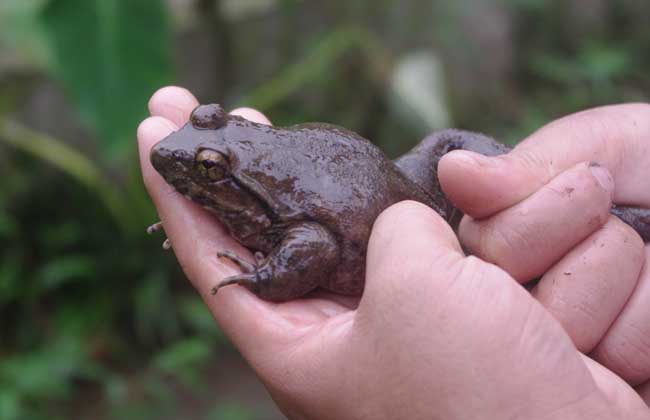
Wild stonefroglives year-round near cool mountain stream ditches or near stone caves with waterfalls. When stone frogs are domesticated artificially, going from wild to domestic, their living environment and other aspects undergo tremendous changes. For artificial breeding, the frog pond must be reasonably designed so that it is both similar to the natural environment and convenient for artificial management. Let's take a look below at the construction methods for stone frog breeding ponds!
The growth environment of stone frogs
Stone frogs like to live in burrows under mountain rock walls that are humid, quiet, dimly lit, near water sources and cool. They have the habits of living in groups and foraging at night. Night is the peak period of activity. At ordinary times they are less active and steady; during the peak breeding period they are frequently active and exhibit behaviors such as calling and pairing. They like to eat live bait such as earthworms, maggots, grasshoppers, ants, loaches, river crabs and mole crickets. They are cold-blooded poikilothermic animals. When the water temperature drops to 10°C, they enter hibernation, and the hibernation period is about 4 months. After hibernation their body weight will decrease moderately. Generally they begin estrus in April, and the amount of eggs laid each time is 1000-3000 eggs. Frog eggs usually hatch into tadpoles in 8-20 days. Tadpoles like to live in large stone crevices or gravel piles in stream pools. In a suitable environment, they generally grow and metamorphose into young frogs after 60-75 days.
Site selection for stone frog breeding ponds
The quality of the environment directly affects the growth, development and reproduction of stone frogs. Frog ponds are not restricted by location. Generally speaking, the breeding site should be chosen in an environment with good water quality, convenient drainage and irrigation, a quiet environment, warm winters and cool summers, no drought and no flooding, convenient management, and prevention of escape and harm. Stone frog breeding ponds are built indoors or outdoors. Indoors, ventilation, coolness and no direct sunlight are required; outdoors, frog ponds can be built under a shade shed.
Requirements for stone frog breeding ponds
Artificial breeding of stone frogs generally adopts intensive rearing. When building ponds, attention should be paid to conforming as much as possible to the frogs' living habits, providing conditions such as water, land, stone caves and feeding, creating a good living environment, and also making feeding management convenient.
1. Breeding frog pond: the area is generally suitably 4-10 sq m, the pond height is 0.8 m, the water depth in the pond is 0.1-0.15 m, the water-to-land area ratio in the pond is 3:1, and there are stone caves for resting. The bottom of the pond is paved with relatively large pebbles, the light is dim, and the humidity is maintained at 80%, creating an ideal ecological environment for stone frogs to rest, promoting their growth and development, and thereby increasing the egg-laying rate and fertilization rate.
2. Hatching pond: area 1 sq m, pond height 0.5 m, water depth 15-20 cm, fresh water quality, pH 6-8, and sufficient oxygen is enough. A large oval basin can also be used instead.
3. Tadpole pond: area 3-8 sq m, pond height 0.8 m, water depth 3-10 cm, pH 6-7, water-to-land ratio 2:1, shading is needed for rearing, and it is best to rear one group of tadpoles of the same size in each pond.
4. Young frog pond: area 4-6 sq m, pond height 0.8 m, water depth generally 10-15 cm, water-to-land ratio 2:1, with 3-5 cm small stones laid in the pond and stone caves built, good water quality, pH 6-7.5.
Note: For all kinds of frog ponds, a rectangular shape is better, the pond bottom should be slightly sloped, and the drainage hole should be at the lowest point so that the pond water can be completely drained. The pond should be provided with water surface, land, stone caves, feeding platforms and other features. A mesh cover should be installed at the upper opening of the pond to prevent frogs from jumping out and escaping and to prevent harmful organisms from invading. The water inlet pipe is installed at the upper side of the pond, near the lower part of the mesh cover. A newly built pond must not be used immediately; disinfect it with disinfectant solution (to remove alkalinity), soak and wash it with water many times, and only then can frogs be raised.