How good is the prospect of roe deer farming? Understand it in one article
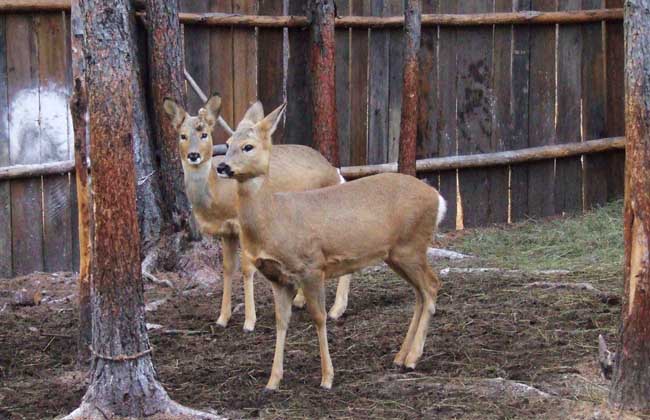
Roe deer are herbivorous animals and easy to raise. Currently, market demand is large while few people farm them, so farming and market demand are out of proportion, with supply falling short of demand. The economic benefits of raising roe deer are unmatched by ordinary livestock, and the prospects look good. Let's take a look at the farming prospects of roe deer below!
The farming advantages of roe deer
1. Roe deer have a wide diet and tolerate coarse feed: in domestic rearing they can be fed straw, vine stems, branches and leaves, weeds, pasture grass, grain, and so on.
2. Fast growth and development, low feeding cost: fawns begin to feed at 15 days after birth, are weaned at 60 days, can reach 10 kg in weight at 3 months, can grow to 20 kg at 6 months, reach 40 kg at over 400 days, and can breed once sexually mature.
3. Strong adaptability, a wide range suitable for raising, and easy to raise and manage: roe deer can withstand high temperatures of 38°C in summer and resist severe cold of -45°C in winter, with strong adaptability, and can be raised all over the country. Domestic roe deer are fed 3-4 times a day in summer and 2-3 times a day in winter. As long as clean drinking water is maintained, hygiene is done well, and a quiet and clean rearing environment is kept, anyone can raise them successfully.
4. Roe deer have strong disease resistance and a high breeding survival rate: roe deer were originally wild animals and have very strong disease resistance. Under artificial rearing, as long as feed is rationally matched and hygiene and disease prevention are done well, they do not get sick all year round. They produce one litter of twin fawns per year, and at most 3-4 fawns, with a kidding rate more than 2 times that of other deer family animals. As long as they are raised reasonably, the mother roe deer gives birth and nurses on her own, and the survival rate can reach 100%.
The farming value of roe deer
1. Roe deer velvet nourishes essence, supplements marrow, nourishes blood, and benefits yang. It can improve memory, promote growth and development and metabolism, improve immunity, resist fatigue, resist aging, and strengthen the body.
2. Roe deer meat is fresh, tender, and delicious, with high nutritional value. Its total amino acid content is 4.7% higher than beef, while its cholesterol is 33.8% lower than beef. Its high-quality meat is 3%-5% higher than beef and 10%-20% higher than mutton. It has the dual health benefits of nourishing yin and tonifying yang, and is known as the “king of lean meat”, famous at home and abroad. In ancient times there was the legend of “becoming immortal by eating roe deer meat”, which actually means that roe deer meat has high nutritional and health value. Eating roe deer meat regularly makes the body strong and prolongs life.
3. Roe deer fur can be made into mattresses and has a moisture-proof effect. Summer fur lacks fine hair and is called “sha pi”. After processing, it can be made into clothes worn in spring and autumn. If the hair is completely shaved off, the remaining leather board can be used to make summer clothes. Winter fur has more fine hair and is suitable for making cold-resistant fur clothing.
4. The blood, heart, liver, kidney, bone, meat, and so on of roe deer all have the function of nourishing the body and prolonging life, and have the dual health benefits of nourishing yin and tonifying yang.
Precautions for farming roe deer
1. Roe deer live in the wild in the forest areas and grasslands of northern China and are nationally protected wild animals. Farming roe deer requires a “Wild Animal Raising License”. Any act of hunting and catching roe deer is illegal, and hunting, buying and selling, or eating wild roe deer is strictly prohibited.
2. At present, breeding roe deer generally need to be introduced from other places over long distances. Good transport routes should be chosen, and time should not be delayed on the way. They generally arrive in about 3 days, and basically do not need food or water on the way. Breeding roe deer are transported in wooden cages; iron cages are not suitable for transporting breeding roe deer.
3. When introducing breeding stock from other places, exit transport quarantine procedures should be handled, and it is generally safer for the supplier to assist in handling them. Before introducing breeding stock, one should learn and understand the detailed relevant techniques for raising roe deer, and it is best to participate in technical training if possible.
4. At present, artificial roe deer farming techniques are mature, but breeding roe deer are scarce. Introduction must be done cautiously. Do not buy roe deer from roe deer dealers as breeding stock. No breeding animal should be bought from dealers, and do not buy poached wild roe deer as breeding stock.
① Captured wild roe deer have not been domesticated or raised domestically, and the mortality rate during long-distance transport is very high, which is what hunters call “dying of anger”.
② Only after wild animals go through a certain domestication process and are successfully domesticated by humans can they live and reproduce under domestic rearing conditions.