Are Roe Deer Really That Stupid? Uncovering the True Habits of the "Silly" Roe Deer
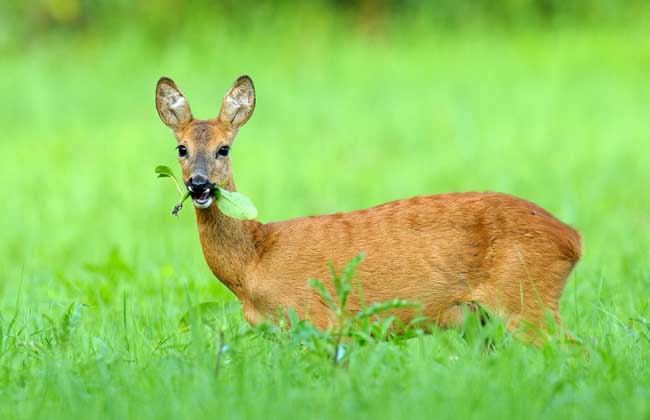
Roe deer have a fatal weakness: a curious nature. When they realize a predator has stopped chasing them, they return to the spot to investigate. It is this peculiar habit that often makes them a fine meal for wild beasts, and that is why they are called "silly roe deer." But are roe deer really that stupid? Let's take a look together below!
Are roe deer really that stupid?
Roe deer are not truly stupid, just curious. Roe deer are intensely curious. They want to get to the bottom of anything they see. When they meet a person, they stand there pondering what this person is all about. When they meet a car, they stare and study it endlessly, like an expert who is always researching things. If a car encounters a roe deer on the road at night, the deer's behavior gives even more reason to call it a silly roe deer. In earlier years, running into a roe deer at night on a mountain road was not all that unusual. When a car sped along the road with its bright headlights on and an animal resembling a deer suddenly appeared in the light ahead, there was no need to be surprised; it was certainly a roe deer. At such moments the roe deer was typically single-minded to a fault, paying no heed to any threat the car behind posed to it, and simply running along with the car's lights, since with light it could see the road better.
Why roe deer are called silly roe deer
1. If you encounter a roe deer in the wild, you only need to shout once, and the roe deer will freeze, staring blankly at you.
2. When chasing a roe deer, if you get tired from running and stop to rest, the roe deer will wait for you not far away. Once you have rested enough and start chasing again, it will resume running. Of course, roe deer run very fast and are not easy to catch up with. The problem is if the person chasing it has a gun.
3. If you can bring down one roe deer from a group, the others will gather around at a short distance to watch you, and some will even come closer to look.
4. With new things they have never seen before, they will study them endlessly, even observing them to the point of forgetting food and sleep, sniffing here and licking there, to the extent that certain specially shaped traps are designed specifically for roe deer.
Living habits of roe deer
1. Diet: Roe deer like to eat tender twigs, buds, and leaves of shrubs, as well as various green grasses, small berries, mushrooms, and so on. In spring, like deer, they often go to saline-alkali ground to lick salt and alkali. A family group is generally made up of a mother roe deer and her offspring, usually 3-5 animals. They are active at dawn and dusk and feed on grass, mushrooms, and berries.
2. Reproduction: Male roe deer join the group only in midsummer, one male and one female. They mate in July-August. During the breeding season, the male chases the female in circles, leaving wreath-shaped tracks on the ground. The gestation period is 8 months. Before giving birth, the mother drives away the young born the previous year and enters dense forest to give birth. Fawns are born in March-June, 1-2 per litter. If a litter has 2 fawns, the birth sites are 10-20 m apart, and they are nursed separately. Ten days after birth, the mother leads the newborn fawns back to the group. They reach sexual maturity in 1.5-2 years.
3. Lifespan: In the wild, roe deer live 10-12 years, with a maximum of up to 17 years. Their antlers shed each year in November-December, new antlers grow in February-March, and the antlers are fully grown in April-May.