How to Grow Aquatic Plants in a Fish Tank? Detailed Guide to Cultivation Methods and Tips
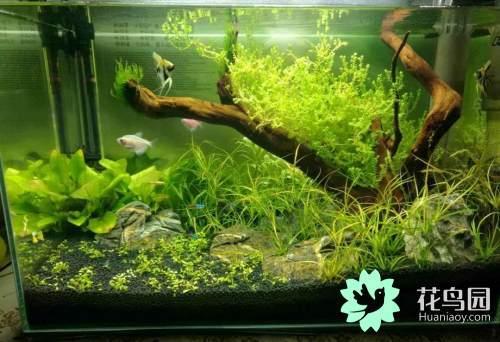
The lush green aquatic plants in a fish tank not only beautify the tank but also serve as a habitat for the fish. There are so many types of aquatic plants for fish tanks, and people usually choose those that look nice or are easy to grow. So, how do we need to grow the aquatic plants in our fish tanks? Below, the editor will introduce this, and let us take a look together.
How to Grow Aquatic Plants in a Fish Tank
1. Basic conditions for growing aquatic plants: moderate lighting, addition of carbon dioxide, sufficient fertilizer (base fertilizer, liquid fertilizer, top dressing), water flow, water temperature, water hardness, pH value, and a healthy substrate. Propagation methods of aquatic plants: there are two types, sexual reproduction and asexual reproduction. Sexual reproduction is completed through the process of flowering, pollination, fertilization, and seed formation. Asexual reproduction is also called vegetative reproduction.
2. Root propagation: the roots of some aquatic plants produce lateral buds, and when the lateral buds grow up, they separate from the parent plant to form new individuals. Stem propagation: plants with underground stems can use broken branches or lateral branches to separate and form new plants; underground stems grow from the roots and spread through the bottom sand, and each node can produce a new plant. Creeping stems are somewhat like underground stems, but they only spread on the surface of the sand.
Which Aquatic Plants Are Easiest to Grow
1. Vallisneria (Vallisneria natans) is a perennial stemless submerged herbaceous aquatic plant of the genus Vallisneria in the family Hydrocharitaceae, commonly known as noodle grass, dragon whisker grass, carrying pole grass, etc. It has creeping stems, basal leaves, and narrow strap-shaped leaf blades. The leaf length varies with the depth of the water level. The leaves are emerald green and semi-transparent, standing gracefully in the water, and it has strong adaptability to water quality.
2. Amazon Sword (Echinodorus grisebachii, also known as Amazon sword plant, crown grass, etc.) is a large aquatic plant of the genus Echinodorus in the family Alismataceae, with thick petioles, broad leaves, and elegant leaf shapes. The largest Amazon Sword can grow nearly 100 leaves, with a maximum leaf length of up to 50 cm and leaf width of up to 8 cm. It is called the king of aquatic plants.
3. Narrow-leaf Amazon Sword is a small marsh plant native to Brazil. Its lanceolate leaves are 10-15 cm long and 1 cm wide, with almost no petioles. The overall height is about 20 cm. Its 2-3 spiral-shaped flowers are about 1.5 cm large and have six pistils. The leaves are green and firm, with a clear main vein, while the veins on both sides are less obvious.
The Role of Growing Aquatic Plants in a Fish Tank
1. The metabolism of fish in an aquarium and the decomposition of feed easily produce large amounts of ammonia and nitrite, which through action form nitrate. Nitrate is not decomposed and accumulates in the water, causing water quality to deteriorate and damaging the entire aquatic living environment. Aquatic plants have the function of absorbing nitrate, reducing the accumulation of nitrate in the water and purifying the water quality.
2. During their growth, aquatic plants can release effective antibiotics, kill bacteria and pathogens in the water, reduce the content of harmful microorganisms in the water, protect fish from bacterial attack, and promote healthy growth of the fish.
3. The most important function of aquatic plants in an aquarium is to enable fish to breed in the aquarium, and some fish especially like to lay eggs on the surface of aquatic plant leaves. Without aquatic plants, juvenile fish have nowhere to hide in the aquarium, and may then be attacked by large fish that eat them.
Precautions for Growing Aquatic Plants in a Fish Tank
1. Before planting, the aquatic plants must first be disinfected. Newly bought aquatic plants should be soaked in a 1% potassium permanganate solution for about 10 minutes. Disinfection treatment in this way can kill parasites and bacteria on the plants, then rinse them clean with clear water and set aside.
2. Do not use mud to plant aquatic plants at the bottom of the fish tank. Choose sand instead, because using mud will make the water quality in the fish tank turbid. When choosing sand, do not choose sand grains that are too fine; preferably the diameter should be 2 to 5 mm.
3. The layout of the fish tank should be reasonable. Generally, tall varieties are always planted at the rear of the tank, short varieties at the front, and varieties with broad and large leaves in the middle. At the same time, they should be properly matched with the rocks in the tank, with appropriate density and spacing. Aquatic plants should not be planted too densely, otherwise it will not only hinder viewing, but also affect the growth of ornamental fish because they consume more oxygen at night.