The Complete Guide to the Crocus Family: Step Into the World of Crocus
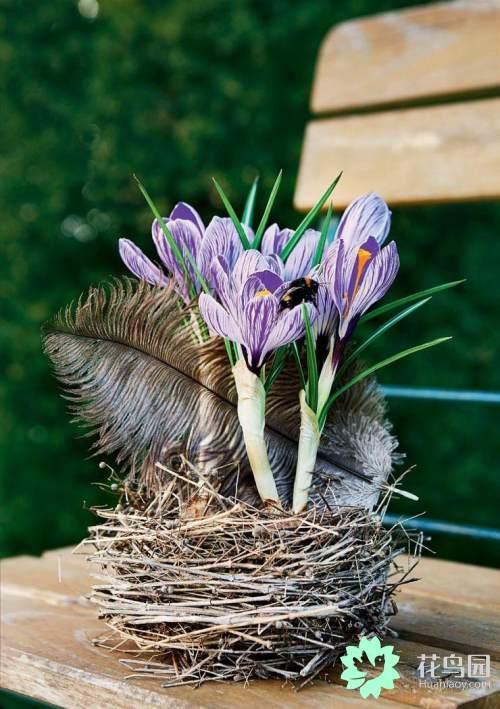
Saffron, a precious and famous medicinal herb, is shrouded in an air of mystery. But did you know it can easily bloom in your own home? Saffron and the crocus family it belongs to are actually quite easy to care for, and in recent years they have gradually appeared on China's flower markets. Try growing these lovely little flowers: you can enjoy a tiny carpet of blooms and brew a cup of saffron tea of your very own.
Fresh saffron has 3 bright red stigmas. The stigmas of other ornamental crocuses are not nearly as well developed.
Saffron has only 1 pistil, which splits into 3 strands in the middle. The dark red stigma at the very top is the most valuable part, and that is what we eat. The yellow part below is generally discarded.
Saffron: For Tea and Cooking, Worth Its Weight in Gold
Walk into a pharmacy and buy a packet of saffron, and you will receive some red thread-like strands. You may wonder to yourself, "How does this look like a flower?" In fact, these are just the stigmas of the pistil in the flower; in a single bloom, this tiny bit is all that is of use to humans. And each saffron plant produces at most a dozen or so stigmas a year, which is why saffron is so expensive.
As a precious medicinal herb, saffron can invigorate the blood and resolve stasis, relieve pain and strengthen the stomach. It also gives off a rich, unusual fragrance, described as "a blend of honey and dried hay." These days it is also popular to brew these "flower threads" as tea, fragrant and nourishing.
Many people naturally assume that saffron is produced in Tibet. In fact, it was simply first introduced to China from Tibet, hence the name "Tibetan." Actually, saffron originates from the Mediterranean region, where the ancient Greeks began cultivating it two or three thousand years ago, and today the world's finest saffron comes from Iran. Besides medicinal use, saffron is also a premium spice and dye in Europe - at one time, these "flower threads" were worth more than their weight in gold. The enticing yellow of Spanish paella comes from saffron.
The enticing yellow of Spanish paella is thanks to saffron.
Crocus is a common landscaping plant in the UK.
The Darling of the Crocus Family
However, "saffron" is simply the name people give this cultivated crop. Scientifically, the official Chinese species name of this plant is "fan hong hua" (crocus), and the genus it belongs to is also called the crocus genus. To avoid confusion, we will call this species saffron throughout the rest of this article.
Saffron does not exist in the wild; it was artificially bred from the wild Crocus cartwrightianus as a triploid variety. Because it has been cultivated for so long, people simply separated it from Crocus cartwrightianus and made it an independent species.
The crocus genus contains 90 species, and including saffron, all its members are brilliantly colorful. Along the Mediterranean coast, spring and autumn are mild and humid, while summers are hot and dry with little rain. So crocuses native to this region have underground stems that have become bulb-like, able to store nutrients and water. In spring and autumn they put effort into flowering and growing, and by summer their above-ground parts wither, surviving the dry, hot days as corms.
Based on their flowering season, crocuses can be divided into two main groups: autumn-flowering and spring-flowering. Saffron is an autumn-flowering type, blooming from September to November. Most of those used in gardening are spring-flowering types, which prefer lower temperatures in winter.
1. Crocus corms are now easy to buy online, costing no more than 5 yuan each. Be sure to buy imported "seed corms" from a reliable shop in late autumn, otherwise you may easily end up with fakes. Both autumn-flowering and spring-flowering types are best planted around September to November. Before planting, first put the fungicide "carbendazim" into water, diluting it 1000 times, and soak the corms for a few hours. This prevents mold after planting.
2. After soaking, they are ready to plant. Buy "special soil for bulbous plants," first lay down a layer of soil, arrange the corms with the growth points facing up. Then add another layer of soil; this layer should cover the corms and then add at least another corm's height in thickness on top. After planting, water thoroughly.
3. Place the pot in a sunny spot with a large day-night temperature difference and low temperatures (-15°C to -10°C). Autumn crocuses will bloom in half a month to a month; spring-flowering types will not bloom until spring. During this period, do not dig into the soil to check, to avoid damaging the roots. When watering, better dry than wet; you can weigh the pot in your hand and water only when it feels very light. In most parts of northern China, crocuses can be grown outdoors. Even when covered by heavy snow, the buds will still stubbornly push through, and that moment is truly exciting!
4. Shortly after the buds push through, the flowers open all at once. If corms of multiple colors are planted together, you can enjoy a crocus carpet of purple, yellow and white! The flowering period lasts about half a month. After all the flowers fade, apply a phosphorus-potassium compound fertilizer several times to promote corm growth.
5. After the flowers fade, the leaves still grow for a while; this is the time when crocuses accumulate nutrients and multiply into small corms, so the plant needs plenty of light. By summer, the above-ground parts will wither completely; at this point, take the corms out of the soil (if left in, they easily rot in the soil), and you will find that several new small corms have formed on them. Store them in a cool, ventilated, dark place through the summer, replant in autumn, and you can enjoy the beautiful flowers again!
If you grow other crocuses, you can only enjoy the flowers. But grow saffron, and you can also treat your taste buds. Pick off the red stigmas, and you can make a pan of paella as well as brew a cup of saffron tea.