Clever tricks for vertical planting on balconies, easily create a small garden
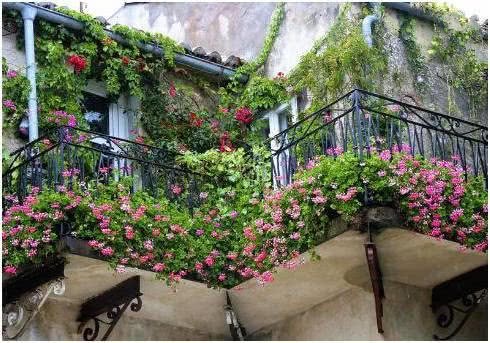
There are actually farmers in the city too, and they are "balcony farmers." Most people have small balconies at home but still want the feel of a garden. How can this be done? Turning it into a small garden is actually very simple. By using vertical planting, even a small balcony can instantly become a garden!
Modern balcony flower growing is no longer the past practice of growing flowers in ground-level courtyards. To make better use of space, planter troughs, hanging pots and placed pots can be used for growing flowers. Residential buildings mostly have no courtyard, so using hanging basket flowers and container flowers to decorate the balcony is what allows people to enjoy the scenery in a natural atmosphere.
For the hanging-pot style, low-growing trailing varieties such as spider plant and ivy can be chosen. The placed-pot style is the simplest, but plants that tolerate shade or prefer sun should be chosen according to the balcony's orientation. Most planter troughs are hung on the outer side of the balcony, taking up no balcony space, and are suitable for smaller balconies; the length depends on the size of the balcony.
On the front face of the hanging balcony, low-growing or creeping annual and biennial flowers can be planted, such as petunia, purslane, snapdragon, dwarf cockscomb, and impatiens. In the planter troughs on both sides of the balcony, climbing plants can be planted, such as runner bean and cypress vine; wrap the climbing vines around bamboo poles to create a natural "sunshade."
Depending on whether flowers or fruits and vegetables are being grown, the "vertical" method should differ.
Generally speaking, if flowers are grown on a balcony with ample sunlight, a staircase-shaped structure can be built for tiered planting. On the highest level, climbing plants such as climbing rose and Chinese trumpet creeper can be planted; in midsummer they can block the overly harsh sunlight for the flowers and plants on the lower levels, while in winter they shed their leaves and let the sunlight through. On the second level, sun-loving plants such as pomegranate, jasmine, and gardenia can be planted. The third level is for plants that like half shade and half sun and for shade-tolerant plants to "live," such as clivia, azalea, camellia, bird's nest fern, and Japanese holly fern. The bottom level can be a "home" for moisture-loving plants such as sweet flag, Boston fern, Humata tyermanni (wolf-tail fern), and sword fern.
If vegetables and fruits are grown on the balcony, then the demand for sunlight is relatively greater, and every effort should be made to ensure that each fruit and vegetable can get sufficient sunlight. It is a good idea to make full use of the railings or walls on the other three sides except the balcony door, and install shelves for vertical planting; hanging planting on wooden frames can also be considered.