Basic principles that should be followed in leisure agriculture planning
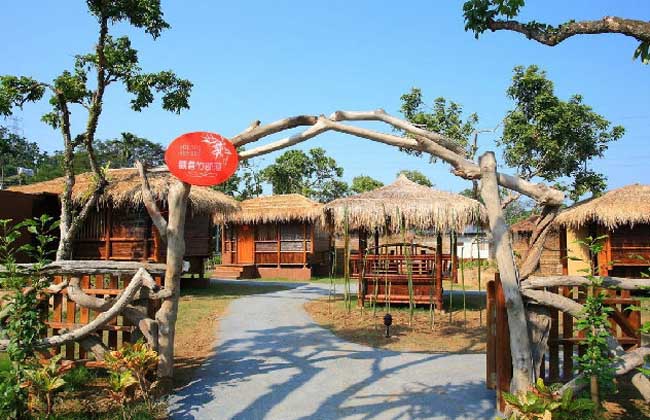
Leisure agriculture began in the 1830s. Due to the acceleration of urbanization and the sharp increase in population, people longed to go to the countryside to enjoy temporary leisure and quiet and experience rural life in order to relieve the pressure of urban life. As a result, ecological leisure agriculture gradually emerged in Italy and other places, and then rapidly developed in European and American countries. Now let us take a look at the planning principles of leisure agriculture!
Principle of scientific site selection
The site of a leisure farm should be chosen in a place close to cities and famous scenic areas with very convenient highway transportation (best within 5 km of a city). In order to fully and reasonably utilize natural environmental conditions, a leisure farm should be built in a place with the following five conditions: First, a place with more hills and less flat land. In a place with more hills and less flat land, it is conducive to cleverly combining landscapes and spatial layout, can occupy less good farmland, does not conflict with relevant national land policies, and can save land acquisition costs. Second, a place without industrial pollution. Third, a place with relatively good water sources. Building a leisure farm in a place with relatively good water sources can not only solve the water use problem of the leisure farm, but also give the leisure farm a better ecological environment because of natural water sources, making the leisure farm full of vitality. Fourth, a place with few residents or no residents. Fifth, a place with relatively good soil conditions.
Principle of adapting measures to local conditions
The planning of leisure agriculture should adopt appropriate measures according to local specific conditions. The plot itself and the surrounding topography and landforms, soil properties, climatic conditions, water source conditions, agricultural farming systems and vegetation conditions, transportation conditions, energy supply conditions, and so on, are some easy to change, some difficult to change, and some even impossible to change. Whether difficult or easy, they all cost construction costs and increase construction investment. The plan formulated according to the principle of adapting measures to local conditions is one with lower construction costs and stronger operability.
Principle of highlighting characteristics
Highlight the characteristics of farming culture. Farming culture has broad connotations. For example, farming forms, traditional agricultural tools, rural life customs, farming labor, agricultural festivals, agricultural crafts, and so on all belong to the scope of farming culture. It can thus be seen that farming culture can be used to develop many tourism products rich in local characteristics and ethnic characteristics. Highlighting farming culture is the major premise for developing leisure agriculture, but for each leisure farm adjacent to one another, merely highlighting farming culture is not enough; each should also fully highlight its own characteristics. Characteristics can also be highlighted by starting from small details, such as planting some melons and vegetables in some empty flat spaces and gaps to cover the soil, building some taller melon sheds and grape trellises for tourists to rest or dine and drink tea, and planting some fruit trees to embellish and beautify the environment. There is no need to build flower beds, rockeries, and other landscapes in empty flat spaces and gaps, which are laborious and costly and are not liked by urban leisure seekers.
Principle of comparing advantages and disadvantages
"Comparative demonstration, selecting the best layout" has become one of the most important decision-making means in the planning and layout of leisure agriculture. The comparison of advantages of leisure agriculture can roughly be carried out from aspects such as location conditions, transportation conditions, socioeconomic background, and resource endowment. Generally speaking, sightseeing and leisure agriculture tourism destinations or projects that are relatively close to large and medium-sized cities, especially major metropolises, have convenient transportation, good regional socioeconomic background, and rich and distinctive resources should be given priority in development and focused development. However, advantages are hierarchical. A comparison made within the local area is only a local advantage, while a comparison made nationwide is a national-level advantage.
Principle of scientific nature
China is a large traditional agricultural country with a long history of agricultural civilization and has gone through three development stages: primitive agriculture, traditional agriculture, and modern agriculture. The dragon-bone waterwheel for lifting water, the cylinder waterwheel for drawing water, the winnowing fan for winnowing grain, the stone mill for grinding flour, ox plowing, the application of farmyard manure, hand-picking of agricultural products, as well as traditional spinning wheels, looms, and so on, these traditional agricultural landscapes that form a sharp contrast with modern high technology are likewise favored by modern tourists because they vividly and truthfully reflect the trajectory of the development of agricultural science and technology. Therefore, the scientific characteristics of the content displayed by leisure agriculture determine that the planning and design work must allow leisure seekers, while entertaining and relaxing, to consciously receive education in agricultural science and technology and consciously spread agricultural scientific knowledge, so as to enhance the educational function of leisure agriculture and the demonstration function of high-tech agriculture.
Summary: Leisure agriculture began in the 1830s. Due to the acceleration of urbanization and the sharp increase in population, people longed to go to the countryside to enjoy temporary leisure and quiet and experience rural life in order to relieve the pressure of urban life. As a result, ecological leisure agriculture gradually emerged in Italy and other places, and then rapidly developed in European and American countries. Now let us take a look at the planning principles of leisure agriculture!
Market-oriented principle
Accurately grasping changes in market demand, planning and developing products that meet market demand, and effectively occupying and expanding one's own market area are among the key issues determining the success or failure of leisure agriculture planning and layout. At present, the leisure product development of leisure farms in most areas is single, which will inevitably lead to single consumption by leisure seekers at the farms, leaving leisure seekers with money to spend but nowhere to spend it at the farms, ultimately making it difficult for the leisure income of leisure farms to grow substantially. Therefore, leisure farms should strive to develop leisure products covering accommodation, food, travel, shopping, and entertainment. Moreover, sightseeing and leisure agriculture is a new type of industry that originates from the geographical environmental differences between urban and rural areas and guides urban residents to go to the countryside for tourism consumption. Undoubtedly, surrounding urban residents are its main potential source market. For this reason, market research must be conducted to ascertain the source of its tourists, types of tourist sources, market size, patterns of tourist flow, tourist spending capacity, and whether there are competing sightseeing and leisure agriculture tourism scenic areas, scenic spots, or projects within a certain distance around the planned layout area.
Principle of comprehensive benefits
The essence of leisure agriculture is a highly efficient market agriculture that combines agriculture and tourism and extends primary industry to tertiary industry. First, the principle of economic benefits must be followed. Through investment return analysis, leisure agriculture projects with large resource scale, high tourism value, good original foundation, convenient transportation, relatively low investment, short construction period, and fast investment recovery should be given priority in planning and development. Second, social benefits must be emphasized, that is, places and opportunities for the broad masses of urban residents to come into contact with nature, experience agriculture, and go sightseeing, leisure, and vacationing should be provided to the greatest extent, their cultural connotations and educational functions should be improved, and the broad masses of farmers should be absorbed into participation as much as possible, so as to improve farmers' quality and employment opportunities. Third, special attention should be paid to ecological benefits, that is, by developing sightseeing and leisure agriculture, beautiful and pleasant green landscapes should be created in the suburbs, the natural environment should be improved, ecological balance should be maintained, urban green belt barriers should be built, and the spread of urban pollution should be prevented, so as to maintain a fresh and quiet suburban ecological environment.
Principle of participation
In order to satisfy tourists' entertainment and participation needs to the greatest extent and cater to the fashion of participation, special attention should be paid to participation in the planning of leisure agriculture projects. According to market demand and in combination with one's own resource characteristics, creative planning, design, and layout should be made for fashionable multi-level series of leisure agriculture products. It is worth noting that participation should also include local farmers' participation in leisure agriculture. Because farmers are the masters of the countryside and the main body of agricultural production activities, they themselves are a most basic and most active tourism resource. Only by absorbing them into this tourism activity to participate in the operation of tourism activities and participate in tourism reception services can urban tourists enjoy an authentic cultural atmosphere of the countryside, agriculture, and farmers. Therefore, in the planning, design, and layout of leisure agriculture, attention must be paid to the participation of local farmers.
Principle of overall development
1. Externally, it must be incorporated into the systematic project of regional leisure agriculture development layout. It must obey the regional high-level or main system development strategy, and highlight its own characteristics among regions, that is, according to the principles of "I have what others do not have," "what others have, I have better," and "what others have better, I have something distinctive," and under the premise of market orientation, base itself on its own resource and product characteristic advantages to develop leisure agriculture parks and their sightseeing, leisure, and vacation products that are clearly different from surrounding areas and have absolute competitive advantages.
2. Internally, it must take into account the overall coordination of all major functional zones and also consider the coordination of the entire product marketing process. At the same time, a leisure agriculture park is a comprehensive leisure area mainly featuring agricultural sightseeing and agricultural leisure functions, and also having multiple functions such as education, vacation entertainment, and sports activities. Its functional zones generally include a viewing area, demonstration area, leisure experience area, and product area. Its planning and layout must be comprehensively coordinated and developed as a whole.
3. The surroundings of a leisure agriculture park are mostly rural areas. The park and the rural areas are an inseparable whole, and the park planning and layout should also be combined with rural construction planning. Only a sightseeing and leisure agriculture park plan established on the basis of rural residential area and road planning, overall land development planning, and ecological environment construction planning will achieve a coordinated, harmonious, and vital effect.
In addition: the principle of diversity, the ecological principle, the humanistic principle, the principle of sustainability, the principle of combining development and protection, the principle of innovation, and so on should also be important principles in the planning and layout of leisure agriculture. Leisure agriculture in China has already been in the stage of comprehensive promotion. In planning and layout, on the one hand, these norms and guidelines accumulated in practice and already elevated to theory should be followed. On the other hand, it is necessary to be good at pioneering and innovating, constantly summarizing and improving, and promoting China's leisure agriculture to always advance along a healthy, orderly, and steady path.