Detailed Explanation of Key Points in Feeding and Management Techniques for Crossbred (Binary) Gilts
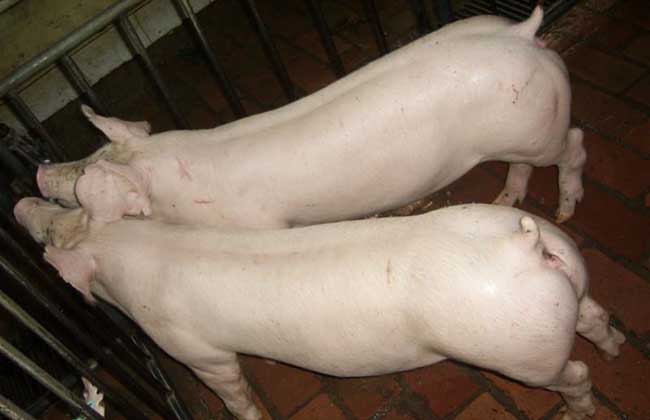
Crossbred (binary) gilts refer to gilts produced by crossing a Landrace boar with a Large White sow, or a Large White boar with a Landrace sow. They have strong adaptability, tolerance to coarse feed, large litters, and good maternal instincts, while also fully utilizing the characteristics of excellent lean-type pigs such as fast growth, good fattening results, and high lean meat percentage, and can rapidly increase the lean meat percentage of commercial pigs. Let's take a look at the feeding and management techniques for crossbred (binary) gilts below!
Feeding and Management Techniques for Crossbred (Binary) Gilts
1. Drinking water: Clean drinking water should be supplied to prevent piglets from drinking dirty water or urine and developing diarrhea.
2. Grouping: When moving pens and grouping, pigs should be grouped according to sex, individual size, and speed of eating. Weaned piglets should be given relatively ample time for exercise outside the pen, and the pen should also be clean, dry, warm in winter and cool in summer, with training for defecating in a fixed location.
3. Feed: (20-60 kg) corn 53%, fine rice bran 10%, high-quality fish meal 2%, soybean meal 16%, wheat bran 15%, calcium hydrogen phosphate 1.5%, stone powder 0.23%, salt 0.19%, additives 2.08%.
4. Management: Create a comfortable micro-environment. Weaned piglets must have sufficient sunlight, suitable temperature, and clean, dry conditions. Before piglets enter the pen, it should be thoroughly cleaned, fully disinfected, and bedding laid down to create a comfortable micro-environment.
5. Density: If the group is too large or the floor space per piglet is too small, and if there are not many feeding troughs, it is relatively easy to cause fighting among piglets, resulting in insufficient rest and insufficient feed intake, thereby affecting piglet development. An average floor space of 0.5-0.8 sq m per piglet is better, and each group is generally best at around 10 sq m.
6. Keeping warm: In northern China, winter and early spring are cold, and pigs are especially afraid of the cold. They often huddle together lying down and squeeze each other, which can easily crush and injure piglets, and they are also prone to illness, seriously affecting piglet growth and development. Therefore, attention must be paid to cold-proof measures in the pens, and where conditions permit, warm pens and plastic greenhouses can be built to raise weaned piglets.
7. Deworming: At 50-60 days of age, and if necessary at 90-120 days of age, inject 400 micrograms of 1% ivermectin subcutaneously per kg of body weight.
Immunization Program for Pig Farms
1. At 7 days of age, inject attenuated live freeze-dried vaccine against Mycoplasma hyopneumoniae (not needed for pig farms where the disease has been eradicated).
2. At 15 days of age, intramuscular injection of 2 ml of multivalent inactivated vaccine against piglet edema disease.
3. At 20 days of age, intramuscular injection of 4 doses of attenuated live freeze-dried vaccine against classical swine fever.
4. At 30 days of age, inject inactivated vaccine against PRRS (porcine reproductive and respiratory syndrome) (for use on positive pig farms) (use according to the instructions).
5. At 35 days of age, optionally administer inactivated foot-and-mouth disease vaccine (use according to the instructions).
6. At 40 days of age, paratyphoid vaccine must be administered (attenuated live vaccine of Salmonella choleraesuis strain C500), intramuscular injection of 1 dose or oral administration of 4 doses.
7. At 56 days of age, intramuscular injection of 4 doses of attenuated live freeze-dried vaccine against classical swine fever (booster).
8. At 60 days of age, subcutaneous injection of 1 dose or oral administration of 4 doses of attenuated live freeze-dried vaccine against Streptococcus suis.
Preventive Instructions for Foot-and-Mouth Disease
1. In areas threatened by foot-and-mouth disease, use type O foot-and-mouth disease oil emulsion inactivated vaccine: pigs over 50 kg are injected with 3 ml, pigs 25-50 kg with 2 ml, and pigs 10-25 kg with 1 ml.
2. In October each year, inject the bivalent inactivated vaccine or attenuated vaccine against porcine transmissible gastroenteritis and epidemic diarrhea.
Precautions for Foot-and-Mouth Disease
1. Before and after vaccine use, attention should be paid to the effect of drugs being used on vaccine immune efficacy. Special attention should be paid to immunosuppressive drugs and antimicrobial drugs that have killing or inhibitory effects on bacterial vaccines.
2. If an allergic reaction occurs, inject 0.2-1 ml of epinephrine per pig subcutaneously or intramuscularly; if administered intravenously, it must be diluted 10-fold,
3. Vaccine immunization should generally be carried out when pigs are healthy, and immunization programs are often adjusted due to the influence of multiple factors such as the health status of the pig herd. Please adjust immunization programs under the guidance of a veterinarian. Classical swine fever and foot-and-mouth disease should be under national compulsory immunization, and vaccines can be obtained directly from the local animal disease prevention station or by requesting them to send personnel to inject them free of charge.
4. In order for vaccines to work better, effective management measures must be taken to reduce pathogenic microorganisms in the environment, but this is only a guide, and each farm should make adjustments according to the disease conditions and existing problems of its own pig farm.
5. The lactation period is a key link. In order to reduce the chance of piglets being infected by sows, segregated early weaning or medicated early weaning techniques can be adopted, weaning within 4 weeks. This guidance content is as comprehensive and detailed as possible, but not every pig farm or pig raiser must follow it.