How to Raise Guanling Pigs? A Detailed Explanation of Key Points for Efficient Breeding Techniques
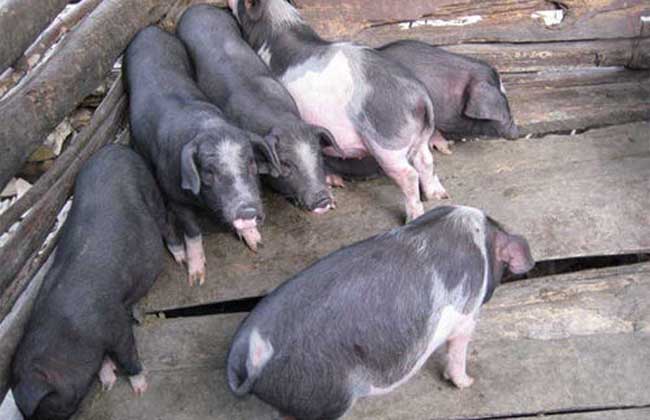
The Guanling pig is a local pig breed widely distributed in the mountainous areas of central and southern Guizhou Province, found in Anshun Prefecture, Qiandongnan Miao and Dong Autonomous Prefecture, Qiannan Buyei and Miao Autonomous Prefecture, and Guiyang City. It accounts for a relatively large proportion of pig production in Guizhou Province and has advantages such as good fattening performance under poor conditions, relatively obvious heterosis, and tender, delicious meat. Let's take a look at the efficient breeding techniques for Guanling pigs!
Suitable Growth Environment
Guanling pigs need a suitable growing environment. The optimal ambient temperature is generally 15-30°C, and the pig house should be warm in winter and cool in summer. When building a pig house, choose a flat, dry, sheltered and sunny location. The pig house for Guanling pigs is basically the same as ordinary pig houses. Because they are active, timid and easily startled, and prone to escaping, the pig house should be built more solidly, the raising environment should be quiet, and the exercise yard should be larger. The pen fence is generally about 1.2 m high. Each Guanling pig should occupy 0.8 sq m, and it is advisable to raise 8-10 pigs per pen.
Breeding Management of Pigs
The management of Guanling breeding pigs requires humanized management. Guanling pigs are very intelligent animals. Only by providing the most comfortable growing environment for the pigs and treating breeding pigs well can their production potential be fully realized and the best feed conversion rate be achieved, thereby enabling the pig farm to obtain the greatest economic benefits. In hot summer, cooling is a key management measure. There are many cooling methods. Pig farms with conditions can use water curtains for cooling; pig farms without conditions can consider spraying water on the roof and adding shade nets outdoors; some pig farms also use misting, spraying and other methods. The purpose is to improve the pigs' comfort and increase feed intake. If feed quality is poor, or the trough design is unreasonable, pigs can easily push the feed out, causing waste. Therefore, unreasonable pig farm facilities also easily prevent pigs from feeding properly and ultimately affect economic benefits.
Management of Suckling Piglets
After piglets are born, they should be allowed to consume colostrum as early as possible. On the second day after birth, iron dextran should be supplemented, and 1 ml of honey should be added, while drinking water with potassium permanganate at a concentration of 2‰ should be provided. In addition, warmth should be strengthened. After 7 days of birth, concentrate feed and mineral feed can be supplemented. The method is to make a small feeding trough in the creep feeding room or creep feeding pen, mix a small amount of mineral feed such as bone meal and salt with roasted soybeans, corn or sorghum, and place it in the trough so that the piglets can eat freely. At the same time, supplementary feeding of green feed should also begin. Farmers can cooperate by planting forage grass for feeding. Commonly used forage grasses in pig production include cocksfoot and cudweed, etc. From the development of the piglet's gastrointestinal tract, feeding green forage grass can enhance its ability to digest and absorb roughage. Starting from 30 days of age, piglets should be given a certain amount of green feed, and the supplemental amount should be gradually increased.
Management of Finishing Pigs
At present, the diseases commonly occurring in finishing pigs mainly fall into two major categories: respiratory disease syndrome and diarrhea caused by various reasons (mainly colitis, swine dysentery, colitis, ileitis, Salmonella enteritis, etc.). In addition, swine fever, toxoplasmosis, atrophic rhinitis, etc. also frequently occur on some pig farms. If the management of finishing pig herds is not strengthened and these diseases occur, it will not only affect the sales of breeding pigs, but also create a vicious cycle for the future management of the breeding pig farm. Therefore, the feeding and management of finishing pigs should be strengthened, and this link should not be neglected, causing unnecessary losses. At the same time, ensure that finishing pigs have sufficient drinking water, especially in hot summer, which can reduce the pigs' stress response. When the height of the drinker is unsuitable, it is blocked, or the water pipe pressure is low and the water flow rate is slow, all of these will affect the pigs' water intake. During the pig raising process, water deficiency causes a more serious stress response than feed deficiency. (Contribution: Rural Notes)