Key Technical Points and Feeding Management Methods for Rongshui Black Fragrant Pig Farming
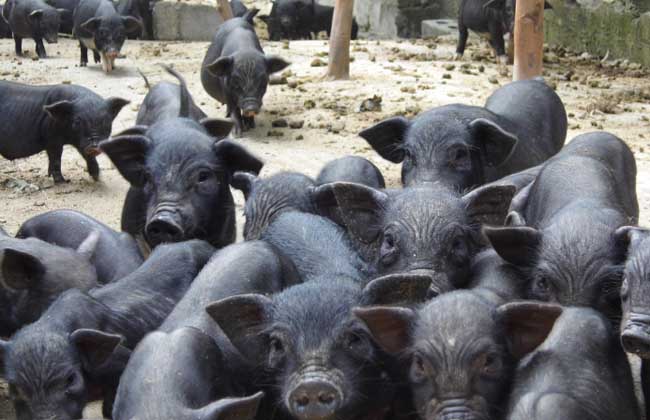
The Rongshui Black Fragrant Pig is produced in the mountainous areas of Rongshui County in northern Guangxi, and was domesticated and bred by ethnic minorities such as the Miao and Dong peoples. It has very high nutritional value, is cold-resistant, has strong disease resistance, and tolerates coarse and extensive feeding. Ordinary farm crops such as rice bran, grains, corn, sweet potatoes, and even various wild vegetables can serve as its feed. The feeding cost is low and management is simple. Let us take a look together at the Rongshui Black Fragrant Pig farming technology below!
Farming Prospects of the Rongshui Black Fragrant Pig
The suckling pig meat of the Rongshui Black Fragrant Pig is of noble quality, unmatched by other pig breeds. Its value lies in its superior meat flavor, and it is renowned worldwide for its excellent meat taste. Neither suckling pigs nor two-month-old weaned piglets have any milky odor or other gamy or off-putting smells. The skin is thin and soft, the meat is fragrant and tender, the taste is sweet with a slight fragrance, the muscle fibers are fine, the intramuscular fat is evenly distributed, and it is rich in unsaturated fatty acids. This forms the excellent characteristic of being suitable for slaughter and consumption at an early stage. It is a superior raw material for making roast suckling pig and cured whole pig. No suckling pig of any other breed can compare with the suckling pig of the Rongshui Black Fragrant Pig. It has extremely high farming prospects.
Construction of a Rongshui Black Fragrant Pig Farm
1. Site selection for the pig farm: Site selection for Black Fragrant Pigs is roughly the same as for ordinary pig farms, but in order to achieve higher quality requirements, a flat location should be chosen in mountainous and hilly areas based on their living characteristics to build the pig farm. The area of land occupied depends on the farming scale. The pig farm should be more than 500 m away from roads, water sources, and residential areas. It should face south with its back to the north, be sheltered from the wind and exposed to the sun, have convenient water and electricity installation, an environmentally friendly and pollution-free water source, smooth communications and information, and convenient transportation with a certain transport capacity.
2. Pig house construction: A passage runs through the middle of the pig house, with pig pens built on both sides. A sewage drainage ditch is built outside the pig house wall, and manure and urine are flushed out directly through the manure outlets at the sides of the pig pen walls. The pig house is generally about 3.2 m high and 7.6-8 m wide, with the length determined by farming scale and site, preferably 30 m. The pig house includes a sow room, a piglet room, and a growing pig room. Because Black Fragrant Pigs are relatively small, the sow room can be designed at 10 sq m per room, the piglet room connected to the sow room can be about 5 sq m per room, and the growing pig room can be 10 sq m per room, with every 5 pigs sharing one pen.
Farming Facilities for Rongshui Black Fragrant Pigs
1. Drinking water facilities: Install a water tower and a booster valve at the highest point of the pig farm (high water pressure is good for washing the pens), introduce a clean water source, and lay pipes to connect all areas. Each pig pen is connected to the pipeline, with bite-type drinking nipples installed and a water outlet valve reserved.
2. Waste discharge facilities: Build a sewage drainage ditch around the outer perimeter of the pig house that connects to the manure and urine outlets of each pig pen. Build a biogas digester or septic tank at the most downwind location of the production area and connect it to the sewage drainage ditch, using biological fermentation to treat manure and urine.
3. Insulation facilities: Lay more than 6 km of thick copper wire throughout the farm (copper wire has good thermal conductivity and helps prevent fire). Install heat-preserving warming lamps inside the pig house, preferably 150W and 200W, and install them at a density of 4-6 sq m per lamp to ensure that the overall temperature inside the pig house in winter stays above 18-22°C.
4. Farrowing bed equipment: Small-scale fragrant pig farms can be equipped with 1-2 sow farrowing beds. The farrowing beds sold on the market are all designed for large pig breeds. When small fragrant pig sows enter them, they will turn around and jump out, failing to achieve the positioning effect. Therefore, the sow pen of the farrowing bed must also be partitioned and positioned to a certain extent. Those with the conditions and skills can also make their own farrowing beds according to the situation.
5. Disinfection facilities: Set up a disinfection passage at the main gate of the production area, that is, design the ground at the bottom of the main gate into a concave shape and fill it with disinfectant water. Vehicles and personnel entering and exiting must drive or walk over the flooded road surface. Set up a disinfection room at the side of the main gate, with a disinfection pool at the door of the room. Install an electric spray-type disinfector inside the room. Personnel can enter and exit the production area through the disinfection room. When entering the disinfection room, they must step in disinfectant water, then carry out full-body spray disinfection inside the room before entering the production area. The purpose is to cut off the transmission routes of pathogens and prevent people and vehicles from bringing pathogens into the farm.
Feeding Environment for Rongshui Black Fragrant Pigs
1. External factors: Black Fragrant Pigs are inherently timid, sensitive, and alert. Therefore, in addition to being clean and hygienic, the feeding environment should also avoid noise as much as possible. Do not allow people, vehicles, and other animals to disturb them, and create a relatively quiet environment. Prevent chickens, dogs, and other highly mobile animals from entering the production area to avoid disturbance while also preventing the spread of diseases and parasites. In addition, pest control and rodent eradication work should be done well.
2. Insulation measures: Black Fragrant Pigs tolerate coarse and extensive rearing and have stronger cold resistance than ordinary pig breeds, but excessively low temperatures can still cause heat balance disorders, produce cold stress reactions, cause excessive heat loss, trigger life function disorders, shivering, huddling, reduced feed conversion rate, affect growth, lower resistance, and cause diarrhea and respiratory diseases. Especially newborn piglets are prone to yellow and white scours, increasing mortality, which is an important factor affecting the survival rate of Black Fragrant Pig farming. Therefore, corresponding insulation measures must be taken so that the pigs can be raised at a suitable temperature. Install 150W or 200W heat-preserving warming lamps in the pens at a density of 4-6 sq m per lamp, and add straw, wood shavings, and other materials to the pens for insulation, keeping the temperature of large pig pens at 25°C and the temperature of small pig pens at around 30°C.
3. Ventilation and moisture prevention: The pig farm environment contains large amounts of microorganisms, harmful gases, and dust, which can seriously affect pig health. Hot and humid weather can cause heat accumulation in the pigs' bodies and severe heart failure. Skin diseases in pigs also increase sharply, with dermatitis, eczema, mange, and so on occurring. In order to reduce and avoid the above problems, the pig house must be well ventilated, and manure, urine, bedding straw, and other wastes prone to fermentation and rotting must be handled in a timely manner to ensure air quality. The pig house must have spacious ventilation openings reserved. For pig houses that are too enclosed, exhaust fans, fans, and other equipment should be installed for ventilation and dehumidification.
Farming Technology for Rongshui Black Fragrant Pigs
1. Grouping and penning: Black Fragrant Pigs should be reasonably grouped according to size, physique, sex, physiological stage, and so on. It is best to group pigs from the same sow and the same litter into the same pen. If pigs from different maternal lines or litters need to be mixed in, it is best to spray a strongly scented disinfectant on the pigs to interfere with their ability to recognize odors and prevent fighting.
2. Stocking density: Fragrant Pigs are small in size, so the stocking density can be appropriately higher than for other pig breeds. A pen of 10 sq m can raise about 10 piglets, while for large pigs, 10 sq m per pen is suitable for raising 5. Too high a density will intensify food grabbing and fighting, affecting feeding, activity, and sleep, while too low a density wastes rearing space. In addition, Fragrant Pigs reach sexual maturity relatively early, so preparations for grouping by sex should be made in advance.
3. Coarse feed: In order to ensure the quality of Black Fragrant Pigs, the method of coarse feeding must be maintained. The drinking water source should be clean, pollution-free mountain spring water. The daily ration is mainly farm green feed, accounting for about 80%, and various green vegetables, sweet potato leaves and vines, and even some grass roots, tender grass, and various wild vegetable vines and leaves in the mountains can all serve as feed for Fragrant Pigs. Commonly used supplementary feed accounts for about 20%, mainly rice bran, broken rice, corn, sweet potatoes, and other farm crop by-products, with appropriate additions of soybean cake, wheat bran, fish meal, bone meal, salt, and so on. The crude protein content in the ration is about 16%. In places where green feed is lacking, the ratio of green and coarse feed can also be appropriately adjusted.
4. Feeding method: Feeding adopts the method of fixed times and fixed amounts, 3-4 meals per day, fed in the morning, noon, and evening. Piglets consume about 0.2 kg of supplementary feed per day and about 1 kg of green feed. Large pigs and sows consume 0.4 kg of supplementary feed per day and about 2 kg of green feed. Where conditions permit, when the weather is fine, after the morning feeding the pigs can be released outdoors for free-range rearing, preferably in mountain and field areas so they can forage and move on their own. Fragrant Pigs raised extensively in under-forest farming not only have a stronger physique and greatly reduced feeding costs, but also have even more outstanding quality.
Disinfection and Epidemic Prevention for Rongshui Black Fragrant Pigs
1. Disinfection measures: In order to eliminate bacteria and viruses in the environment and cut off the transmission routes of diseases, comprehensive epidemic prevention disinfection of the site, pens, feeding troughs and utensils, bedding straw, and so on must be carried out regularly on a planned schedule. Routine disinfection is once every 7-10 days. Bromochlorohydantoin can be chosen at 1:500 diluted with water for spray disinfection, or other disinfectants can be chosen, such as 5-20% bleaching powder solution, 2-5% caustic soda solution, 20% plant ash water, or 10-20% lime milk.
2. Planned immunization: Carry out epidemic prevention in combination with local animal disease conditions. Piglets over 20 days old begin immunization with swine fever vaccine, and after 1 week at intervals they are immunized with swine foot-and-mouth disease vaccine and porcine blue ear disease vaccine. According to the feeding cycle, booster immunization is given once every half a year (Black Fragrant Pigs grow relatively slowly and have a longer feeding cycle). Sows are immunized once every half a year, and during the stage of multiple pregnancies and postpartum weakness, immunization should not be given or should be given cautiously.
3. Parasite prevention: Drug prevention and control measures are adopted for parasite prevention, with deworming medicine administered once a month. For nematodes, avermectin or levamisole, etc. can be used. For the prevention and treatment of cysticercosis, albendazole or praziquantel, etc. can be used. Manure, bedding straw, and other pollutants should be cleaned up in a timely manner to prevent pigs from being infected with parasitic diseases and from repeated infections.