Detailed analysis of fragrant pig farming costs and profits
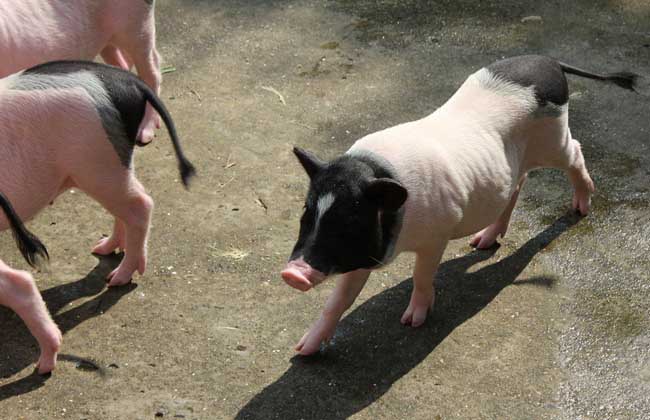
For fragrant pigs, the investment in general equipment and pens is 20% of that for ordinary pigs, the feed investment is 30% of that for ordinary pigs, and the labor cost investment is 50% of that for ordinary pigs. They are easy to manage and have strong disease resistance, and their litter size is basically the same as that of ordinary pigs, but their market price is 200-300% of that of ordinary pigs. Below, let us take raising 20 sows as an example to look at the costs and profits of fragrant pig farming!
Farming prospects of fragrant pigs
Fragrant pigs have thin skin and fine bones, tender meat, and a delicious taste, and are suitable for processing into roast suckling pig, which is an excellent characteristic. At the same time, they also have broad prospects as experimental animals or pets. The biggest advantage of fragrant pig farming lies in the fragrant pig's own tolerance to roughage, strong disease resistance, and strong adaptability, because these advantages of fragrant pigs themselves can make fragrant pig farming require less feed investment, have a high survival rate, require less environmental and labor investment, and have low technical requirements, so fragrant pig farming is a low-threshold, low-cost, and low-risk farming operation.
Farming costs of fragrant pigs
1. First-year investment: pen and equipment investment of 150 sq m, totaling 30000 yuan. Labor investment of 2 people, totaling 30000 yuan per year. Breeding pig feed investment of 18000 jin, at 0.8 yuan per jin, totaling 14400 yuan. Fattening pig feed investment of 200 yuan per head. Vaccine, medicine, and health care investment of 400 yuan. Water, electricity, and other investment of 500 yuan. Total 75300 yuan + fattening pig feed.
2. Investment in subsequent years: labor investment of 2 people, 30000 yuan per year. Breeding pig feed investment of 18000 jin, at 0.8 yuan per jin, totaling 14400 yuan. Vaccine, medicine, and health care investment of 400 yuan. Water, electricity, and other investment of 500 yuan.
3. Total cost: 45300 + fattening pig feed. The above are all calculated at the highest standard. If green feed such as green grass is added, the cost will be lower.
Farming profits of fragrant pigs
1. Income: each sow can produce 2.2 litters per year, and at least 2 litters excluding special circumstances such as disease and return to estrus. With an average of 10 piglets per litter, each sow can produce 20 pigs per year. Among the 20 pigs produced, after excluding deaths and culling, generally each sow can have more than 16 pigs sent to market per year. 20 sows can send 320 pigs to market per year. Fragrant pigs can be used for roast suckling pig at at least 200 yuan per head, yielding 64000 yuan. If fattened and sold as meat pigs at at least 600 yuan per head, this yields 192000 yuan.
2. Profit: the net profit in the first year from selling suckling pigs = selling suckling pigs - costs for the year = 64000 - 75300 = -11300 yuan. Profit from selling fattening pigs = selling fattening pigs - costs = 192000 - (75300 + 64000) = 52700 yuan. In each subsequent year, after deducting the 48000 yuan investment in breeding pigs and pen equipment, selling suckling fragrant pigs can yield a profit of 36700 yuan per year, and selling fattening pigs can yield a profit of 100700 yuan per year.
Note: In fragrant pig farming, great attention must be paid to the selection of pig breeds. When introducing breeding stock, strict inspection should be made of the pig breed's appearance, growth and development, bloodline, and whether there are genetic defects and other aspects of performance. The breed characteristics are required to be obvious, reproductive function vigorous, and pig breed pedigree cards should be brought back for preservation and future reference. Also pay attention to the local environment. The introduced fragrant pigs must conform to the local people's living and consumption level and the needs of economic development. At the same time, it is necessary to understand the characteristics of the breed, climate, and feeding management, so as to determine the acclimatization measures after the introduction of fragrant pigs and create the necessary feeding and management conditions. Only in this way can the benefits of fragrant pig farming be guaranteed.