What Do Mini Pigs Eat? Feed Combinations and a Scientific Feeding Guide
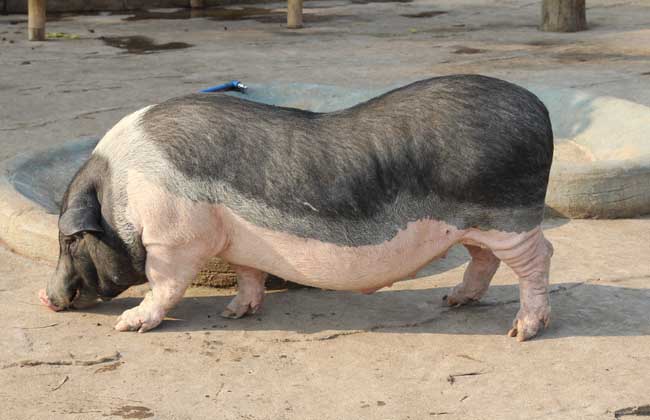
The mini pig, also known as the miniature pig, is a mammal of the order Artiodactyla, family Suidae, genus Sus, famous nationwide for its small size, early maturity and delicious meat. The most famous breeds are the Congjiang mini pig and Jianbai mini pig from the Qiandongnan region of Guizhou, which the national agriculture department has awarded the title "Home of China's Mini Pigs," and the Bama mini pig from Guangxi near the Qiandongnan region of Guizhou. There are also breeds such as the Huanjiang mini pig and the Tibetan mini pig. Let's take a look at what mini pigs eat!
What do mini pigs eat?
Mini pigs are mainly raised by free-range grazing and often eat green fodder such as wild grasses and fragrant rice grain. Each replacement gilt (2 to 4 months old) consumes an average of 0.2 kg of concentrated feed and 1 kg of green fodder per day. Pregnant and lactating sows consume an average of 0.4 kg of concentrated feed and 2 kg of green fodder per day, so feed consumption is low. In their place of origin, mini pigs are fed mainly cooked feed, as cooking the feed can improve feed utilization.
Morphological characteristics of the mini pig
The mini pig has a small, short build. Its coat is black, with fine, glossy hair, a long head, a flat forehead, and forehead wrinkles running in all directions. The hairless area around the eyes is obvious, the ears are thin and extend flat to both sides, the back and waist are slightly sunken, the belly is large, round and drooping, the four legs are short and slender, and the tail is small and thin with white hair at the tip. At 6 months of age, a boar has an average body weight of 14.2 kg, body length of 65 cm, body height of 33 cm and chest circumference of 55 cm. A sow at 8 months of age weighs 30 kg, with a body length of 70 cm, body height of 47 cm and chest circumference of 73 cm. The dressing percentage of fattened mini pigs is 63.6%, and the lean meat rate reaches 52.2%.
Feed combinations for mini pigs
1. Bran and chaff feeds: Bran and chaff feeds include rice bran, wheat bran, sweet potato vine bran, peanut vine bran, broad bean leaf bran, soybean straw bran, etc. The amount used for pigs is 10 to 15% of the total feed, and no more than 20%.
2. Cake and meal feeds: Cake and meal feeds mainly include rapeseed cake, peanut cake, cottonseed cake, soybean cake, sesame cake, etc. The proportion of cake feeds used for pigs is 10 to 25% of the total feed. Soybean cake and peanut cake are highly nutritious and can be included at 25%. Rapeseed cake and cottonseed cake should be below 10%. Rapeseed cake and cottonseed cake must be detoxified before use as feed, while other cake types only need to be steamed or stir-fried before being mixed in. Cake and meal feeds are not suitable for piglet feed.
3. Distiller's grains and residue feeds: Distiller's grains and residue feeds include distiller's grains, bran residue, vinegar residue, starch residue, soybean residue, sugarcane residue, etc. The amount used for pigs is 5 to 10% of the total feed. Distiller's grains are not suitable for pregnant sows or pigs in the late fattening stage. All kinds of distiller's grains and residues must be cooked before feeding.
4. Grain feeds: Grain feeds include corn, barley, wheat, sorghum, broad beans, peas, etc. The amount used for pigs is 50% of the total feed, and no more than 60%.
5. Animal-based feeds: Animal-based feeds include silkworm pupae, fish meal, bone meal, blood meal, feather meal, etc. The amount used for pigs is 4 to 8% of the total feed, and blood meal is not suitable for piglets. In fattening pig feed, fish meal can be included at 10%; if silkworm pupae are also included, fish meal can only be included at 5 to 6%. When using this type of feed, pay attention to getting the calcium-to-phosphorus ratio right.
6. Mineral feeds: Mineral feeds include shell powder, eggshell powder, calcium carbonate, calcium phosphate and salt, etc. The amount used for pigs is 1 to 2% of the total feed, with salt used at no more than 0.5%. If trace elements are added, they must be used strictly according to regulations.
7. Green and succulent feeds: Green and succulent feeds include aquatic duckweed, water lettuce, water hyacinth and water peanut, as well as the leaves and vines of crops and alfalfa, vetch, etc. This type of feed is green, succulent, nutritious and easy to digest, and generally accounts for 40% of the total feed.