What is the outlook for pig farming in 2016, and how should one go about it?
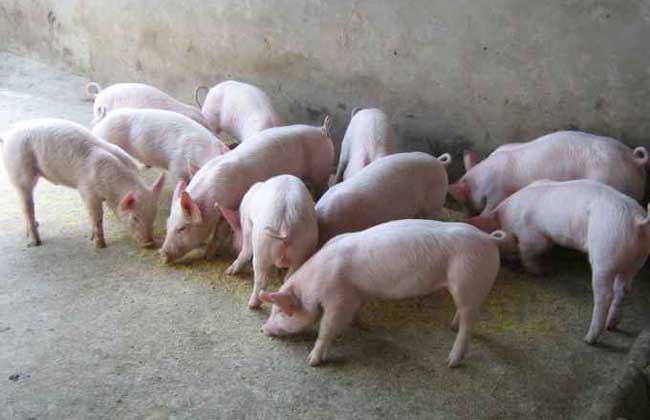
The overall development trend of the pig farming industry in 2016 is mainly characterized by "small-scale backyard farmers gradually exiting, while large-scale, intensive farms develop in large numbers," but judging by the current pace of development, it is hard to draw an exact dividing line. During this period, the volatility of the market will still be difficult to grasp, especially since in the past few years the pig farming market has been complex and changeable, with no rules to follow and hard to predict, making pig farming very risky.
2016 pig farming development prospects
The pig farming industry has many problems and many uncontrollable risks, but its overall development prospects are relatively good. At present, the pig farming industry has tended toward intensification and large-scale operation; moderate-scale operation can raise overall efficiency and is conducive to disease control and improvement of production levels. Backyard pig farming has harsh environments, poor rearing conditions, and weak awareness of disease prevention, so when one place has an outbreak, all around suffer; at the same time, because backyard farmers use rough feed and rough rearing methods, pigs have poor reproductive capacity, slow growth, and a high feed-to-meat ratio, making them easily eliminated by the market. Large-scale pig farms, however, involve large investment and are hard to redirect, which makes the pig herd inventory and slaughter volume relatively balanced and stable; even if the market fluctuates, generally speaking the profitable period is still longer than the loss period, and continued operation is still profitable. When the market is good, backyard farmers rush in en masse; when the market is bad, they exit en masse, causing a great impact on overall market fluctuations. After the entire farming industry tends toward large-scale operation, market stability will also improve greatly, and profits will be relatively stable.
At the same time, the state has also increased its efforts to regulate live pig prices, ensuring both the interests of farmers and the public's "vegetable basket"; only a reasonable and stable profit margin can ensure healthy development. Relevant preferential policies for the pig farming industry, such as subsidies for breeding sows, construction of standardized large-scale pig farms, and subsidies for improved livestock breeds, have also strongly promoted the development of large-scale pig farming.
Problems existing in the pig farming industry
1. At the current stage, pig diseases are increasing and becoming more and more complex, and the risks of pig farming are growing. It is understood that many backyard farmers, small and medium-sized pig farms, and even some large pig farms are still losing money even during high-profit periods, mainly because of disease "trouble," which causes increased pig mortality. Especially for backyard farmers, disease prevention conditions are poor and feeding management levels are low, so disease becomes their greatest risk.
2. The breeding pig industry is the leader in the industrialized development of the pig farming industry, and the smooth development of the breeding pig industry depends on a sound breeding pig market. At present, China's breeding pig market is in its initial stage, breeding pig farms vary unevenly in scale, and breeding pig quality differs greatly; there has long been a strange cycle of "introduction-maintenance-degeneration-reintroduction." At the current stage, China's infrastructure for breeding improved pig breeds is weak, and breed improvement work is relatively backward.
3. The growth speed and feed utilization rate of live pigs are key concerns in the farming world; feed-to-meat ratio, daily weight gain, and feed intake are important indicators for evaluating feed quality and feeding effects. Sow nutrition, boar nutrition, and lactating piglet nutrition respectively meeting their growth needs, thereby giving play to their best reproductive performance and growth performance and creating the greatest economic benefits, is what farmers pursue and also the direction that enterprises providing value services to the pig farming industry strive toward. However, at present, concentrated feed, premix, complete feed, and other products on the market vary unevenly in quality, and how to make the correct choice is also a problem farmers face.
2016 pig farming development trends
1. The trend of environmentally friendly pig farming: just by looking at the vigorous demolition of pig farms across the country, it is not hard to understand that the farming industry is facing a difficult environmental protection revolution. Whether local demolitions are truly for energy conservation and emissions reduction or secretly for grabbing land, pollution from the farming industry can no longer be avoided. Pig farmers want to make money cleanly and walk with their heads held high; if farms want to continue to survive and develop, upgrading environmental protection processes is the only way. Whether complaining or fearing, the farming industry can only adapt. It is just that solving the problem of farming pollution at low cost is not so easy. Environmentally friendly pig farming awaits the joint efforts of the government, experts, enterprises, and pig farms. This is a difficult problem and also a business opportunity, and countless people are striving for it.
2. Difficulty in finding labor is a trend: in recent years, bosses have all lamented in unison that workers are hard to hire and labor costs have risen sharply. In the future, as those born in the 1990s and 2000s gradually enter the scene, pay will probably continue to rise. On the one hand, the new generation of young people is unwilling to engage in the farming industry; on the other hand, the backbone pig farmers are gradually growing old. Pig farms have no other way but to raise pay and benefits and change the working environment to increase attractiveness. Pig farming is merely a means of making a living for many young people; when they face more choices, only happy work can keep their hearts. Of course, to solve the labor problem, capable large groups can add automated equipment and rely on machines and processes to save labor, which is also a path.
3. The trend of farming cooperation: pig farming is changing from traditional agricultural production to modern industrial production. So-called industrial production can be simply described as having clearer standards, finer division of labor, more complex processes, and more direct competition. The era of extensive pig farming will gradually pass, and cooperation and exchange have become incomparably important. This is a complex industrial world and industrial environment; farming behind closed doors and working hard alone may not bring success, while appropriate cooperation can yield twice the result with half the effort. Therefore, we see endless varieties of cooperation models: small and medium-sized farmers organizing cooperatives in an attempt to strengthen bargaining power (whether successful or not is beside the point), manufacturers and pig farming enterprises forming deep equity ties (for example, the cooperation between Jinxinnong and Hunan Jiahe), and strong alliances between large enterprises (for example, the raw material cooperation between COFCO and Wens).
4. Low profit is a trend: as more and more large capital enters the farming industry, and as the farming industry's intensification and large-scale development accelerate, the era of huge profits in pig farming is fading away. There is no other reason: in the past, China's large fluctuations in pig prices were to a great extent determined by backyard farmers and small and medium-sized farmers. Now, backyard farmers have been eliminated, and those left are pig farms with long-term planning and relatively strong risk resistance, so the number of sows and the number of meat pigs will not surge or plunge over a fairly long period. In the future, it will not be hard to understand that pig farming maintains low profits.
Summary: Overall, the pig farming industry still has many problems, such as small rearing scale, poor breed quality, weak technical strength, low production levels, serious drug residues, poor meat quality, complex diseases, and environmental pollution, which require us to face together and work together to improve.