Detailed Explanation of the Methods and Steps for Establishing a Rural Pig Farming Cooperative
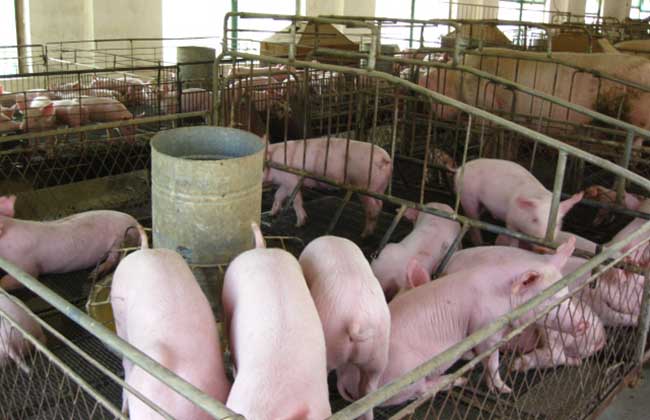
Pig farming cooperatives implement unified breeds, unified feed, unified epidemic prevention, unified sales, and unified management for farming households. While reducing farming costs and risks, they increase the benefits of member farming households, change the previous situation of poor information and going it alone among farming households, and improve farming households' ability to withstand market risks. Let us now take a look at how to establish a pig farming cooperative in rural areas!
The Establishment Stage of a Rural Pig Farming Cooperative
A farmers' professional cooperative is an independent, mutual-aid economic organization, a new type of market economy entity with legal person status, and an important component of developing the rural economy. In the initial stage of establishing a cooperative, in accordance with the "Law of the People's Republic of China on Farmers' Professional Cooperatives" and relevant policy provisions, only by fully respecting public opinion, with farmers voluntarily uniting and managing independently, can the founding principle of "run by the people, managed by the people, and benefiting the people" truly be reflected.
1. Organizational structure development: Chapter Four of the "Law of the People's Republic of China on Farmers' Professional Cooperatives" clearly defines the establishment, authority, responsibilities of cooperative organizational bodies as well as the members' assembly. The members' (representatives') assembly is the highest authority of the cooperative, the board of directors is the executive body, and the board of supervisors is the supervisory body.
①Form a capable board of directors: After the cooperative is established, apart from major matters involving cooperative operation and management that are decided by the members' (representatives') assembly through discussion, general daily work mainly relies on the board of directors to decide and implement. Therefore, the role of the board of directors in the cooperative's operation is very critical. The cooperative's founding assembly generally elects both the board of directors and the board of supervisors, so when democratically electing board members, talent from multiple fields should be considered, and "capable people" among members should be elected to the board, especially production technology talent, brokerage and marketing talent, business planning talent, and so on.
②Select a high-quality chairman: The chairman is the leader and core figure of the cooperative. Serving as chairman requires not only a high sense of responsibility and selfless dedication, but also strong cohesion and appeal within the cooperative, as well as outstanding organizational coordination and verbal expression abilities. Therefore, when electing the chairman, members should fully understand the abilities and level of the candidates. Only when the right person is chosen to lead will the cooperative develop healthily.
③Hire a highly skilled accounting professional: A cooperative is an economic organization and cannot do without financial accounting. Therefore, a farmers' professional cooperative must hire accounting personnel with professional qualifications. In the initial stage of establishing a cooperative, if there are no suitable professional accounting personnel, the bookkeeper of the local village-level organization may be hired, or the township financial accounting center may be entrusted to handle the bookkeeping.
④Reasonably set up internal departments: In setting up internal departments, each cooperative should make reasonable arrangements according to its actual needs. For some larger cooperatives, departments such as an office, finance office, technical (supply) service department, and marketing department may be established.
2. Rules and regulations development: Rules and regulations are the basic guarantee for the standardized operation and sustainable development of farmers' professional cooperatives, and are also a task that must be done before the cooperative is established and registered. From the current situation, many cooperatives' articles of association are copied from the model articles for industrial and commercial registration, or from the model articles of other cooperatives. Some have incomplete basic systems and unclear rights and responsibilities.
①Formulate a set of "Articles of Association" that meets the cooperative's actual needs and is highly operable: The articles of association can be said to be the internal "law" of the cooperative, so it is very necessary to formulate them well. The formulation of the articles may refer to the model articles of the Ministry of Agriculture, but they must not be copied verbatim. Key parts such as member contributions, institutional setup, financial management, surplus distribution, and dissolution and liquidation must be clearly stipulated. The articles must go through full deliberation, repeated revision, and discussion and approval, and finally be voted through by all founders at the founding assembly, and formally take effect after signing and sealing.
②Formulate a set of basic systems: Such as financial management systems, work responsibilities of the board of directors and chairman, the board of supervisors and chief supervisor, as well as purchase and sales systems, production technical operation procedures, product quality standards, and so on.
3. Office premises development: The office premises are the location of the cooperative, the gathering place for the board of directors and board of supervisors to handle daily affairs and for members to meet and receive training, and one of the hardware elements for the cooperative's initial development. The cooperative is best located where members live in concentration or produce in concentration. Those with the means should preferably build their own premises; those without the means may rent a storefront with convenient transportation, and may also seek the support of village officials to set up the cooperative's office in the village committee office. In developing the office premises, one should neither be ostentatious and luxurious nor too shabby. A chairman's office, finance office, and business office are essential, and the office premises should also achieve "two haves, two boards, two on the wall." The two haves are: a signboard and office supplies. The two boards are: a cooperative affairs disclosure board and a financial disclosure board. The two on the wall are: the articles of association posted on the wall and the systems posted on the wall.
After completing the above work, the cooperative can entrust capable personnel (mostly the chairman) to handle the cooperative's registration matters. First, apply for registration with the industrial and commercial department; after obtaining the business license, have the official seal and the legal representative's name seal made; within one month, obtain the organization code certificate and tax registration certificate; choose a bank to open a bank account; and finally file with the township (town) government and the county-level agricultural department. Thus, the procedures for a farmers' professional cooperative are completed.
The Operation Stage of a Rural Pig Farming Cooperative
From establishment to formal operation, if a farmers' professional cooperative wants to truly embody the requirements and concepts of "production at home, services at the cooperative," "professional production first, professional cooperation second; the will of the masses first, organizational development second," and "independent management, freedom to join and withdraw," it must comprehensively strengthen internal management and promote standardized operation. The focus of these requirements is, on the basis of household contract management, to fully emphasize the function of "unification," so that the dual-layer management system combining unified and separate management can be extended and deepened. The cooperative's board of directors or management personnel should, in light of the cooperative's actual situation, selectively focus on the following work:
1. Provide members with timely information services: In the information age, as a brand-new vehicle for building and developing modern agriculture, the cooperative's operation cannot be separated from market orientation. Strengthening the collection and transmission of market information is a long-term and important task for cooperatives to achieve flexible operation and avoid market risks. Cooperative management should respond promptly to product dynamics information, market supply information, consumer demand information, market price information, and industrial policy information, and convey it to members.
2. Organize farmers to learn scientific and technological knowledge: Cooperatives must not only achieve substantial increases in production and income for cooperative members, but also drive the broader local farming population to increase income and become prosperous. Science and technology are productive forces. In this regard, improving the scientific and technological content of the industry, raising the production technology level of cooperative members, and cultivating new-type farmers should be placed on the cooperative's important agenda. It can be said that the content of training that cooperatives need to carry out is very extensive. The first thing to do well is training on cooperative-related theoretical knowledge, so that the concept of cooperation takes root in people's hearts.
3. Actively carry out technical guidance: In the course of operation, cooperatives should, in accordance with the degree of specialization and industrial characteristics of their production and operation, extensively connect with relevant science and technology departments, strengthen horizontal ties, and use the technical advantages of science and technology departments to solve difficult problems encountered by members in production and operation. Cooperatives with the means may, in light of their own actual conditions, hire technical advisors, financial advisors, legal advisors, and policy advisors from relevant departments.
4. Unified supply of agricultural production materials: Cooperative members enjoy various services provided by the cooperative. Uniformly purchasing and distributing pesticides, agricultural film, chemical fertilizers, and superior varieties on behalf of members is a true embodiment of the cooperative's series of pre-production, mid-production, and post-production services. Through unified purchasing and distribution of agricultural materials, not only can members' production costs be reduced and members can concentrate on production, but economic losses to members caused by counterfeit and inferior agricultural materials can also be avoided.
5. Formulate unified agricultural product quality standards: The technical standards for agricultural production and product quality standards are directly related to the quality safety and quality level of agricultural products. They not only involve the product's usability and market price, but are also directly tied to the product's marketability and reputation. When formulating production technical standards, product quality standards, and specific operating procedures, each cooperative should proactively seek the opinions of relevant government departments, so that the standards and procedures are more practical and authoritative.
6. Do a good job in designing distinctive packaging for the cooperative's agricultural products: Product packaging is an extension of product production. Using distinctive packaging for products can not only ensure quality but also expand marketability and raise prices. Under the current conditions of increasingly fierce market competition, if producers do not change the traditional business model, it is very difficult to increase market share. Only by continuously changing packaging styles while ensuring product quality, to adapt to the psychological needs and consumption needs of consumers, can more market share be won and can one defeat competitors and remain in an enduring position.
7. Members' agricultural products must be sold in a unified manner: To realize the secondary return of cooperative profits, maximize product value, and achieve the goal of increasing farmers' income, the products produced by cooperative members should, within the terms agreed in the articles of association, be collected by the cooperative, and after primary products are graded, screened, and packaged, be uniformly brought to market. Some products can also be put on the market after intensive processing. This helps increase the added value of agricultural and sideline products, can also solve the difficulty of individual households selling their products, and better reflects the true value of establishing farmers' professional cooperatives.
8. Register and apply for well-known brands: Farmers' professional cooperatives must have their own brands. With the optimization and upgrading of cooperative products and the increase in visibility, active efforts should be made in applying for pollution-free agricultural products, green food, organic food, well-known trademarks, and famous trademarks, and sublimation should be carried out in showing one's advantages and building one's own brand.
9. Financial accounting must be standardized and regularly disclosed to members: As a mutual-aid economic organization, every economic activity of a farmers' professional cooperative cannot be separated from financial accounting. Standardizing the financial management work of cooperatives is a foundational task for safeguarding the legitimate rights and interests of the broad membership. Each cooperative should, in accordance with the "Financial Accounting System for Farmers' Professional Cooperatives" formulated by the Ministry of Finance, set up three sets of books well: namely the cooperative's general ledger, subsidiary classification ledger, and member ledger. Approval procedures for vouchers must be strictly enforced, the functions of the board of supervisors must be fully brought into play, the financial situation must be regularly reported to members, and democratic financial management must be realized.
10. Implement profit returns in the year-end final accounting: The ultimate goal of cooperative development is to implement the secondary return of profits. Each cooperative must, in accordance with the "Law of the People's Republic of China on Farmers' Professional Cooperatives" and the provisions of the articles of association, effectively formulate a year-end income distribution plan, do a good job in the annual financial final accounting, convene the members' assembly or members' representatives meeting, pass the distribution plan, and make public the distribution results, so that year-end income distribution and secondary profit returns are more open and more transparent.
The Improvement Stage of a Rural Pig Farming Cooperative
After two or three years of operation, once a cooperative has gradually carried out all its business, it faces the question of how to develop further. A farmers' professional cooperative with vitality, especially for the cooperative's leader, should in concrete work practice have short-term work plans and long-term development goals. From the current development trends of farmers' professional cooperatives and the operational status of farmers' professional cooperatives in economically developed regions of the country, and drawing on the experience of international agricultural cooperative development, the transformation of farmers' professional cooperatives from a quantity-oriented establishment type to a quality-oriented operation type, and from vertical farmer professional cooperation to horizontal alliances among cooperatives, is the inevitable direction for making the cooperative cause bigger and stronger. After a cooperative has completed strengthening its foundation and achieved standardized operation, it should focus its work on striving for excellence, planning development at a deeper level, and seeking greater development in the two words "intensive" and "deep."
1. Base oneself on the present while planning for the long term, find accurate coordinates and a clear direction for the cooperative's sustainable development. A cooperative's work plan, especially its economic development plan, is crucial for an economic organization. When formulating annual work plans and long-term development goals, one must, in accordance with the cooperative's operational advantages and production characteristics, persist in seeking truth from facts and scientific planning, take increasing the income and prosperity of the broad membership as the foundation, build the cooperative into a platform where everyone is equal and the wisdom of the broad membership can be fully brought into play, and on this basis set a target value as the direction for all cooperative members to strive toward unremittingly. Usually, the annual production and operation plan should, before the end of the year, be collectively studied by the board of directors, which proposes a work plan, and be implemented after approval by the general members' assembly or members' representatives meeting. The long-term development plan should, on the basis of feasibility study and demonstration, have a plan proposed by an enlarged meeting of the board of directors, be submitted to the members' assembly for discussion, form a resolution, and then be implemented step by step.
2. Raise the grade and enhance strength, and take the path of intensive and deep processing of agricultural products to seek maximum benefits. Developing the agricultural and sideline product processing industry can improve the cooperative's economic benefits and enhance market competitiveness.
①After intensive and deep processing, agricultural and sideline products not only have more impurities and a large amount of moisture removed, but are also easier to package and transport, and their storage time will be longer. This can not only effectively avoid short-term market fluctuations, but also adapt to the market's regulation of demand for agricultural and sideline products.
②As people's pace of life continues to accelerate and consumption concepts change, consumers have put forward higher and new requirements for agricultural products, such as pollution-free agricultural products, green food, organic food, and so on, all of which cannot be separated from the intensive and deep processing and product development of agricultural products. Such foods are more favored by people.
③The intensive and deep processing of agricultural and sideline products can effectively raise the grade and quality of agricultural products. Once processed products enter the circulation field, it is easy to find suitable markets and consumer groups, and their added value also increases accordingly.
3. Develop horizontal alliances on the basis of vertical cooperation, and truly make the cooperative cause bigger and stronger. At present, farmers' professional cooperatives are still in the initial stage of development, and it is necessary to truly make the cause bigger and stronger in the process of sound and rapid development.
①Further increase efforts to publicize the "Law of the People's Republic of China on Farmers' Professional Cooperatives," effectively expand the reach of legal publicity, let the broad farming population deeply understand the connotation and essence of the law, and let farmers voluntarily move toward cooperation.
②Encourage already registered cooperatives to break through regional limitations, open their doors, absorb farmers who meet the conditions and can abide by the cooperative's articles of association to join the cooperative, expand the cooperative's scale, and guide farmers to actively and voluntarily invest in the cooperative so as to form a joint force.
③Guide medium and small cooperatives to carry out horizontal mergers, or for cooperatives in the same industry to further unite, establish federated cooperatives or general industry cooperatives, re-integrate resources, expand scale, enhance strength, raise market competitiveness, and increase visibility.
Summary: As long as farmers' professional cooperatives do the key work of the three stages of establishment, operation, and improvement well, and achieve standardized operation and scientific management, they can make the cooperative cause bigger and stronger, and more farmers' professional cooperatives with a good industrial foundation, strong market competitiveness, and broad radiation and driving scope will emerge, promoting the sound and rapid development of agricultural industrialization in various places.