Key Points and Operational Methods of Pig Farming with Biogas Slurry
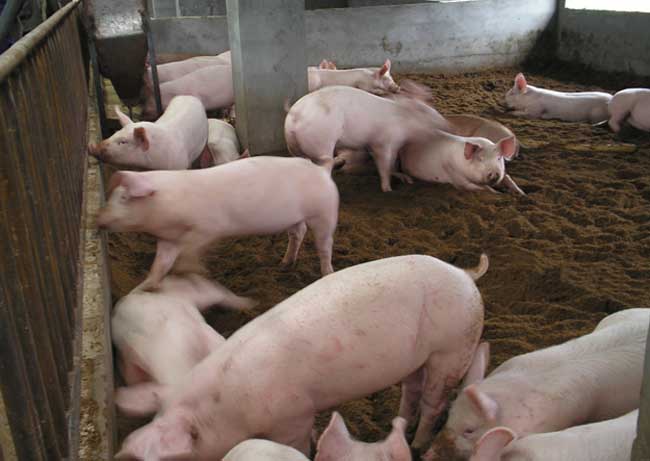
Biogas slurry pig farming is a technical measure that uses biogas slurry as an additive under conventional feeding conditions to promote pig growth. It features fast growth and a high feed conversion rate, and it reduces feed consumption, thereby opening up a new feed source. It is a safe technique to use and is well received by the vast number of pig farmers in rural areas.
Advantages of Biogas Slurry Pig Farming
When biogas slurry is added to feed, pigs have a strong appetite, their coats are glossy and shiny, and they get sick less often or not at all; at the same time, it saves feed and produces faster weight gain. Biogas slurry pig farming is safe and reliable, easy for farmers to master, and highly profitable. Conventionally raised pigs gain 0.38—0.53 kg per day; pigs fed with added biogas slurry gain 0.5—0.7 kg per day and can be sent to market 1—2 months earlier. The feed-to-meat ratio of pigs fed with added biogas slurry is 3.02—4.12:1. For raising a pig of the same body weight (such as 100 kg), feeding biogas slurry can save more than 80 kg of concentrated feed per pig compared with not feeding biogas slurry.
According to the inspection and appraisal of the pork quality of biogas slurry-fed pigs by the Food Quality Inspection Center of the Ministry of Agriculture, biogas slurry pig farming is safe and reliable. Before slaughter, the pigs' body temperature, spirits and appearance are normal, and their body development is good. After slaughter, the color, hardness, size and elasticity of all tissues and organs show no abnormalities, with no toxic substances, metal residues, infectious diseases or parasitic diseases. The muscle is relatively plump, and the meat quality is the same as that of conventionally raised pigs, with a fresh taste and no off-flavor. All inspection indicators meet the standards issued by the Ministry.
Specific Methods of Biogas Slurry Pig Farming
1. The method of using biogas slurry as an additive for pig farming is very simple. When raising pigs, use a manure ladle or another container to take an appropriate amount of the middle-layer biogas slurry from the outlet of the biogas digester, put it into the feed and stir it. In summer, after the feed is mixed, it can be left to stand for 3—5 minutes; in spring, it can be left to stand for 5—10 minutes; in winter, it can be left to stand for 10—15 minutes. The purpose is mainly to let the biogas slurry penetrate into the feed, and on the other hand to let its ammonia smell volatilize. When first adding biogas slurry, if the pig is not adapted to the odor of the biogas slurry, a small amount of biogas slurry can be added to the feed, and after it adapts, the amount of biogas slurry can be appropriately increased.
2. Because pigs differ in body weight, feed intake and feeding habits at different growth and development stages, the amount of biogas slurry added must also be suited to each pig and cannot be uniform. It is generally divided into three stages: First, the piglet stage (body weight below 25 kg). Piglets at this stage generally should not be given added biogas slurry; even if it is to be added, it should be added in small amounts. Second, the growing pig stage (body weight 25—50 kg). At this stage, the pig's bones develop rapidly and body mass increases. Begin adding biogas slurry, with about 0.5 kg of biogas slurry each time, 3—4 times per day. If a small amount of bone meal or fish meal is added to the feed, the weight-gain effect is even more significant. Third, the fattening stage (50—100 kg). At this stage, the pig develops in an all-round way, has a large appetite and gains weight quickly, so the amount of biogas slurry should also be increased to about 1 kg each time, 3 times per day. When the pig's body weight reaches more than 100 kg, biogas slurry feed may still be added, but the weight-gain rate slows down. When it exceeds 120 kg, the weight-gain rate is not much different from that of conventionally raised pigs. If it is not sent to market for a long time, the addition of biogas slurry can be stopped.
Mix the feed raw with biogas slurry until it is semi-dry and semi-wet. If the amount of biogas slurry is insufficient, clean water can be added separately. The standard is that the pig finishes the feed with none left. The amount of biogas slurry additive each time should be controlled according to the concentration of the biogas slurry; if the biogas slurry is more concentrated, a little less can be added. Never add more just because the pig likes it very much, or add less or even none because it does not like it, as this will disrupt the pig's taste adaptability and is very unfavorable to the pig's growth.
Precautions for Biogas Slurry Pig Farming
1. Biogas slurry from normally fermenting biogas must be used. Biogas slurry from digesters that do not produce gas, from diseased digesters, or from biogas digesters into which toxic substances have been put must never be used for pig farming.
2. For newly built digesters or biogas digesters with a large feed replacement, biogas slurry can only be used after feed has been added for one month of normal gas production and utilization; otherwise, it cannot be used because the acidity is too high or the crude fiber and crude protein have not been fully decomposed and pathogenic factors have not been fully killed.
3. When taking biogas slurry from the outlet of the biogas digester, the floating scum should be pushed aside and the middle-layer clear liquid should be ladled out. Feed the pigs according to the required time; it must not be left to stand for too long.
4. The acidity and alkalinity of the biogas slurry should preferably be neutral, that is, the pH value is between 6.5—7.5.
5. Biogas slurry is only an additive and cannot replace the basic raw materials. The effect of the additive can only be shown on the basis of meeting the feed required for pig growth, so biogas slurry should be added as required.
6. Deworming measures should be taken. After removing the pig's intestinal parasites, biogas slurry can then be used for pig farming.
7. When starting to add biogas slurry for pig farming, observe the pig's dynamic behavior, with special attention to the shape of the feces. If the pig is found to have diarrhea or the feces are cake-shaped, the amount of biogas slurry should be appropriately reduced, and biogas slurry should be added again after the symptoms disappear.
8. After a sow has given birth and been weaned, the amount of biogas slurry fed should be reduced or its use temporarily suspended, so as to avoid too-rapid fattening affecting estrus and lowering the conception rate.
9. New material should be put into the biogas digester regularly to help increase the organic components in the digester. Pesticides and animal carcasses killed by pesticides must not be put into the biogas digester.