What are the prevention and control methods for porcine circovirus disease?
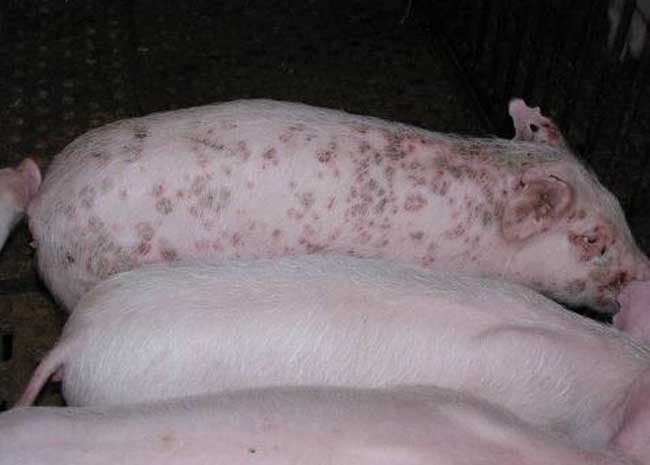
Porcine circovirus is classified taxonomically in the family Circoviridae, genus Circovirus, and is one of the smallest known animal viruses. The virion is 14-17 nm in diameter, has an icosahedral symmetric structure, has no envelope, contains covalently closed single-stranded circular negative-sense DNA, and has a genome size of about 1.76 kb. PCV has considerable resistance to external physical and chemical factors; it can survive for a period even in an acidic environment at pH 3 and at a high temperature of 72 degrees C, is not inactivated by chloroform, and has no hemagglutinating activity. Two serotypes of PCV are currently known, namely PCV1 and PCV2. PCV1 is a non-pathogenic virus. PCV2 is a pathogenic virus. Pigs are highly susceptible to PCV2, and infected pigs can shed the virus in nasal fluid, feces and other waste, infecting pigs of different ages through the oral and respiratory routes.
Clinical symptoms of porcine circovirus disease
1. Clinical symptoms of PMWS: The most common is progressive emaciation or stunted growth in pigs, which is also a necessary clinical basis for diagnosing PMWS. Other symptoms include anorexia, depression, slow movement, pale skin, rough coat, and difficulty breathing, with coughing as a characteristic respiratory disorder. Less commonly observed symptoms are diarrhea and central nervous system disorders. The incidence rate is generally very low while the mortality rate is high. Superficial lymph nodes on the body surface become enlarged, and the swollen lymph nodes can sometimes be palpated, especially the superficial inguinal lymph nodes. Anemia and visible mucosal jaundice. Not all of the above clinical symptoms may be seen in a single pig, but all symptoms can be seen in an affected herd. Gastric ulcers, lethargy, central nervous system disorders and sudden death are relatively rare. The vast majority of PCV2 infections are subclinical. General clinical symptoms may be related to secondary infection, or may be caused entirely by secondary infection. Under factors such as poor ventilation, overcrowding, foul air, mixed rearing, and infection with other pathogens, the disease markedly worsens, with a general mortality rate of 10%-30%.
2. Symptoms of congenital tremor: Trembling ranges from mild to severe, and the number of affected pigs in a litter also varies greatly. Severely trembling affected piglets often starve to death within 1 week after birth because they cannot suckle. Piglets that survive past 1 week can live on and recover by 3 weeks of age. The trembling is bilateral, and stops when the piglets lie down or sleep. External stimuli such as a sudden noise or cold can trigger or intensify the trembling. Some pigs never fully recover and continue trembling throughout the growing and fattening periods. Affected litters are often born to newly introduced young breeding pigs, which indicates that these seronegative breeding pigs were exposed to PCV during the critical period of pregnancy.
3. Common mixed infections: PCV infection can cause immunosuppression in pigs, making the body more susceptible to other pathogens, which is also the reason circovirus is associated with mixed infections with many pig diseases. The most common mixed infections include PRRSV, PRV (pseudorabies virus), PPV (parvovirus), Mycoplasma pneumoniae, Pasteurella multocida, PEDV (porcine epidemic diarrhea virus), and SIV (swine influenza virus). Some are dual infections or triple infections, and the mortality rate of the affected pigs will also be greatly increased, sometimes reaching 25%-40%.
Defense mechanisms against porcine circovirus disease
There is currently no effective treatment for porcine circovirus disease, and combined with the decline in production performance and high mortality of affected pigs, this disease is particularly important. Moreover, because of persistent PCV2 infection, this disease is even more economically devastating. The use of antibiotics and good management help solve the problem of concurrent infections.
1. Strengthen feeding management
Reducing stocking density, implementing a strict all-in-all-out system and mixing groups, reducing environmental stress factors, controlling concurrent infections, ensuring a stable immune status in the herd, strengthening internal and external biosecurity measures on the pig farm, and ensuring that pigs come from clean farms when purchasing are effective measures to prevent and control this disease and reduce economic losses. The proprietary disinfectant Virkon S can effectively kill circovirus when used for disinfection at a 1:250 dilution, so it can be applied for terminal disinfection between batches of pigs.
2. Do a good job of immunization against the main infectious diseases of pigs
The occurrence of PCV2 and its related pig diseases also requires additional conditions or co-factors to induce clinical symptoms. The experience of countries around the world in controlling this disease is to carry out appropriate active and passive immunization against common sources of infection, so doing a good job of vaccination against swine fever, porcine pseudorabies, porcine parvovirus disease, asthma and blue ear disease on the pig farm, and ensuring the safety of fetuses and suckling piglets, is key. Therefore, implementing a reasonable immunization program for sows based on different possible pathogens and different vaccines is crucial.
3. Artificial passive immunization
Serum therapy can be adopted. Collect blood from fattening pigs on the farm (blood from healthy culled breeding pigs is best), separate the serum, and inject it intraperitoneally into weaned piglets.
4. Use of autogenous vaccines
Once this disease occurs on a pig farm, the internal organs of affected pigs can be processed into an autogenous vaccine, and according to clinical practice, the effect is good. But at present there are two viewpoints: one is to immunize sows and weaned piglets at the same time; the advantage is that the immune effect is fast, and the disease can basically be controlled within 1-2 months. The disadvantage is that if inactivation is not thorough, the disease will persist for a long time. The second is to immunize only weaned piglets; the advantage is that immunization safety is good, and the disease will basically not persist for a long time. The disadvantage is that the immune effect is slow, and it takes about half a year to control the disease.
5. Active immunization with "infectious" material
"Infectious" material refers to the feces of infected pigs on the farm, stillborn fetuses, mummified fetuses, etc., used to feed sows, especially first-litter sows before mating, which can achieve better results. If sows with a certain level of antibodies are given supplementary feeding after 80 days of pregnancy, a higher immune level can be produced and passed to piglets through colostrum. This method is not only effective in preventing and controlling this disease and protecting the health of fetuses and suckling pigs, but also has a good effect on reproductive disorders caused by other enteroviruses. However, this method must be used very cautiously; if there are small pigs on the farm, it will cause artificial infection.
6. Drug prevention
Preventive medication and treatment are highly advisable for controlling bacterial mixed infections or secondary infections. However, the pathogens and mechanisms by which PCV2 causes related pig diseases are not yet fully understood, so specific control measures cannot be relied on entirely; only by simultaneously carrying out effective comprehensive measures can twice the result be achieved with half the effort.
(1) Medication for piglets: Suckling piglets are injected 3 times with Dexamycin (long-acting oxytetracycline, 200 mg/mL, 0.5 mL each time) at 3, 7 and 21 days of age, or injected with ceftiofur (500 mg/mL) 0.2 mL at 1 day and 7 days of age and at weaning. From 1 week before weaning to 1 month after weaning, feed with tiamulin (50 mg/kg) + chlortetracycline or oxytetracycline or doxycycline (150 mg/kg) mixed into the feed, while providing amoxicillin (500 mg/L) in drinking water.
(2) Medication for sows: For sows at 1 week before farrowing and 1 week after farrowing, add tiamulin (100 mg/kg) + chlortetracycline or oxytetracycline (300 mg/kg) to the feed.
7. Comprehensive prevention and control plan
(1) Farrowing period: all-in-all-out for piglets, and cleaning and disinfection between two batches of pigs. Sows should be cleaned and treated for parasites before farrowing. Limit cross-fostering, and if it is truly necessary, it should also be limited to within 24 hours after farrowing.
(2) Weaning period: pens are small, in principle one litter per pen, and pen partitions are solid. Adhere to strict all-in-all-out, and have an independent manure and urine discharge system separated from neighboring houses. Reduce stocking density: >0.33 sq m/pig. Increase feeder space: >7 cm/piglet. Improve air quality: NH3<10×10-6,CO2<0.1%,相对湿度<85%。猪舍温度控制和调整:3周龄仔猪为28 ℃,每隔一周调低2 ℃,直至常温。批与批之间不混群。
(3) Growing and fattening period: pens are small, with wall-type partitions. Adhere to strict all-in-all-out, empty pen, cleaning and disinfection systems. Pigs removed from post-weaning pens are not mixed into groups. Pigs in the entire fattening pen are no longer mixed into groups. Reduce stocking density: >0.75 sq m/pig. Improve air quality and temperature.
(4) Others: an appropriate vaccination plan. The nursery house must have independent drinking water medication facilities. Strict health care measures (strict disinfection during tail docking, teeth clipping and injection). Move sick pigs to the treatment room or cull them as early as possible.
Prevention and control measures for porcine circovirus disease
1. Experimental veterinary biosecurity measures: Treat introduction work seriously; careless introduction is often the main cause of outbreaks. Introduced replacement gilts should undergo strict quarantine, and purchased breeding boars and semen must be free of type II circovirus infection.
2. Improve feeding management, reduce stress, and formulate rations reasonably. Pay attention to ventilation and warmth, keep the pig house dry, improve the air quality of the pig house, and reduce ammonia concentration. Castration and injection must follow good hygiene and disinfection habits.
3. Cats and dogs should not be kept on the pig farm, mosquitoes and flies should be regularly controlled, and bait should be used to kill rodents. Do a good job of purifying the breeding herd, and adhere to self-breeding and self-raising. Conduct regular monitoring, reasonably formulate immunization programs, avoid immunizing piglets too early or too much, and reduce the impact of various stress factors on piglets.
4. During the susceptible period to porcine type II circovirus, it is best not to inject vaccines that cause greater stress, such as piglet paratyphoid vaccine, foot-and-mouth disease vaccine, and asthma vaccine. For certain bacterial infectious diseases that can be prevented by drugs, such as swine erysipelas, swine pasteurellosis, swine streptococcosis, and piglet paratyphoid, vaccine injections can be temporarily suspended.