What are the prevention and treatment methods for piglet paratyphoid?
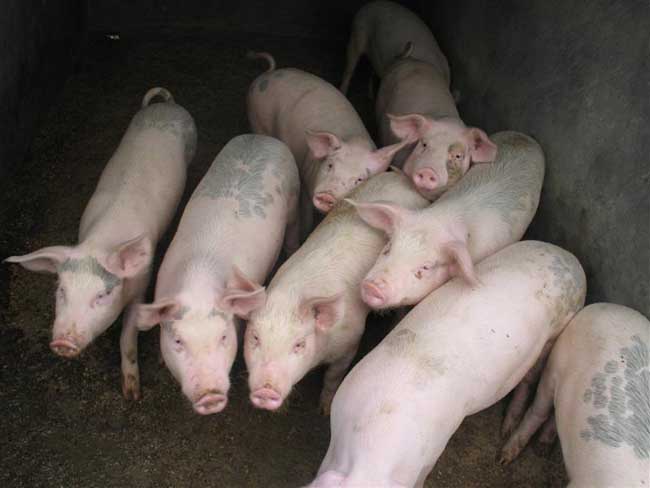
Piglet paratyphoid, also known as swine salmonellosis, is an infectious disease of piglets caused by Salmonella. The acute form is septicemia, and the chronic form is necrotizing enteritis. It often occurs in piglets under 6 months of age, and is especially common in piglets aged 2 to 4 months. It can occur in all four seasons, with a high incidence during rainy and humid periods, cold weather, and seasonal transitions.
Symptoms of piglet paratyphoid
1. Acute (septicemic) type
Mostly seen in piglets around weaning (2 to 4 months old), with elevated body temperature (41 to 42°C), refusal to eat, and rapid death. Congested purple patches appear on the skin at the base of the ears, chest, and underbelly, and dry gangrene appears at the ear tips. In the later stage, diarrhea, difficulty breathing, coughing, and lameness are seen, with death occurring after 1 to 4 days. The incidence rate is below 10%, and the mortality rate can reach 20% to 40%.
2. Subacute and chronic types
More commonly seen, resembling intestinal-type swine fever, with elevated body temperature (40.5 to 41.5°C), aversion to cold, conjunctivitis, mucous and purulent discharge, adhesion of the upper and lower eyelids, and corneal clouding and ulcers. There is intractable diarrhea, with watery feces that may be yellow-green, dark green, or dark brown, often mixed with blood, necrotic tissue, or fibrin flakes, and having a foul odor. Symptoms fluctuate, recurring repeatedly and lasting for several weeks, accompanied by emaciation and dehydration leading to death. Some diseased pigs develop diffuse crusty eczema on the skin in the middle and late stages of the disease. The course of the disease can last for several weeks, ultimately leading to death or becoming a runt pig.
3. Acute type
Acute-type piglet paratyphoid presents as purple patches on the skin, an enlarged spleen that is dark blue and rubbery, and cord-like enlargement of the mesenteric lymph nodes; the liver is also enlarged, congested, and hemorrhagic, with small yellow-gray nodules; hemorrhages occur on the mucous membranes and serous membranes throughout the body: catarrhal hemorrhagic gastroenteritis.
Preventive measures for piglet paratyphoid
1. Keep the piglet pen warm, clean, and dry. The feed trough must be clean, and manure should be removed promptly.
2. Strengthen feeding management. Newborn piglets should suckle colostrum early, and creep feed and supplemental feed should be introduced early. When piglets are weaned and grouped, do not change pens.
3. Around the time of weaning, piglets can be given attenuated lyophilized vaccine orally for prevention.
4. After piglets become ill, isolate and treat them promptly, and thoroughly disinfect the pig house; for piglets that have not yet become ill, add 100 grams of chlortetracycline per ton of feed for prevention.
5. Regular health care. Add 1 kg of Yinqiao San and 100 grams of chlortetracycline per ton of piglet feed or per ton of drinking water, starting on the day of weaning and using continuously for 7 days. In addition, 7 days before weaning, 100 grams of Lihuning can be added per 200 liters of drinking water for both sows and piglets, using continuously for 3 to 5 days.
Treatment methods for piglet paratyphoid
The first choice for treating piglet paratyphoid is Changdushenzhen, administered by intramuscular or intravenous injection. Each set of this product can be used for 100 kg of body weight, injected once a day, for a course of three days. For severe cases, the dosage may be increased as appropriate. (For severe cases, first inject one dose of atropine at 1-3 ml per pig, and at the same time orally administer bismuth subnitrate or tannalbin + active peptide carbon orally, for three consecutive days.)
For diseased piglets, traditional Chinese medicine treatment can also be used. The traditional Chinese medicine formula is: Patrinia herb 40 grams, coix seed 30 grams, honeysuckle 20 grams, Salvia miltiorrhiza, Sophora flavescens, and Smilax glabra 18 grams each, Corydalis bungeana 15 grams, moutan bark 10 grams, and Aucklandia lappa 6 grams. Decoct in water and administer orally to piglets, once in the morning and once in the evening, continuously for 3 to 5 days.