What are the prevention and control measures for metritis in sows
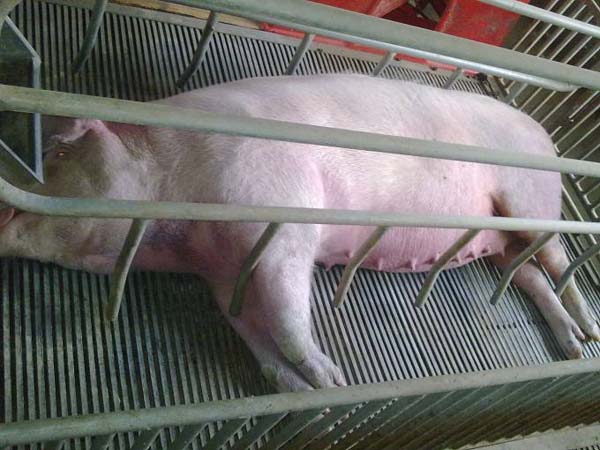
Metritis in sows is inflammation of the uterus caused by infection during or after farrowing. The causes include: difficult labor, retained placenta, uterine prolapse, unclean instruments and rough handling during assisted delivery causing uterine injury, postpartum infection, as well as incomplete disinfection during artificial insemination, and pathogenic bacteria or inflammatory secretions in the boar's reproductive organs or semen during natural mating. When sows are malnourished, too thin, or have reduced resistance, non-pathogenic bacteria in their reproductive tract can also cause the disease.
Symptoms
Metritis in sows can be divided into acute and chronic endometritis.
1. Acute endometritis. Systemic symptoms are obvious: the sow's body temperature rises, she is listless, and her appetite decreases or is completely lost. She strains frequently, especially when she has just lain down, and white mucus or foul-smelling, dirty reddish-brown mucus or purulent discharge flows from the vagina. The discharge sticks to the base of the tail and has a foul, offensive odor. Sometimes the sow shows symptoms of abdominal pain. Acute metritis mostly occurs after farrowing and after abortion.
2. Chronic endometritis. It is mostly converted from acute endometritis when treatment is not timely. The systemic symptoms of the affected pig are not obvious. The affected pig may periodically discharge a small amount of turbid mucus from the vagina. Sows often have delayed estrus, or abnormal estrus, and even if they come into estrus regularly, they repeatedly fail to conceive after mating.
Prevention and control measures
1. Treatment
① In the acute postpartum stage, the inflammatory secretions retained in the uterus should first be cleared out, and the uterus should be thoroughly flushed with 1% saline or 0.02% benzalkonium bromide solution, 0.1% potassium permanganate solution, or 0.2% furazolidone solution. After flushing, all residual solution must be expelled until the drained washing fluid is completely transparent. Finally, inject 100 ml of Gongyanjing into the uterus.
② For systemic therapy, antibiotics or sulfonamides can be used. Penicillin 400,000 to 800,000 IU and streptomycin 1,000,000 IU, intramuscular injection twice daily. When using chlortetracycline or oxytetracycline hydrochloride, 40 mg per kg of body weight for sows, intramuscular injection twice daily; sulfadiazine sodium 0.05 to 0.1 g per kg of body weight, intramuscular or intravenous injection twice daily.
③ For pigs with chronic endometritis, penicillin 200,000 to 400,000 IU and streptomycin 1,000,000 IU can be injected deep into 20 mL of high-pressure sterilized vegetable oil and infused into the uterus. In addition, subcutaneous injection of pituitrin 200,000 to 400,000 IU to promote uterine contraction and discharge the inflammatory secretions from the cavity.
④ Honeysuckle, coptis, anemarrhena, phellodendron, plantain, polyporus, alisma, and licorice 15 g each, decocted in water once and fed.
2. Prevention
To prevent this disease, the pig house should be kept clean and dry, and clean dry straw can be spread on the ground at the time of farrowing. When difficult labor occurs, assistance should be careful and cautious; the arms and equipment should be disinfected. After removing the fetus and placenta, the birth canal should be washed with a disinfectant solution and antibacterial drugs should be injected. Artificial insemination must be strictly carried out according to the rules and with disinfection.