How to tell a cow's age? Learn these methods to judge it easily
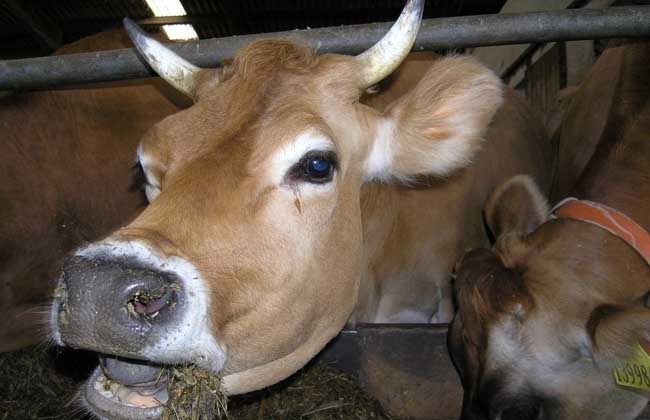
The growth, replacement and wear of teeth follow a certain pattern. A cow's age can be determined by changes in its incisors, that is, by the appearance of milk teeth or their replacement by permanent teeth, as well as the degree of wear on the permanent teeth. Let us take a look together below!
Identifying age by appearance
Appearance can only indicate whether a cow is old or young, not its exact age. Generally, a young cow has a glossy coat, moderate coarseness, soft and elastic skin, full eye sockets, bright eyes, and lively, vigorous movements, while an old cow is the opposite: an unsteady standing posture in the limbs, a messy and lusterless coat, dry skin, sunken eye sockets, dull eyes, wrinkled eye rims, and slow movements. In buffalo, besides the changes above, the coat color darkens and the hair density decreases with age.
Identifying age by horn rings
Horn rings are like the annual rings of a tree, generally formed during seasons when forage is scarce, or during pregnancy, due to insufficient nutrition. Each time a cow gives birth, a concave ring forms on the surface of the horn. Therefore, the number of horn rings plus the breeding age equals the cow's age. However, this is only accurate under normal conditions. If a cow is barren, aborts, falls ill, or has unbalanced nutrition, the horn rings will differ in depth and width, and the boundaries are often unclear, with more than one forming each year. Therefore, usually only the large and obvious horn rings are counted. Otherwise, errors in judgment easily occur. Note that for breeding bulls kept under good feeding conditions, there are generally no horn rings on the horns.
Identifying age by teeth
1. Pair teeth: A cow's milk teeth (the teeth that grow after birth) are small and white, with a distinct neck and relatively large gaps between teeth. Permanent teeth (the new teeth that replace the milk teeth after they fall out) are large and thick, slightly yellow, neatly arranged, and closely packed together. Generally, a calf's first pair of milk incisors emerges about half a month after birth, and by 4-5 months of age all 4 pairs of milk incisors have grown in, after which they gradually wear down and become shorter. In buffalo, around 3 years of age, and in yellow cattle, at 1.5-2 years, the first pair of milk incisors falls out. The first pair of permanent teeth grows in, namely the pair teeth, and thereafter 1 pair falls out and is replaced each year, gradually going from 4 teeth, to 6 teeth, to 8 teeth (full mouth). Generally, buffalo reach a full mouth at around 6 years, and yellow cattle at 4.5-5 years.
2. Tooth marks: After a cow reaches a full mouth, the permanent teeth begin to wear down in sequence. The worn surface gradually changes from a rectangular pattern to a black oval and then to a triangle, and the gaps between teeth gradually widen until the tooth roots are exposed and even the permanent teeth fall out. The rectangular pattern appearing on the worn surface of the teeth is the mark. In buffalo at around 7 years, and in yellow cattle at 5.5-6 years, 2 marks appear, and in this way 1 pair wears down each year until 8 marks, at around 10 years in buffalo, and 8.5-9 years in yellow cattle.
3. Tooth beads: The black oval pattern appearing on the worn surface of the teeth is the “bead”. In buffalo at around 11 years, and in yellow cattle at 9.5-10 years, 2 beads appear, and so on until 8 beads (full beads, also called old mouth), which is around 14 years in buffalo and 12.5-13 years in yellow cattle. A buffalo over 14 years and a yellow cow over 13 years have reached old age, have basically lost their draft performance, and have also basically lost their reproductive performance.