How Many Stomachs Does a Cow Have? Understanding the Structure of the Cow's Stomach in One Article
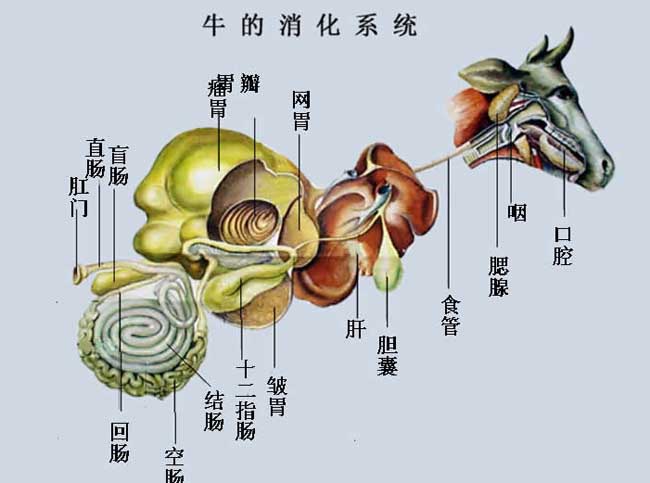
Do you know how many stomachs a cow has? Cows are different from us humans. Cows are the most representative herbivores, and they have 4 stomachs, namely the rumen, the reticulum, the omasum and the abomasum. Let's take a look at these stomachs of the cow together!
Rumen
The rumen of an adult cow can reach a volume of 151 liters and can hold 136 kg of contents. The functions of the rumen are: 1. Temporarily storing feed. 2. Microbial fermentation.
Reticulum
The reticulum is located at the front part of the rumen. In fact, these two stomachs are not completely separated, so feed particles can move freely between them. The inner lining of the reticulum has a honeycomb-like structure, hence the common name honeycomb stomach. The main function of the reticulum is like a sieve; heavy objects swallowed along with the feed, such as nails and wire, are retained in it.
Omasum
The omasum is the third stomach, and its inner surface is lined with tissue-like folds. The role of the omasum is not yet very clear. It is generally believed that its main function is to absorb water from the feed and to squeeze and grind the feed.
Abomasum
The cow's abomasum is also called the true stomach. Its function is the same as the stomach of monogastric animals: it secretes digestive juices and moistens the chyme. The digestive juices of the true stomach contain enzymes that can digest part of the protein, but basically do not digest fat, cellulose or starch. When the feed leaves the true stomach it is watery, and then it reaches the small intestine for further digestion. Undigested material is excreted from the body through the large intestine.
After a cow eats, the food flows through these 4 stomach compartments in order, and part of it returns to the mouth to be chewed again before entering the omasum; this process is called "rumination." These 4 stomach compartments are not arranged in a straight line, but exist interwoven with one another.