What are the uses of cow dung? Make rational use of it and turn waste into treasure
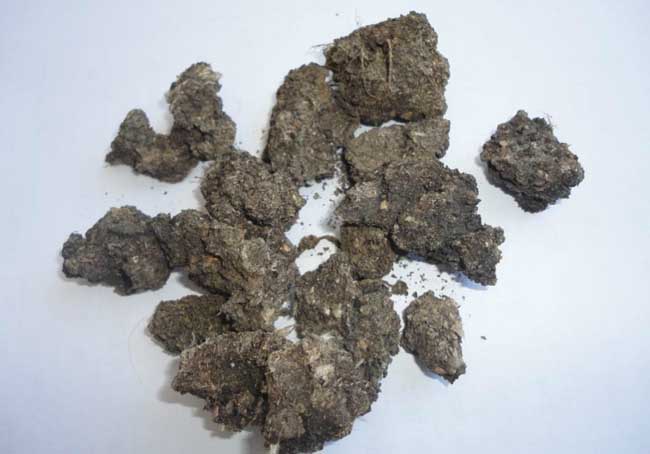
In most people's impressions, cow dung may just be stuck on the outside of yurts as fuel, but in fact cow dung now has a great many uses. In the past it was used as fertilizer to grow vegetables and cash crops, which could bring very high returns and turn dung into treasure. Cow dung can also be used as a base fertilizer, selling for 300 yuan per ton. Cow dung can also be used as a feed additive to raise pigs, fish, chickens and so on, and with the development of technology, using cow dung fermentation to generate electricity has become a new direction.
Cow dung can be used as a base fertilizer
Cow dung is a very good organic fertilizer. Many farmers use it as fertilizer with quite good results. When applying it, the following points should be noted:
1. The cow dung used must be thoroughly decomposed and fully fermented and broken down before use; otherwise, the heat released during fermentation may harm the plants, and it may also introduce pathogens into the soil.
2. It is recommended for use as a base fertilizer, applied in furrows. The nutrient release of cow dung is usually relatively slow, and its salt content is generally relatively high, so it is suitable as a base fertilizer, preferably applied in furrows with soil covering afterward, and broadcast application is not recommended.
If it is broadcast on the surface, the amount must be controlled and the concentration must not be too high, so as to avoid fertilizer burn that harms the plants.
Fermented cow dung can be used to raise pigs
Using cow dung to raise pigs is not only low in cost but also convenient to operate. As long as the technique is mastered, 1 person can feed 30 to 40 pigs. The method of using fermented cow dung to raise pigs is:
1. After mixing dried cow dung and coarse bran evenly, add fermentation powder. The amount of fermentation powder depends on the temperature. At 25°C, add 500 grams of fermentation powder for every 50 kg of cow dung and 50 kg of coarse bran.
2. After 2 to 3 days of piling and fermentation, when the cow dung turns from black to yellow and gives off an alcoholic smell, it can be used to feed pigs.
Cow dung can be used to grow mushrooms
Wang Liwu, deputy district head of Taobei District, Baicheng City, found that because dairy farming in Taobei District has developed relatively quickly, cow dung was all over the streets but no one used it. The main reason was that the grass seeds contained in cow dung would cause large amounts of weeds to grow in the crop fields, so growers generally did not use cow dung as fertilizer for farming. Using cow dung as a raw material for edible mushroom cultivation, the high temperature during the fermentation of the material pile can kill the grass seeds in the cow dung, and after the mushrooms are produced, the spent mushroom sticks returned to the fields, especially to paddy fields, are yet another rare organic fertilizer.
Experimental demonstrations have shown that edible mushrooms produced using cow dung as a raw material taste good, with quality significantly improved, and the success rate of mushroom sticks producing mushrooms also significantly improved, reaching more than 98%. Compared with the traditional use of wheat bran, soybean meal and cornmeal as raw materials, the average production cost per mushroom stick was reduced by about 40%, and the yield increased by more than 50%, with very considerable economic benefits.
Cow dung can be used to produce seedling soil
The production of seedling soil from cow dung comprehensively utilizes livestock and poultry manure and crop straw to produce cultivation substrates and bio-organic fertilizer, reducing environmental pollution and meeting the seedling-raising needs of 200,000 mu of protected vegetables in Ningxia and surrounding provinces and regions. According to project leader Feng Xihong, at present the seedling soil produced by fermenting cow dung sells well, with annual sales across the northwest region of more than 200,000 bags and a market share of 50% in Yinchuan.
Cow dung can be used to grow vegetables
Sangzhuang Village in Fushan Town has a vegetable processing company and a milk factory, and the processed vegetable products are exported to the United States, Canada and other places. Villagers feed organic vegetable leaves and processing waste as green feed to dairy cows, then compost cow dung into fertilizer and return it to the fields for organic vegetable production. This alone increases the whole village's annual income by more than 3.5 million yuan. Dongshu Town has nearly 40,000 mu of grain fields, of which each mu of corn produces about 1,500 kg of straw. It happens that one cow in the town's dairy farming park eats about 6,000 kg of silage feed a year, requiring a total of 18 million kg, thus turning more than 20,000 mu of corn straw from waste into treasure and ultimately avoiding the environmental pollution caused by burning.
Cow dung biogas can be used to generate electricity
A farm technician explained that a loader is used to shovel cow dung into the separator, and the separator separates out mud, sand, firewood and grass. After separation, it is put into a soaking pit. After soaking for a certain period, it is pumped from the soaking pit to a slurry mixing tank. After being adjusted to a certain concentration, it is then pumped into the biogas fermentation tank at set times and in set amounts using our numerical control equipment. The blue one is the biogas fermentation tank. We use medium-temperature fermentation and medium-high temperature fermentation. The biogas produced by fermentation is stored in the white gas storage holder above, and then transported downward through pipelines to the electrical conversion system, where the biogas is desulfurized, dehydrated and decarbonized, and after that, it is transported through pipelines to the generator for biogas power generation.