How many jin does a cow actually weigh?
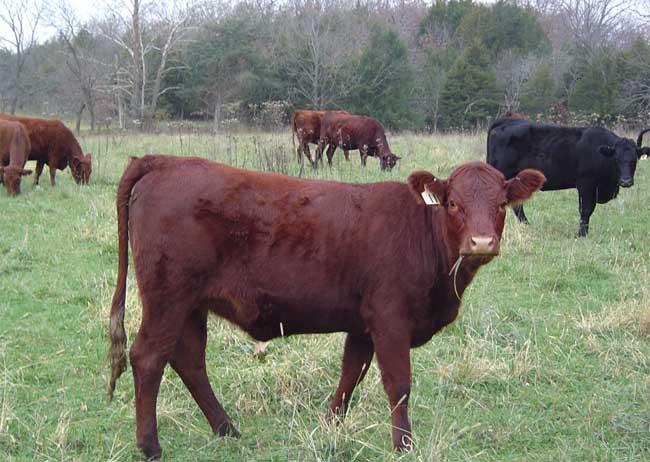
Cattle are a type of large livestock, and their body weight is much heavier than that of other livestock. However, due to differences in cattle breeds and sizes, cattle show characteristics such as relatively large differences in breed weight and relatively large differences in individual weight. Below, the editor of Qiannong Network will give you a detailed introduction to how much a cow actually weighs.
How many sheep does one cow weigh as much as?
According to the introduction above, everyone now understands that the body weight of an adult cow ranges from 500 jin to 2400 jin, while the body weight of an adult sheep is about 100 jin to 200 jin. Depending on the difference in body weight, one cow can be equivalent to the body weight of 3 to 24 sheep.
How many pigs does one cow weigh as much as?
A pig weighs about 200 jin to 300 jin, and the body weight of one cow is roughly equivalent to the body weight of 2 to 12 pigs.
Which is heavier, a cow or a donkey?
An adult donkey weighs about 300 jin to 800 jin, while an ordinary adult bull weighs about 2400 jin, which is 1600 jin more than the largest donkey.
How many chickens does one improved beef cattle weigh as much as?
The slaughter weight of a fattened improved beef cattle is about 1500 jin, while the slaughter weight of a meat chicken is about 5 jin. One improved beef cattle is equivalent to the body weight of 300 chickens.
How much does a cow actually weigh?
1. The birth weight of a calf is about 50 jin to 80 jin. Generally, the birth weight of small local yellow cattle calves in China is about 50 jin, the birth weight of medium-sized cattle breeds is about 50 jin, and the birth weight of large cattle breeds is about 80 jin. Individual calves can have a birth weight of up to 100 jin, but the dams of such calves often experience dystocia. If not handled properly, it can also lead to the death of the calf from suffocation and the death of the cow from dystocia. Therefore, during breeding, cattle farmers must reasonably proportion cattle feed, feed reasonably, and ensure cattle have sufficient exercise, so that healthy calves can be produced.
2. Cows are the foundation of herd development. A large-scale cattle farm should have a healthy, high-yielding foundation cow herd. The weight of cows also depends on the breed. The adult cow weight of a small local yellow cattle is about 300 jin to 600 jin. The adult cow weight of an improved yellow cattle (such as Luxi yellow cattle, Yanbian cattle, etc.) is 800 jin to 1000 jin. The adult cow weight of an improved beef cattle (such as Simmental cattle, Limousin cattle, etc.) is 1500 jin to 1600 jin. When choosing foundation cows, everyone must choose cows with a larger body shape and better production performance. But it is not necessarily true that the heavier the better. If a cow is too obese, it should not be selected as a foundation cow, because such cows often have relatively low reproductive rates.
3. Bulls are an important guarantee for improving the herd. When cows are in estrus and being bred, excellent bulls must be selected. Generally, the adult bull weight of small local yellow cattle is 600 jin to 800 jin. The adult bull weight of an improved yellow cattle is 1000 jin to 1200 jin. The adult bull weight of an improved beef cattle is 2000 jin to 2400 jin, and the largest cow weighed 2800 jin. When selecting breeding bulls, bulls with a large individual size, good body shape, and strong sperm vitality must be selected, but likewise it is not true that the heavier the better. Generally, small local yellow cattle foundation cows should be bred with improved yellow cattle bulls, and should not be bred with small local yellow cattle bulls, because the cattle produced in this way are relatively small. They also should not be bred with improved beef cattle bulls, because the cattle produced in this way are relatively large and prone to dystocia. Improved yellow cattle foundation cows are generally bred with improved beef cattle bulls, which can better improve the quality of yellow cattle and increase growth speed and individual size. Improved beef cattle foundation cows are generally bred with excellent improved beef cattle bulls, so that better improved beef cattle calves can be bred.
4. Generally, local yellow cattle are fattened to about 500 jin for slaughter, improved yellow cattle are fattened to about 1000 jin for slaughter, and improved beef cattle are fattened to about 1500 jin for slaughter. Local yellow cattle fattening is mostly carried out by grazing, which can reduce feeding costs. The cost of confined feeding is relatively high, while local yellow cattle grow relatively slowly, so the profit from confined cattle is very low. Therefore, local yellow cattle are mostly fattened by grazing. Improved yellow cattle can be fattened by confined feeding, by grazing, or by a combination of half confined feeding and half grazing. Improved beef cattle are generally fattened by confined feeding. This fattening method has higher requirements for feed proportioning, and attention should also be paid to disease prevention and control.