How to Select Feeder Cattle? Selection Tips and Key Points Explained
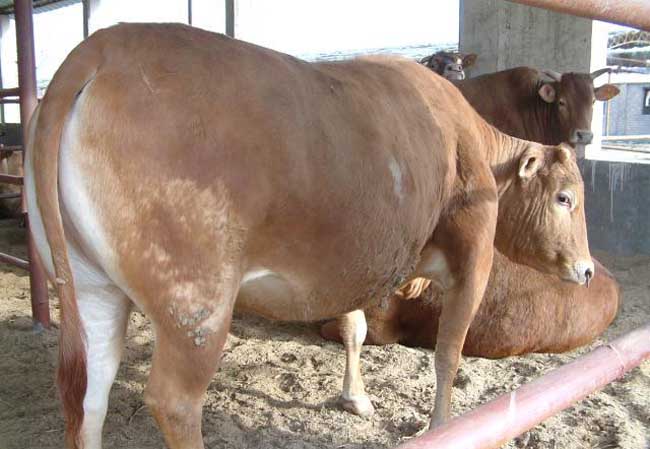
Feeder cattle are a type of cattle. First, choose feeder cattle that are crosses between local cattle and improved foreign beef breeds such as Charolais, Simmental, Limousin, and Hereford; second, choose Holstein bulls or crosses between Holstein cattle and local cattle. Such cattle have good meat quality, fast growth, and high feed conversion. Feeder cattle are characterized by a large body, flat and broad shoulders, a broad and deep chest, a straight and broad back and loin, a large rounded belly, curved ribs, broad hindquarters, a large head, large nostrils, a large and deep mouth corner, a broad and moist muzzle, a well-developed lower jaw, large and spirited eyes, fine and glossy coat, and soft, loose, elastic skin. When you pinch and pull the skin with your thumb and index finger, it stretches like a rubber band; when you insert your fingers and grasp, you get a large handful of skin. Such cattle put on more meat and are easy to fatten.
Selection Standards for Feeder Cattle
1. Choose a good breed: First, choose feeder cattle that are crosses between local cattle and improved foreign beef breeds such as Charolais, Simmental, Limousin, and Hereford; second, choose Holstein bulls or crosses between Holstein cattle and local cattle. Such cattle have good meat quality, fast growth, and high feed conversion.
2. Cattle with good body conformation: Feeder cattle for fattening should have a large body, flat and broad shoulders, a broad and deep chest, a straight and broad back and loin, a large rounded belly, curved ribs, broad hindquarters, a large head, large nostrils, a large and deep mouth corner, a broad and moist muzzle, a well-developed lower jaw, large and spirited eyes, a fine and glossy coat, and soft, loose, elastic skin. When you pinch and pull the skin with your thumb and index finger, it stretches like a rubber band; when you insert your fingers and grasp, you get a large handful of skin. Such cattle put on more meat and are easy to fatten.
3. Accurately judge the age of the cattle: The best age for selecting feeder cattle is between 1.2 and 2.0 years old; they fatten easily, have good meat quality, grow fast, and save feed.
4. Choose uncastrated bulls: The growth rate and feed utilization of bulls are both higher than those of steers. Practice has proven that the daily weight gain of uncastrated bulls is 13.5% higher than that of steers, and their meat quality is better than that of steers. Therefore, when selecting feeder cattle, choose uncastrated bulls as much as possible to improve the fattening effect.
5. Estimate body weight accurately: Generally, cattle weighing 300-400 kg are required. After more than three months of fattening, such cattle can reach a body weight of over 500 kg, meeting the standards for foreign trade export.
6. Choose cattle in good body condition: Good body condition yields high-quality carcasses; poor body condition means less fat deposition during fattening, which lowers carcass quality. Extremely thin cattle are often that way due to poor feed intake and digestion, or due to certain diseases, and such cattle are difficult to fatten. In addition, overcrowding during transport, excessively high or low temperatures, and windy and stormy weather can all cause a reduction in the cattle's body weight.
7. Choose healthy, disease-free cattle: Before purchasing cattle, each animal must be quarantined and inspected. Feeder cattle with infectious diseases and parasitic diseases must not be purchased. After purchase, they should first be isolated for observation and dewormed promptly. Only after about 2 weeks of observation and confirmation that they are disease-free can they be placed into the fattening herd. Their manure must be treated harmlessly.
Principles for Selecting Feeder Cattle
1. Choose excellent breeds.
2. Choose healthy cattle with strong growth vigor.
3. Body weight of over 300 kg.
4. Choose bulls aged 1—2 years.
5. Choose cattle with a gentle temperament.
6. Do not purchase cattle from epidemic areas.
Reference Standards for Feeder Cattle
1. Head. The head of a beef cow should be short and broad. The shape of the head, its size, and the direction of the horns differ among breeds.
2. Neck. When assessing the neck, note that the neck and the body should connect naturally. The neck of a bull is thicker and shorter than that of a cow.
3. Withers. They should be flat and broad. Note that the forelimbs must be well attached to the body and that free movement of the forelimbs is ensured. There should be no sharp, highly protruding, or sunken withers. Sunken withers are a sign of slack muscle tissue, so such cattle have lower draft and dairy productivity. Generally, the withers of bulls are more developed than those of cows; the withers of draft cattle are higher than those of dairy cattle; the withers of beef cattle and dual-purpose beef-and-dairy cattle are broader, while the withers of dairy cattle and draft cattle are relatively narrow.
4. Back and loin. They should be broad and flat, forming a horizontal line from the withers to the rump. A sagging back is a sign of weak constitution. Sagging backs often appear in old cattle and in cows that have calved many times, and such animals have low productivity and are unhealthy. Cattle raised under poor feeding and management conditions often develop an upward-curving carp back. This kind of back is usually accompanied by a narrow back. Any cow with a sagging back has low productivity and is unhealthy. The back and loin of beef cattle are relatively broad, those of dual-purpose cattle are next, and those of draft cattle and dairy cattle are relatively narrow.
5. Rump. It should be long, broad, and flat. A broad rump in cows is beneficial for reproduction, especially at calving, making it easier to deliver the calf. The rump of draft cattle has well-developed muscles, giving greater draft power. The rump of beef cattle should be even longer and broader, because the rump produces a very high yield of meat. A narrow, cone-shaped, downward-sloping rump is a major defect, and these defects often simultaneously cause weakness of the hind limbs and poor muscle development.
6. Tail. A fine and long tail hanging down to the hock is a sign of fine bone structure and high productivity. The tip of the tail should be covered with fine hair.
7. Chest. Cattle of all uses are desired to have a deep and broad chest. Viewed from the front of the animal, one can judge the width of the chest: protruding ribs, a chest that is semicircular and barrel-shaped, and a large distance between the two forelimbs indicate a well-developed chest. A large thoracic cavity means the heart and lungs within the body are also relatively well developed. Viewed from the side of the animal, one can see the depth and length of the chest. A deep chest means long shoulders; a shallow chest means short shoulders. The chest of bulls is more developed than that of cows; whether in depth, width, or barrel shape, it is better expressed than in cows. The chest of draft cattle and beef cattle is broader and fuller than that of dairy cattle.
8. Belly. The belly should have a large volume and a rounded shape, and should not sag or contract. A sagging belly is often accompanied by a sunken back. Especially early-maturing cattle and breeding bulls should not have a hay belly, and cows must absolutely not have a tucked-up belly.
9. Forelimbs and hindlimbs. When assessing the stance of livestock, look from the front, the side, and the rear. In any animal with excellent conformation, the forelimbs and hindlimbs must be set widely apart, with a proper, upright, and sturdy stance.
10. Skin and coat. The fineness of the hair is related to the thickness of the skin: thin skin means fine hair, thick skin means coarse hair. The skin of beef cattle is thicker and softer than that of dairy cattle; the skin of cattle grazed locally year-round is often relatively thick and coarse. The condition of the coat can be used to judge the health of the cattle. Healthy cattle have a smooth, glossy coat, and shedding proceeds quickly and evenly, whereas diseased and weak, emaciated cattle have a coarse, lusterless coat, and their shedding period is prolonged, with a very irregular shedding pattern.
11. Temperament of the cattle. Generally speaking, buy cattle with a gentle temperament, and do not buy cattle that are hot-tempered and fierce. Several characteristics of hot-tempered cattle are: red rims around the eyes, rotten eye margins, and two horns without tips. The larger the cattle's eyes, the more docile they are.