Analysis of Key Points of Rapid Fattening Technology for Feeder Cattle
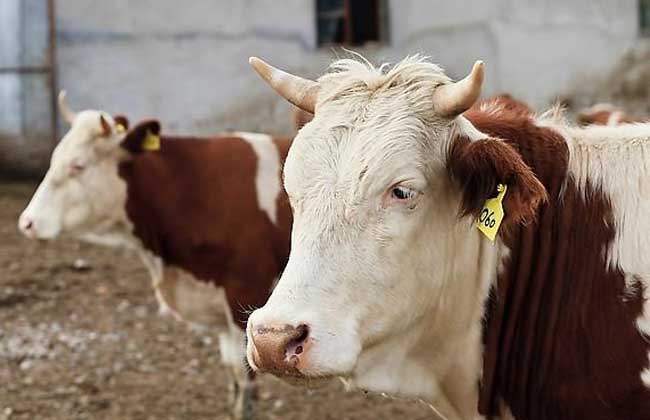
Feeder cattle generally refer to cattle aged 3 to 4 years, whose growth and development have completely ended, and whose skeleton and body shape have become fixed. After more than 150 days of intensive fattening on a high-concentrate, high-energy diet, they reach a body weight of 550 to 650 kg, meeting the standards for live cattle supplied to Hong Kong, China and for slaughter, and offering a high yield rate of processed cooked beef products, a short feeding period, a fast cycle and obvious economic benefits.
Selection of Feeder Cattle
1. Age selection: Choosing cattle around 1.5 years old for fattening can produce high-grade quality beef. However, Qinchuan cattle grow and develop relatively slowly, and under traditional feeding methods, their skeleton and body shape only reach the requirements for fattening at 3 to 4 years of age. Therefore, to obtain good results and benefits from short-term intensive fattening, healthy 3-to-4-year-old Qinchuan steers should be selected. Steers over 6 years old, culled foundation cows and other old or disabled cattle have poor fattening results and low benefits, so they are not suitable for producing mid-to-high-end beef and can only produce ordinary fattened cattle.
2. Body shape and appearance: Short head and broad forehead, large mouth and thick neck, broad, deep and long body, well-opened forequarters, thin and soft hide, relatively large frame, obvious angularity, broad and level back and rump, with fattening potential, body height 137 cm, body slant length 150 cm, body weight over 350 kg. However, those with an overly short body, narrow back and arched waist, pointed rump, and thin and weak condition are not suitable.
3. Fattening time: Spring and autumn are the best seasons to choose. In the high-temperature season from June to August, measures such as water curtains, roof sprinkling and fans should be used to prevent heatstroke and cool down, reduce heat stress; in winter, insulation measures should be taken. The most suitable environmental temperature for beef cattle fattening is 4 to 20°C.
Feeding of Feeder Cattle
1. Recovery period (10 to 15 days): Due to stress responses from factors such as transport, environment and management methods, the cattle are fatigued and lose 5 to 15% of their body weight, requiring a period of recovery to adapt to the new environment, grouping and feeding management methods. The diet is mainly high-quality green hay and wheat straw, with sufficient drinking water. No concentrate is given on the first day; a small amount of wheat bran is given on the second day; after 3 days, the concentrate is maintained at the amount originally fed by the farmer or farm. Quarantine, epidemic prevention, deworming and isolation observation are also completed.
2. Transition period (15 to 20 days): Gradually realize the shift from the original roughage type to the concentrate type. After the feeder cattle recover their body condition and adapt, reduce green hay, increase wheat straw, feed 4 to 6 kg of roughage per head per day, maintain crude protein in the concentrate at 13 to 15%, gradually increase the feeding amount to 4 kg/day, and ensure 37 to 52 MJ/day of net energy per head.
3. Fattening period: At this stage, stop feeding green hay and prohibit feeding green, juicy feed. Mainly feed wheat straw and rice straw, with a daily feeding amount of 3 to 4 kg per head; gradually increase the concentrate by about 2 kg per head per week, maintain crude protein at 8 to 10%, and stabilize the daily concentrate feeding at 6 to 8 kg per head until marketing.
Management of Feeder Cattle
1. Sufficient drinking water: Free access to water should be provided, or water should be given no fewer than 3 times per day; in winter, warm water should be given.
2. Deworming and stomach strengthening: During the recovery period, albendazole is given orally once at a dose of 10 mg/kg body weight. For external parasites, 2 to 4% fenvalerate can be used; on clear days, spray bathing to kill parasites, which can both kill parasites such as ticks on the body surface and help repel mosquitoes and flies. Three days after deworming, use 50 to 80 rhubarb and sodium bicarbonate tablets per time, twice a day, for 2 consecutive days; then use 500 g per head of Chinese herbal stomach-strengthening powder for 2 consecutive days to strengthen the stomach and promote digestion.
3. Grouped feeding: Feed in pens grouped by body size and strength. During the fattening period, each group should have at most 15 head, with small groups of 6 to 8 head being optimal, and the groups should remain relatively stable. During the fattening period, each small group can only have cattle removed, not added; the pen area is 12 to 18 sq m.
4. Feeding frequency: In the early fattening stage, feed 2 to 3 times a day with an interval of 6 hours; in the later stage, free feeding may be used.
5. Sanitation management: Keep the cattle shed dry and clean. Before cattle enter, the shed must be cleaned thoroughly and sprayed and disinfected completely with 2 to 4% caustic soda; cattle enter after it dries.
6. Observation and weighing: During the fattening period, observe each head's rumination, spirit and feces. Sick cattle should be isolated promptly and fed and treated separately. If there is bloating, or thin and foul-smelling feces containing undigested concentrate, the increase of concentrate should be reduced or stopped. During the fattening period, weigh once every 30 days. The method is to weigh twice consecutively on an empty stomach in the morning, take the average as one weighing, calculate the daily gain, and adjust the daily ration formula according to the daily gain so as to maintain a daily gain of 0.8 to 1.2 kg.