Detailed Explanation of Propagation and Pest and Disease Control Cultivation Techniques for Zhonghua Shoutao Peach
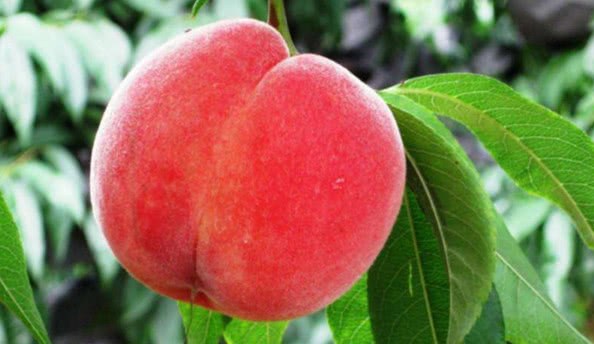
Zhonghua Shoutao peach is planted in northern China. This variety is known as the "finest of peaches," belongs to the extremely late-maturing variety, and has the characteristics of early flowering, early fruiting, and resistance to severe cold, showing the advantages of large fruit size, rich sugar content, sufficient moisture, high yield, and a long storage period, and it can grow normally, flower, and bear fruit in barren land, having won high praise at home and abroad for its strong adaptability and great economic value. Now let's learn together with the editor about the propagation and pest and disease control cultivation techniques for Zhonghua Shoutao peach in Quyang County.
1 Nursery Stock Propagation
Grafting propagation is the main approach for peach tree seedling cultivation in China. When planting grafted peach seedlings, land with fertile soil, soft soil texture, and convenient drainage and irrigation should be selected. Kernel sowing is carried out at the transition between winter and spring, and the sowing period is chosen after the soil thaws and before it freezes. For winter sowing, the seeds need low-temperature stratification treatment; before the kernels germinate, they are pre-germinated first, and then sown in the seedbed, with a sowing depth of about 7 cm. For autumn sowing, soak the seeds in cold water 4 d before sowing. Before grafting peach trees, it is necessary to manage the grafted peach seedlings well, such as fertilizing, weeding, and pest and disease control, to promote healthy and vigorous growth of the seedlings. The grafting time for peach trees is usually chosen from February to April or from May to July. Summer grafting can use single-bud and side grafting, and after grafting, the binding is removed after 15 d of survival; spring grafting usually uses the single-bud cutting method, and grafting can be completed within 2 years. With appropriately early grafting, the grafted seedlings become more robust.
2 Selection of Peach Orchard Location
The root system of Zhonghua Shoutao peach has good drought resistance and high oxygen consumption, and is suitable for planting in sandy soil or loam with deep soil layers, loose soil texture, good drainage, and sufficient sunlight. When a peach orchard is established on plains, sandy soil below 1 m will not produce water accumulation, while waterlogged, saline-alkali, and hilly drought areas are not suitable for establishing a peach orchard. The planting time should generally be chosen in spring, with a plant spacing of 3 to 4 m and a row spacing of 4 to 5 m. The diameter and depth of the planting hole should be greater than 80 cm. When backfilling soil after planting, first mix the surface soil and decomposed organic fertilizer into the hole, and then backfill the remaining planting soil.
3 Field Management
3.1 Intercropping. After Zhonghua Shoutao peach has been planted for 1 to 2 years, economic crops such as leguminous crops, vegetables, tuber crops, and root crops can be interplanted between the peach tree planting rows.
3.2 Timely Weeding. Interplanting in the peach orchard can maintain a loose soil state and suppress weeds, and weeding operations need to be carried out regularly. Generally, weeding is done 3 to 5 times in spring and summer.
3.3 Water and Fertilizer Management. The fertilization method, as well as the type and amount of fertilizer, need to be comprehensively considered according to the tree age, growth vigor, fruit yield of the previous year, and soil fertility status of the peach trees. Generally, autumn is suitable for deeply applying base fertilizer and deeply plowing the soil; spring is suitable for topdressing at the base of the fruit trees to promote flower bud differentiation and fruit development. When irrigation conditions are available, fertilizer can be applied with water. The key periods for watering are before germination, during the rapid fruit expansion period, and before the ground freezes.
4 Training and Pruning
Zhonghua Shoutao peach has strong growth vigor and an upright tree posture. In view of the characteristics of Zhonghua Shoutao peach, young trees and trees in the initial fruiting stage have strong vigor and obvious apical dominance, and the tree posture should not be too open. Branches should mainly be retained as medium and short fruit branches. During pruning, attention should be paid to opening the angle, suppressing apical dominance, moderating tree vigor, and promoting the growth of a large number of medium and short branches. When pruning young trees, note that the direction of the main branches must not directly face the working path, to prevent affecting operations and inter-row lighting after the canopy forms. Pruning trees in the full fruiting stage mainly regulates the contradiction between fruiting and growth. The pruning amount should gradually increase, and the scaffold branches should be renewed by heading back. Attention should be paid to the cultivation, renewal, and rejuvenation of branch groups, so that the main branches and branch groups of the whole tree remain balanced, stable, and robust. The branches on the upper outer part of the canopy should be controlled, and strong branches and upright branches should be thinned out in time to improve light conditions in the inner canopy. Timely clean up excessively dense branches, weak branches, and water shoots in the lower and inner parts, head back overextended branches, and cut off diseased, injured, and insect-infested branches.
5 Flower and Fruit Management
Flower thinning is usually carried out at the initial flowering stage of peach trees, thinning out early-opening flowers, deformed flowers, and upward-facing flowers. All flowers below the middle part of the branch are thinned out; for flowers above the middle part, one is retained and one is thinned, maintaining a reasonable and uniform spacing. Fruit thinning should be carried out in mid-May, removing excess fruit and retaining enough fruit for production. The 2nd fruit thinning is completed in mid-June, reasonably arranging the fruit load on different fruit branches and thinning out all excess fruit. Long fruit branches retain 2 to 3 fruit, maintaining a distance of 15 to 20 cm between fruit. Medium fruit branches retain 1 to 2 fruit, with the fruit positioned on both sides of the branch. Short fruit branches retain a single fruit, and bouquet-like fruiting branches retain a single fruit or no fruit. For naturally grown fruit, fruit cracking is relatively serious in the later stage, and the fundamental way to solve this problem is fruit bagging. Bagging is carried out at the end of the 2nd fruit thinning, and special paper bags are best. Bag removal is generally carried out about 2 weeks before harvest, removing them all at once.
6 Pest and Disease Control
Common pests and diseases include bacterial shot hole disease, powdery mildew, peach leaf curl, aphids, leafminers, red spider mites, scale insects, and so on. Comprehensive control should be carried out according to the occurrence patterns of different pests and diseases in different periods throughout the year. During the dormant period, the control targets are various overwintering disease sources and pests such as bacterial shot hole disease and leafminers. In terms of control, the main task is to do a good job of orchard sanitation, and for peach orchards with severe shot hole disease, spray 1 application of high-concentration equal-amount Bordeaux mixture. During the bud break period, the control targets are peach leaf curl, bacterial shot hole disease, scale insects, and so on. The control agents can be 5 degrees Baume lime sulfur mixture plus 80% sodium pentachlorophenate 250-fold solution to eliminate various overwintering fungal sources; scale insects can be brushed off with a steel wire brush.