How to grow large cherries in Yishui County? Detailed explanation of key techniques for improving quality and efficiency
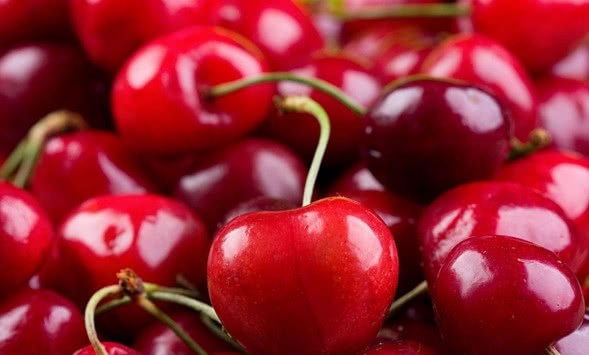
Everyone should have heard of large cherries from Yishui County. Yishui County has a large temperature difference between day and night in summer and autumn, making it the most suitable cultivation area for large cherries. Yishui large cherries have obtained national agricultural product geographical indication certification. Now the editor has compiled the key techniques for improving quality and efficiency of Yishui large cherries as follows.
1 High-standard orchard establishment
1.1 Orchard site selection There should be no pollution sources around the orchard, and irrigation water, soil and air should all meet the requirements for pollution-free fruit production. For hilly slopes, the active soil layer should reach 40 cm thick, with organic matter content above 0.8%. For plain areas, the groundwater level should be below 1.5 m.
1.2 Pollinator tree arrangement Pollinator trees need to meet two conditions: first, they produce a large amount of pollen and their flowering period coincides with the main cultivar; second, they are pollinizer-compatible with the main cultivar. In flatland large cherry orchards, 1 row of pollinator trees is planted every 3 rows of the main cultivar. In hilly terraced orchards, pollinator trees are arranged in a staged pattern, that is, 1 pollinator cultivar is planted every 3-4 trees within the row.
1.3 Planting density According to the characteristics of the large cherry rootstock, the adopted tree form and the requirements for mechanized operations, the suitable plant spacing is determined as 3-4 m x 4-5 m.
1.4 Preparation before planting Conduct soil analysis one year before planting, and adjust the soil pH and organic matter content according to the analysis results. The suitable pH is 6-7, and the suitable organic matter content is above 1.5%. Apply more than 4,000 kg of high-quality farmyard manure per mu, then plow and level the whole orchard, and build ridges along the row direction, with a ridge width of 100-120 cm and a height of about 30 cm.
1.5 Planting technique Plant in spring after the soil thaws and before budbreak. Dig holes in the middle of the ridge beds for planting, and the planting depth should be consistent with the nursery depth of the seedlings or about 3 cm deeper. After planting, firm the soil, irrigate, and cover with plastic film to preserve moisture.
1.6 Post-planting management Apply fertilizer 2-4 times 6-8 months after planting. In the early stage, apply 50 g of urea or diammonium phosphate per plant each time; in the later stage, appropriately increase phosphorus and potassium fertilizer. After September, appropriately control fertilizer and water to promote branch maturity.
2 Shaping the tree form
2.1 Main tree forms and their structural parameters Generally, spindle-shaped training is adopted, with a strong and upright central trunk and 10-15 main branches. The main branches are distributed spirally on the central trunk from bottom to top and decrease in size successively. The thickness of the main branch is about 1/4 of the central trunk, with an angle of 85°. There are no excessively large or thick side branches or upward-growing branches, and both main branches and branch groups extend in a single axis. The tree height is about 3.5 m. This tree form has good light exposure and high yield.
2.2 Training and pruning In the first spring after planting, cut the trunk at 80 cm to set the trunk height, with the cut about 1 cm from the terminal bud to prevent the terminal bud from drying out. After setting the trunk height, remove the 2nd-4th buds and 6th-7th buds below the cut, and selectively notch the buds below the 8th bud so that the long shoots grow evenly distributed. In early spring of the second year, except for the central trunk, all branches are heavily short-cut, leaving only 2-4 buds on the basal developmental branches to promote branching and reduce branch thickness and length. In autumn of the second year or spring of the third year, all secondary branches growing from the stubs left on the central trunk and all primary long branches growing after bud notching on the central trunk are pulled flat. If more than 1 long branch grows from a stub position, 2 can be pulled flat if there is ample space, or 1 if space is limited, and the rest are all removed. The main task of pruning in mature orchards is to maintain ventilation and light penetration throughout the orchard, retract weak branches, remove dense branches and excessively thick or large branches, and cultivate strong fruiting branch groups.
3 Fertile soil and strong trees
3.1 Orchard grass cover There are mainly two ways to grow grass in orchards: artificial grass cover and natural grass cover, and the two methods can also be combined. First, artificial grass cover: sow excellent grass species such as ryegrass, bluegrass, alfalfa, or hairy vetch between orchard rows. Generally broadcast or drill in late September to early October, with a seeding rate of 1.5-3 kg/mu, and spray water 2-3 times after sowing. Second, natural grass cover: do not carry out intertillage and weeding between orchard rows, and allow local excellent wild weeds such as crabgrass and foxtail to grow naturally, while promptly removing malignant weeds such as ragweed, amaranth, lambsquarters, and velvetleaf. Third, mowing treatment: when the grass grows to about 40 cm, carry out mechanical or manual mowing, leaving a stubble height of about 15 cm. Generally mow 3-4 times per year. Cover the cut grass under the tree canopy.
3.2 Efficient fertilization
1) Autumn basal fertilizer application. The time for autumn basal fertilizer application is from mid-September to late October. The basal fertilizer is mainly organic fertilizer, mixed with an appropriate amount of chemical fertilizer. Organic fertilizers include fully decomposed human manure and urine, barnyard manure, soybean cake, chicken manure, pig manure, etc., and more than 3,000 kg of organic fertilizer is applied per mu. Autumn basal fertilizer application should mainly use radial trenching. Dig 6-8 radial trenches around the outer part of the tree canopy, with a depth of 20-30 cm. Dig as many and as deep trenches as possible, as this helps the root system absorb fertilizer nutrients. Mix the organic fertilizer evenly with the soil, apply deeply, and tread firmly.
2) Soil topdressing. During the flowering and fruiting period, cherry trees consume a large amount of nutrients and have relatively high nutritional requirements. Quick-acting fertilizers must be applied in a timely and sufficient manner to increase fruit set rate, enlarge fruit size, improve quality, and promote the growth of branches and leaves. The main topdressing at this stage is nitrogen-phosphorus-potassium compound fertilizer. For large trees in full fruiting stage, generally about 1 kg of compound fertilizer is applied per tree by trenching, followed by watering. Supplementary fertilization after fruit harvest is generally carried out from mid-to-late June to early-to-mid July after fruit harvest. For large trees in full fruiting stage, generally about 1.5 kg of compound fertilizer is applied per tree. The fertilization method can use multiple radial trenches or ring-shaped trenches.
3) Foliar topdressing. Spray borax 1-2 times during the flowering period, and spray monopotassium phosphate 2-3 times during the fruit coloring period. Foliar topdressing can be carried out together with pesticide spraying, but the two must have no adverse reactions. The spraying time is generally in the afternoon or evening.
4 Flower and fruit management
4.1 Promoting fruit set Spray boron during the flowering period, and spray a 0.2%-0.3% borax solution at the early full-bloom stage. Release mason bees for pollination at the initial flowering stage. Bee nests should be placed about 1 m above the ground, with 250-300 nest tubes per nest. The nest tubes are 15-20 cm long, with a wall diameter of 5-6 mm.
4.2 Regulating yield Thin flower buds before flowering, retaining only 2-3 plump and strong flower buds on each flower bouquet spur. Although flower bud thinning has a significant effect on improving fruit quality, it is rather troublesome and labor-intensive, so it is advisable to carry it out together with the removal of weak fruiting branches during the dormant period. Thin fruit after the physiological fruit drop of large cherries. The amount of fruit thinning should be determined according to tree vigor and fruit set. It is sufficient to retain 3-4 fruits per flower bouquet spur, with a maximum of 5. For weak flower bouquet spurs with fewer than 5 leaves, fruits generally should not be retained.
4.3 Promoting fruit coloring On the basis of reasonable training and pruning and improving ventilation and light conditions within the canopy, remove leaves. During the fruit coloring period, simply remove the leaves that block light from reaching the fruit. Leaves on fruiting branches play an important role in flower bud differentiation, so never remove too many leaves. 10-15 days before fruit harvest, lay reflective film under the tree canopy to promote fruit coloring.
4.4 Preventing and reducing fruit cracking Stabilize the soil moisture condition. From the pit-hardening stage to the second rapid growth stage of large cherry fruit, keep the water content of the 10-30 cm deep soil stable at about 12%. Spray calcium agents before harvest. Spray 200-fold amino acid calcium solution once a week before fruit harvest, 3 times in total, which can increase the soluble solids content in the fruit and reduce the fruit cracking rate. Install rain-shelter facilities.
5 Disease and pest control
The main diseases and pests include large cherry gummosis, bacterial shot hole disease, Alternaria leaf spot, aphids, red spiders, white peach scale, and pear lace bug. Spray 3-5 degrees Baume lime sulfur mixture once before flowering in spring. For disease control during the fruit growing period, use tebuconazole, carbendazim, thiophanate-methyl, etc. For pest control, choose imidacloprid, chlorpyrifos, pyridaben, azocyclotin, etc. From harvest to September, spray Bordeaux mixture at 1:2:200 once every 10-15 days.
6 Timely harvest
Harvest in stages according to different cultivars and ripening times. Harvest qualified fruits that have reached commercial maturity in a timely manner, and grade and package them according to market requirements and different cultivars and specifications.