How to grow stone ginseng? Cultivation and management techniques and measures in Meizhou City, Guangdong Province
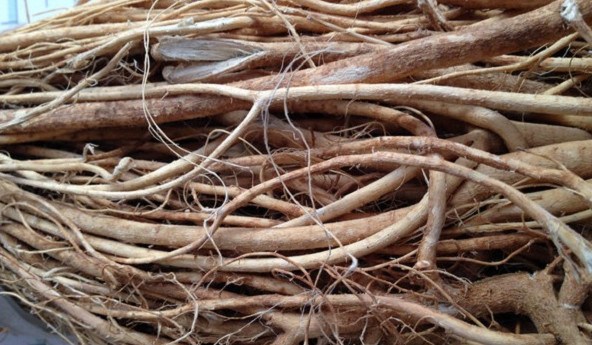
How is stone ginseng planted? In 2000, Meinan Town, Meixian District, Meizhou City, Guangdong Province introduced 50 kg of stone ginseng from Zhangzhou City, Fujian Province, and achieved initial success. Below, let's learn together with the editor about the introduction and cultivation techniques of stone ginseng in Meixian, Guangdong Province, as well as the continuous optimization process that followed.
1 Cultivation and management techniques and measures for stone ginseng
1.1 Site selection and land preparation
Although stone ginseng has wide adaptability and can be planted both in mountain paddy fields and intercropped or relay-cropped with forest clearings and young orchards, if high yield and high quality are to be ensured, its unique growth habits must be considered, such as its preference for cooler mountainous areas, deeper soil layers, and loose, well-drained sandy loam. This requires that after selecting good farmland, land preparation should be carried out to ensure a bed width of 1.2-1.5 m and a ditch depth of 0.2-0.3 m, while also keeping the bed surface fine, crumbly, and level.
1.2 Sowing and sowing methods
Stone ginseng is sown between February and May, and early sowing can increase yield. Sowing methods can be direct sowing or seedling raising and transplanting: direct sowing not only saves labor, but also, because stone ginseng has a taproot, avoids damaging the taproot, giving higher yield, though the seed rate is slightly higher;
Seedling raising and transplanting requires more labor, and transplanting damages the taproot, so when the stone ginseng roots are harvested there is no taproot, with more lateral roots and fibrous roots, poor appearance, and lower yield. At present, farmers generally use the direct sowing method, spraying a pre-emergence herbicide on the bed surface two days in advance, using one liang of butachlor plus one small packet of Henais per bucket of water for spraying. Many years of practice have proved that using a pre-emergence herbicide has no effect on the growth and quality of stone ginseng in the current crop or the following crop, and can delay the first intertillage and weeding by more than 40 d, reducing weeding work by one to two times for the whole crop, and saving about two labor-days per 667 m2. Before sowing, the seeds should first be dehulled with a small rice mill to increase the germination rate (above 95%); without dehulling, because the seed coat is too thick, the germination rate can only reach 15%. The soil should be moist before sowing, preferably after rain or after spraying water on the bed surface. Use 1.5 kg of seed per 667 m2, mix with an appropriate amount of fine sand, and broadcast evenly on the bed surface; no covering is needed after sowing. If emergence is seriously uneven after sowing, seedlings can be thinned from dense areas and transplanted for establishment (carrying soil if possible without damaging roots), ensuring a basic population of 9,000 to 10,000 plants per 667 m2.
1.3 Field management
1.3.1 Fertilizer management
Stone ginseng is rough-growing and easy to grow, so its fertilizer demand is not great. If burnt soil or potassium fertilizer is applied too much, the stone ginseng root system will turn black, leading to poorer quality. The base fertilizer used can be prepared by mixing 500 kg of decomposed pig and cattle pen manure with 25 kg of phosphate powder per 667 m2. After the seedlings are established (the 3-5 leaf stage), thinning and weed removal are needed. Starting 20 d after stone ginseng emergence (5-8 leaves), apply urea three times consecutively at 14 d intervals, each time scattering 3-5 kg evenly per 667 m2, so that the stone ginseng seedlings close the rows uniformly. At 15 d before flowering and 5 days before flowering, scatter high-content sulfur-based compound fertilizer twice, each time 5 kg per 667 m2, which helps increase the color and aroma of the stone ginseng roots.
1.3.2 Water management
Although stone ginseng has low water requirements, the soil must be thoroughly watered before sowing, otherwise the germination of stone ginseng seeds will be seriously affected. After emergence, if the weather is especially dry, running water must be irrigated through the field. Stone ginseng growth fears waterlogging; long-term waterlogging affects root growth and causes irreversible blackening and rotting of the root system, losing commercial value, so in continuous rainy weather drainage work must be strengthened.
2 Pest and disease management
During many years of cultivation, apart from some snails in the early stage, no particularly obvious pest or disease damage to stone ginseng has been found, so only molluscicides such as Mida are used.
3 Harvesting
3.1 Seed harvesting
Stone ginseng gradually enters the flowering season after June, and the seeds mature around October, so they should be harvested in time. Choose sunny weather, wear gloves, and collect the seeds by stripping from the base of the stone ginseng inflorescence to the tail. After returning home, remove the fuzz and impurities, then dry them in the sun to keep as seed; the drying time is 2-3 days.
3.2 Stone ginseng root harvesting
After the seeds mature and are harvested in October, the stone ginseng roots can be harvested successively, and delaying harvest can increase yield. Choose to harvest after rain or after irrigating running water through the field. Before harvesting, first cut off the aboveground part with a knife; the roots can be dug out with a cattle plow or hoe. After harvesting on the same day, wash them clean in time, then put them under the full sun to dry until the skin of the large taproot cannot be scraped with a fingernail, which takes about five to seven days of drying. The key point in drying stone ginseng is to note that after two days of drying, the root system should be straightened by hand and placed neatly for drying. After drying, bundle them, about 1 kg per bundle, and they can be sold on the market.
4 Comprehensive benefit analysis
4.1 Economic benefits
Stone ginseng can generally be harvested in one year, or in the second or third year; the longer the growth period, the stronger the aroma of the stone ginseng root system. The production cost of stone ginseng is 800 yuan per 667 m2 in the current year. In the current year, the average stone ginseng root yield is 250 kg per 667 m2, and the current market price is about 20 yuan per 1 kg, giving an output value of 5,000 yuan; the average stone ginseng seed yield is 30 kg per 667 m2, and the market price is about 50 yuan per 1 kg, giving an output value of 1,500 yuan. The two items together give a current-year output value of 6,500 yuan for planting 667 m2 of stone ginseng.
The above are all the technical key points for introducing and cultivating stone ginseng in Meizhou City. Farmer friends who want to grow stone ginseng can consider referring to them in light of their actual geographical environment!