A Detailed Guide to Cattle Farming with Distiller's Grains: Feeding Methods and Precautions
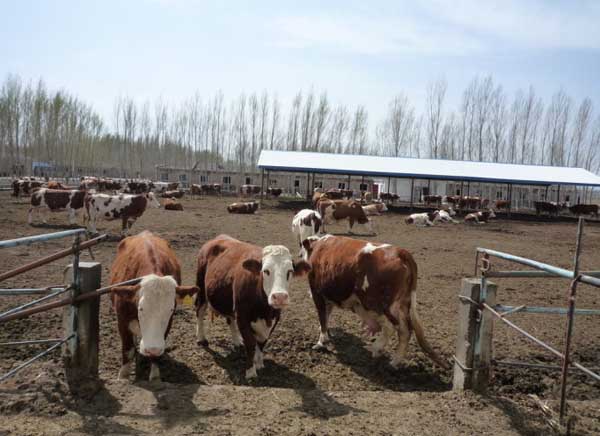
Distiller's grains are a direct by-product of the brewing process. They not only contain a certain proportion of grain, which can save on concentrated feed for cattle, but are also rich in crude protein, 2 to 3 times higher than the content in corn. They also contain various trace elements, vitamins, yeast, and other substances, among which the content of lysine, methionine, and tryptophan is also very high, which crop straw cannot provide. Compared with crop straw, the greatest advantage of distiller's grains is that they save grain; in addition, the crude fiber content of distiller's grains is also relatively high. Because distiller's grains are formed through fermentation and high-temperature steaming, their crude fiber content is relatively low. This determines that distiller's grains, as the main feed for cattle, have good palatability and are easy to digest, with no problems of indigestion or incomplete digestion, and they can also effectively prevent bloat in cattle.
The Economic Benefits of Cattle Farming with Distiller's Grains
1. Whether it is baijiu distiller's grains or beer grains, both contain a certain amount of alcohol. After eating them, cattle are much calmer than when fed straw, which helps cattle lie down quietly and ruminate after eating, and has a positive effect on promoting fattening and shortening the finishing period. After feeding cattle distiller's grains for about 20 to 30 days, you will notice that the cattle's coat becomes glossier and softer, and they are no longer picky about their food.
2. On-site measurements after slaughter show that cattle fed distiller's grains have better meat quality than those not fed them, with finer fibers, fresher color, and more tenderness, and the net meat rate after slaughter is about 3% to 5% higher than under normal feeding conditions. If, after reaching the net meat slaughter point at the slaughterhouse, each point higher is calculated at 8 fen, then each jin brings an extra income of 0.24 yuan to 0.4 yuan. If a finished cow weighs over 600 kg to 700 kg at sale, each cow yields a net profit of 300 yuan to 600 yuan, and the economic benefit is quite considerable.
3. Distiller's grains are available in every county and city, and the price is very low. Through feeding practice, the author has made a preliminary estimate that baijiu distiller's grains cost about 3 fen to 5 fen per jin; beer grains cost only about 1 jiao per jin, while ordinary silage corn straw fed to cattle costs about 8 fen to 1 jiao per jin. Therefore, cattle farmers or farms with the conditions might as well give it a try. It is worth mentioning that when first feeding baijiu distiller's grains to cattle, a few individual cattle may be unwilling to eat them. After a 3-day to 5-day adaptation period, the cattle become accustomed to the taste of distiller's grains. At that point, feeding can follow a ratio mainly of distiller's grains with straw as a supplement. When feeding beer grains, however, cattle do not need these few days of adaptation; once fed, the cattle all love to eat them, which may be related to the natural fresh fragrance of beer grains.
Nutritional Composition of Distiller's Grains
Because of differences in raw materials and processing techniques, the nutritional composition of distiller's grains varies greatly. In distiller's grains made from corn, sorghum, and tuber crops, the dry matter contains 20%-25% crude protein and 11%-17% crude fiber; in distiller's grains made from corn, the dry matter contains 18.4%-19.4% crude protein, 5.6%-9.7% crude fat, 14.2%-18.8% crude fiber, 51.7%-47.9% nitrogen-free extract, 6.2%-8.3% ash, 0.25%-0.50% calcium, and 0.19%-0.21% phosphorus. The protein, crude fiber, fat, vitamins, and minerals in beer grains are similar to those in brewers' grains, with crude protein accounting for 22%-27% of dry matter weight, crude fat 6%-8%, linoleic acid 34%, nitrogen-free extract 39%-48%, and crude fiber 14%-18%. The phosphorus content is high, and beer yeast also contains lysine at 3.79%, methionine at 0.79%, and tryptophan at 0.67%, while trace element content is insufficient. The disadvantage of distiller's grains is that they contain about 70% water and easily ferment on their own and spoil. It is best to feed them directly, or store them for a period using anaerobic storage before feeding. In production, fresh beer grains are often dehydrated and made into dried beer grains before being used as feed.
Storage and Preservation of Distiller's Grains
1. Distiller's grains that cannot be fed completely should be spread thinly on a cement floor to dry until the moisture content drops to about 15%, after which they can be stored for a relatively long time. The disadvantages are that a large site is needed, it is not suitable for rainy weather, and when air humidity is high, drying also takes a relatively long time, with nutrient losses of about 50%.
2. Place the distiller's grains into a temporarily unused silage pit or ammoniation tank, compact them, and seal the pit to create an anaerobic environment and inhibit the reproduction of most spoilage bacteria. The pit is generally selected in a place with a low water table. Place a layer of dry grass or grass bags at the bottom and around the walls of the pit; non-toxic plastic film or straw mats can also be used around it. Then load the distiller's grains into the pit, trampling each layer firmly before adding the next, until the pit is full. Then cover the top of the distiller's grains with a layer of grass, cover the grass with plastic film, and pile on 0.3 m of soil. Shape the top of the pit like a steamed bun, then cover it again with grass or plastic film and weigh it down with soil. Especially around the pit, the plastic film must be firmly and tightly pressed down with soil so that it does not leak or seep water, allowing long-term storage. The size of the pit depends on the amount of distiller's grains to be stored.
3. Use clean, non-toxic plastic film bags that have been scrubbed, put the distiller's grains into the bags, trample them firmly layer by layer, and tie the bag openings tightly, keeping out air and preventing water from entering, and store them in a low-temperature, light-protected place. The storage temperature is below 4°C in summer for pit style, and 10°C for pile style; for tank style and bag style, it is 10°C in spring and autumn.
4. Referring to the method of microbial straw storage, mix 330 kg of straw or dry grass cut to 3-5 cm in length into each ton of distiller's grains with a moisture content of 70%-80%. According to the operating procedures for straw fermentation live dry bacteria, use 3 grams of bacterial agent per bag to treat 1.5 tons of distiller's grains, load them into the pit in layers, spray and compact them, then evenly sprinkle a little salt powder on the topmost layer (250 grams per square meter), then compact and seal with plastic film and cover with soil. The shelf life can reach 9-12 months.
Methods for Cattle Farming with Distiller's Grains
1. When feeding distiller's grains to cattle, start with a small amount and gradually increase it. After the cattle have become accustomed to eating them over 10-15 days, feed them according to the set amount. For each dairy cow, a daily feeding amount of 7-8 kg is appropriate. For calves, the daily amount should account for about 40% of the concentrated feed, while for growing cattle, 30%-35% gives good results. Under normal circumstances, feeding fresh distiller's grains should not exceed 10%-12% of the daily ration. Feeding dried distiller's grains should not exceed 6%-8% of the daily ration, to avoid diseases such as acidosis in dairy cows.
2. The method for degrading distiller's grains is to crush the freshly produced wet material and add to 1,000 kg of distiller's grains 50 kg of corn, 25 kg of soybean meal, 10 kg of feed-grade monocalcium phosphate, 2 packs of "coarse feed degrading agent" (main raw materials are compound enzyme preparations, chelated trace elements, auxiliaries, lactic acid bacteria, Bacillus, and carriers), 3 kg of salt, and 1 kg of brown sugar or white sugar. After mixing, put them into a large vat or tank, compact them, and seal them (100% moisture content) for fermentation. In summer, ferment for more than 24 hours; in winter and spring, ferment for more than 3 days before feeding. The amount of degraded distiller's grains fed should be controlled at about 25%. Take out the fermented distiller's grains and let them air out for about 1 hour before feeding. The concentrated feed formula is 30% degraded beer grains, 21% coarse corn meal, 5% soybean meal, 14% cottonseed meal, 15% corn silage straw, 13% dry grass, 1% premix, 0.3% salt, 1.5% baking soda, and 2% each of calcium hydrogen phosphate or bone meal.
3. According to the nutritional composition and characteristics of different distiller's grains, make a reasonable combination in the cattle's daily ration to give full play to their strengths. Distiller's grains are rich in crude protein, but their nutrition is not comprehensive or balanced, and the calcium-to-phosphorus ratio is unsuitable. The organic acids they contain can form insoluble calcium salts with calcium and affect calcium absorption, so calcium should be supplemented when feeding distiller's grains. It is recommended that bone meal account for 2% of the concentrated feed in the daily ration, and vitamin A and vitamin D3 be added to the concentrated feed. For dairy cows within 1 month after calving, it is best not to feed distiller's grains, or to feed only a small amount, otherwise it will delay the recovery of the reproductive system and have an adverse effect on breeding.
Precautions for Cattle Farming with Distiller's Grains
1. Feed at fixed times and in fixed amounts. In spring and winter, feed 2 times a day: put in the distiller's grains at 6:30 a.m., provide warm water once at noon, and put in the distiller's grains at 4 p.m. In autumn, put in the distiller's grains at 5 a.m., provide warm water once at noon, and put in the distiller's grains at 4:30 p.m. In summer, put in the distiller's grains at 4 a.m., put in the distiller's grains at 6:30 p.m., and provide clean cool water 2 times at noon. In the early fattening stage, feed 4 kg of fresh distiller's grains per head per day; in the middle stage, feed 6 kg; in the later stage, 5.5 kg is appropriate.
2. Add frequently and mix frequently. When feeding, give small amounts frequently and mix as they eat.
3. When feeding distiller's grains, start with a small amount and gradually increase it. After the cattle have become accustomed to eating them, feed them according to the set amount.
4. Observe frequently to prevent poisoning. In addition to nutrients, distiller's grains may contain toxic substances due to poor raw material quality. Therefore, special attention should be paid when feeding distiller's grains to prevent poisoning.
5. The feeding amount must not be too large. Feeding too much distiller's grains over a long period can easily cause diseases such as excess stomach acid and rumen bloat in beef cattle.
6. Prevent vitamin A and D deficiency. Pay attention to adding vitamin A and D3 to the concentrated feed to ensure the rapid growth of the cattle.