What is the basic principle of improving yellow cattle?
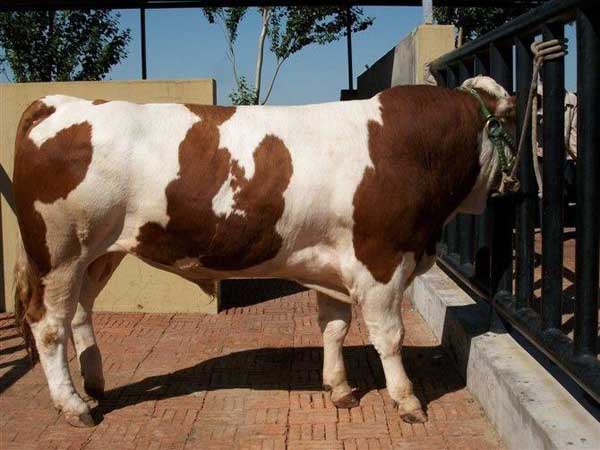
To improve low-productivity yellow cattle into dual-purpose cattle with higher production performance, it is necessary to break the conservatism of low yield in yellow cattle, use biological crossbreeding, and absorb and introduce the heredity of high-yielding breeds, so as to achieve the goal of continuously improving production performance.
The various economic traits of livestock are passed from parents to offspring through the transmission of substances contained in the nucleus of the sex cells that produce these traits. These substances are called genes, and they exist at specific positions on the chromosomes of the cell. The chromosomes in the body cells of livestock are all in pairs. When the sex cells mature, meiosis occurs, and only one chromosome from each pair enters the sex cell, meaning only half of the genes in the body cells of livestock enter the sex cell. At fertilization, the chromosomes of the male and female reproductive cells combine, and the genes in the body become paired again. In this way, the various traits of both parents are passed on to the offspring. Under normal circumstances, the influence of each parent's various traits on the offspring is half from each. The crossbreeding improvement of livestock is also the use of this biological law to improve production performance.
Under general conditions, the young of the first hybrid generation of yellow cattle grow vigorously, have strong vitality, and have high production performance. This phenomenon is called hybrid vigor. From a biological perspective, hybridization has three characteristics: first, it enriches the heredity of the organism. Various hybrid offspring possess the heredity of both parents, and sometimes may also exhibit new characteristics that neither breed has; second, it shakes the heredity of the organism. Due to the genetic heterogeneity of both sides of the cross, the hybrids obtained after crossing show instability in heredity. This increases both variability and plasticity, and people can use these two characteristics to develop hybrid offspring in the desired direction. Third, it improves vitality. Because the sex cells of both sides of the cross differ greatly, a strong vitality can be produced after combination.
After crossbreeding improvement, yellow cattle can change the low-yield genotype of the original stock, not only producing hybrid vigor, but also combining the excellent characteristics of different parents, thereby improving production performance. The purpose of hybridization is to enable the offspring to retain the advantages of local yellow cattle, such as good adaptability to local natural conditions, strong disease resistance, and tolerance to roughage; and to absorb the advantages of introduced foreign breeds, such as large body size, fast weight gain, high feed utilization rate, and good milk and meat production performance, so as to obtain hybrid vigor, and in a planned way fix the various beneficial traits desired by people, forming a breed or a new group.
For more content on yellow cattle breeding technology, farmers can continue to follow this site. "Take trust as the way, take excellence as victory", and always adhere to the principle of being responsible to customers.
Note: This article was contributed by Shandong Yunfeng Livestock and Poultry Cattle, Sheep and Donkey Breeding (Gao Shanxin).