Detailed explanation of key points for buffalo farming technology, scientific feeding and management methods
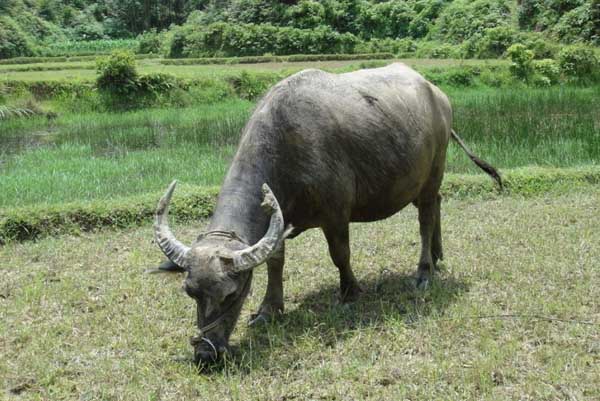
Buffaloes have the characteristics of tolerance to coarse feed, tolerance to damp heat, and strong disease resistance, adapting to the ecological environment of the south and the extensive feeding conditions of rural areas. After crossbreeding and improvement, they still maintain the biological characteristics of local buffaloes. Farmers can easily master the feeding and management techniques, making them convenient to promote and apply in the vast rural areas.
Living habits
Buffaloes like to wallow in mud pits to dissipate heat and prevent insect bites. Buffaloes feed in the morning and evening, mainly on grass, leaves and aquatic plants. Their senses are keen and their sense of smell is well developed.
Domestic buffaloes were domesticated from wild buffaloes, possibly dating back about 5000 years. Even today, wild buffalo bulls are still crossed with domestic buffalo cows as a means of renewing bloodlines. Their senses are keen and their sense of smell is well developed; some believe that the sense of smell played an important role in the domestication process. The skin is thick, and the coat is short and sparse. The sweat glands are underdeveloped, about only 1/6 of those of yellow cattle, so their heat regulation function is poor. They are fond of water and often soak and wallow in ponds to dissipate heat. Their appearance is sturdy, and their body weight can reach 1 ton. They are docile and easy to manage.
Feed types
Buffaloes mainly eat green feed, with concentrate as a supplement. The grass and feed provided should be sufficient and reasonably matched to meet the needs of buffalo growth, development and production; ordinarily, sufficient green feed is enough, and some concentrate should be supplemented during lactation.
Feed sources
Buffaloes can consume large amounts of coarse feed, so feeding is relatively extensive. Generally, dry rice straw is fed in winter, and green grass is fed in spring, summer and autumn. Under grazing or barn feeding conditions, green and coarse feed can generally meet nutritional needs; for heavy work, concentrate must be supplemented, and high-yielding dairy buffaloes must be fed more concentrate.
1. Planting forage grass: for every dairy buffalo raised, 0.067 hectares of napier grass need to be planted;
2. Feed silage: cut sugarcane tops, forage grass, etc. into 2-3 cm lengths, press tightly and seal to make silage;
3. Straw ammoniation: cut straw into 2-3 cm lengths, and ammoniate according to the ratio of 100 kg straw, 50-60 kg water and 3-5 kg urea.
Management techniques
Pay attention to feeding techniques, and manage thoroughly and carefully. Feeding should be done at fixed times and in fixed amounts, with small amounts given frequently; the feed should be clean and fresh, without impurities; when changing feed, there should be a 1-week transition period, and sufficient drinking water should be ensured; do not feed spoiled, moldy or contaminated feed or dirty, foul water.
Because buffaloes' body temperature regulation ability is not strong, special attention must be paid to cold protection and heat protection. In summer, they should be given sufficient water for bathing, and especially allowed to roll in mud in ponds; the mud layer on their bodies can both prevent direct sunlight and avoid bites from mosquitoes and gadflies.