Detailed Explanation of Key Points for Short-Term Beef Cattle Fattening Techniques
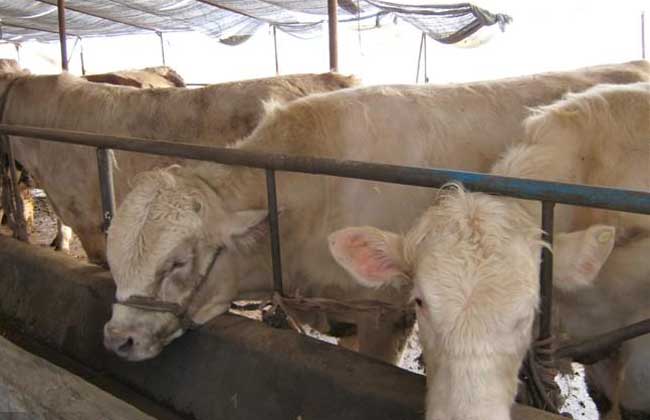
Short-term beef cattle fattening mainly refers to the short-term fattening of uncastrated bulls, castrated cattle over 3 years old, and various culled cows. Such cattle cannot produce high-quality premium beef. For simple fattening farms or farmer fattening, the goal is to pursue a large frame and body weight at the time of marketing, mainly selling fattened live cattle, with the target of supplying low-to-medium markets, and the fattening period is 120-150 days.
Beef Cattle Selection
1. Age selection: There is not much room for choice in beef cattle age; of course, the younger the better. At comparable ages, cows and castrated cattle fatten better than uncastrated bulls.
2. Health inspection: Carefully check whether the mouth and teeth are intact, and closely observe chewing, feces, urination, limbs, etc. Cattle with an overly short body, narrow back and arched waist, pointed rump, and emaciated body condition are not suitable.
3. Pregnancy examination: Culled cows should undergo a pregnancy examination to determine whether they are pregnant before deciding whether to purchase them.
Beef Cattle Feeding
1. Recovery period (10-15 days): The diet is mainly high-quality green hay and wheat straw, with a small amount of silage and sufficient drinking water. No concentrate is given on the first day; a small amount of wheat bran is given on the second day; after 3 days, the concentrate is maintained at the original feeding amount of the farmer or farm. Complete epidemic prevention, epidemic prevention, deworming, and isolation observation.
2. Transition period (15-20 days): Gradually realize the shift from the original roughage type to the concentrate type. After the feeder cattle recover their body condition and adapt, reduce green hay and increase silage and distillers' grains. Feed about 15 kg of roughage per day. Keep crude protein in the concentrate at 10-12%, NEm 8.04 MJ/kg, NEg 5.14 MJ/kg, add 0.5% sodium bicarbonate, and gradually increase the concentrate feeding amount to 4 kg/head/day.
3. Fattening period: At this stage, stop feeding green hay to save costs, mainly use green, succulent silage and distillers' grains, and do not restrict intake. In the later stage, the maximum feeding amount of distillers' grains can reach 20 kg/day/head, silage is maintained at 8-15 kg/day/head, and a small amount of wheat straw and rice straw is given, mainly at 3 kg/head per day, to regulate gastrointestinal pH and stimulate gastrointestinal peristalsis. Gradually increase the concentrate, by about 1-2 kg/head per week. Keep crude protein in the concentrate at 8-10%, NEm 7.68 MJ/kg, NEg 4.96 MJ/kg, add 1.0% sodium bicarbonate, and gradually stabilize the daily concentrate feeding at 4-6 kg/head until marketing.
Beef Cattle Management
1. Sufficient drinking water: Adopt free access to water or water at least 3 times per day; in winter, provide warm water. When tethered, after daytime feeding is finished, clean the forage and fill the water trough.
2. Deworming and stomach strengthening: Albendazole orally once at a dose of 10 mg/kg body weight, avermectin intramuscularly at 0.2 mg/kg body weight, and deworm again after an interval of one week. Use rhubarb sodium bicarbonate tablets or Chinese herbal medicine to strengthen the stomach of cattle.
3. Grouping and fixed feeding troughs: Raise cattle in pens grouped by breed, body size, and strength. During the fattening period, a maximum of 15 head per group, with small groups of 6 head being optimal, and keep them relatively stable. During the fattening period, each small group can only be reduced, no more cattle are added. The pen area is 12 sq m to 18 sq m. For tethered cattle, fix the trough position, with a halter rope length of 35 cm.
4. Feeding frequency: In the early fattening stage, feed 2-3 times per day with an interval of 6 hours; in the later stage, free feeding may be adopted. For tethered fattening, add feed to the trough at 21:00 at night to keep forage available for the cattle to eat at night.
5. For tethered cattle: Especially when fattening uncastrated bulls, someone must be on duty at night to prevent breaking free from the halter and fighting, which could cause injuries, stress, and unnecessary cattle or personal accidents.
6. Pay attention to observation: Prevent the cattle halter rope from entangling the cattle's legs, or the rope from rubbing and damaging the skin of the cattle's head, causing infection.
7. Trace elements: When feeding forage based mainly on straw and distillers' grains, attention must be paid to supplementing vitamin A, D, minerals, and trace elements.