Detailed Explanation of Key Points for Rapid Beef Cattle Fattening Technology
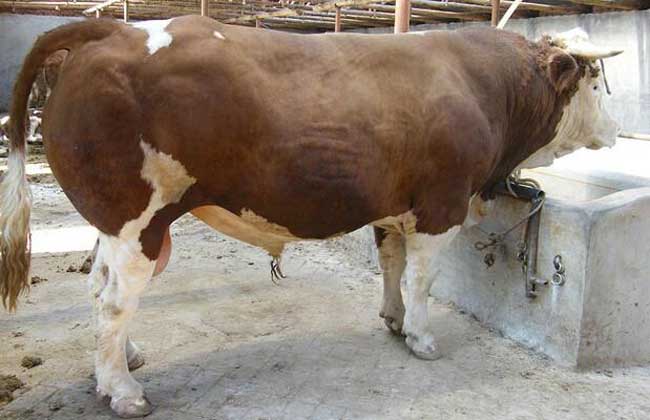
Rapid beef cattle fattening, also known as linear fattening, is the primary fattening method for producing high-quality premium cuts of beef. Building on the use of hybrid vigor, with the goal of replacing high-grade imported beef, it adopts comprehensive supporting technologies. For the hybrid offspring, through early starter feeding of calves, early weaning, and early castration, starting from a young age, higher-level rations are continuously provided according to each stage of growth and development, enabling rapid growth and intensive fattening, reaching slaughter standards at around 30 months of age, achieving high quality and efficiency.
Selection of Fattening Cattle
1. Breed: When the fattening goal is “marbled” premium beef, with the market positioned for high-end consumers of Western steak and Japanese barbecue, the first choice should be three-way crossbreds of Qinchuan cattle, Angus cattle and Wagyu, and crossbreds of Wagyu and Holstein. The next choice is Angus cattle, Qinchuan cattle and their crossbreds. When the fattening goal is premium red beef with no intramuscular fat, with the market positioned for hot pot, Chinese-style dining, and mid-range Western steak, breeds such as Limousin, Simmental, Qinchuan cattle, Charolais, dairy bulls and their crossbreds should be selected.
2. Sex and age: Bulls castrated before 6 months of age or unbred females, no later than 10 months of age.
Feeding During the Fattening Period
1. Transition period (2-4 months, 6-10 months of age): The transition period of beef cattle fattening mainly involves completing recovery from stress such as deworming, vaccination, castration and grouping, adjusting gastrointestinal function, gradually transitioning from calf feed to fattening cattle rations, and transitioning from restricted concentrate feeding to free-choice feeding, so as to adapt to the new environment and feeding management methods as quickly as possible. High-quality green hay remains the main feed, fed free-choice, with a small limited amount of distillers' grains and no silage. In large-scale fattening farms, due to individual differences among newly purchased cattle and incomplete work such as castration during the observation period, fattening is delayed, but must not be later than 10 months of age. The feeding program should follow the "Beef Cattle Feeding Standard," with the ration calculated based on body weight and a daily gain of 1.2 kg. The concentrate supplement formula uses protein ingredients such as cottonseed meal and rapeseed cake to replace whole milk powder in calf feed. The concentrate formula level is CP 16-18%, NEm 7.2 MJ/kg, NEg 4.54 MJ/kg, with intake reaching 1.0-1.2% of body weight, accounting for 30-45% of the ration.
2. Early fattening stage (4-6 months, 11-18 months of age): The early fattening stage is also the growth fattening stage. During this stage, beef cattle grow and develop fastest, with relatively high growth intensity. The focus is on promoting the growth of bones, internal organs and muscles, and adapting to concentrate-type feeding as quickly as possible. At 16 months of age, the ratio of concentrate to roughage is 1:1. The ration should be rich in protein, minerals and vitamins. Roughage includes green hay, wheat straw, silage and distillers' grains, among which green hay and wheat straw are fed free-choice, while silage and distillers' grains are fed in limited amounts. The concentrate supplement contains CP 14-16%, NEm 7.99 MJ/kg, NEg 5.08 MJ/kg. Concentrate is fed free-choice, accounting for 1.5-2.0% of body weight, roughly 50-55% of the ration. Starting at 14 months of age, barley or wheat is used to replace part of the corn, with a daily gain of 1.0 kg.
3. Mid-fattening stage (4-6 months, 19-24 months of age): In the mid-fattening stage, the bones, muscles and body frame of beef cattle have gradually become more complete, and fat is deposited in the internal organs and abdominal cavity. Roughage is mainly wheat straw or rice straw, fed at 1.0-1.5 kg/head per day, with no silage, green hay or other green roughage, no distillers' grains, and controlled roughage intake. The supplement formula is CP 12-14%, NEm 7.33 MJ/kg, NEg 4.66 MJ/kg, fed free-choice, with intake reaching 2.0-2.2% of body weight, accounting for about 60-75% of the ration.
4. Late fattening stage (6-8 months, 25-32 months of age): The late fattening stage is the fattening maturation stage. Daily gain decreases significantly, and the main process is fat accumulation, increasing the amount of fat between muscle fibers and fat density, improving beef quality, and raising the proportion of premium high-grade meat. Roughage is a single type of wheat straw, with daily intake controlled at 1-3 kg/head. Concentrate is CP 10%, NEm 7.06 MJ/kg, NEg 4.28 MJ/kg, fed free-choice, so that the proportion of concentrate accounts for 70% of the dry matter of the ration, with daily feeding maintained at about 1.8-2% of body weight, accounting for about 80-85% of the ration. In the ration, energy feed is mainly barley or wheat, the proportion of corn in the concentrate is controlled, and green roughage and VA are prohibited. From 60-90 days before slaughter, VE and VD are appropriately increased to improve meat quality and color.
Management During the Fattening Period
1. Pen loose housing: Before 12 months of age, during the growth stage, sufficient exercise space is provided to promote growth and development. For cattle purchased from farmers, during the initial isolation and observation period after arrival, work such as numbering, deworming, vaccination and castration should be completed.
2. Group feeding: At around 6 months of age, cattle are grouped according to individual growth and development, by month of age, sex, body weight and body condition (15-20 head/group). At the end of the fattening transition period, or at around 12 months of age, the transition from large groups to small pens is completed. After that, during the fattening process, no further grouping, regrouping or pen transfers are carried out, to avoid unnecessary stress that affects growth and development. Small groups of 6-8 head are appropriate, and they remain stable until slaughter, with small pens allowing only exit and no entry. Grouping, regrouping and pen transfers must be carried out in the evening. After grouping, wait until the cattle are quiet, and only after observing each head with no abnormalities may the technician leave, and immediately turn off the lights, maintaining darkness to reduce fighting.
3. Establishing records: Weighing and body measurements are conducted regularly every 2 months. This should be combined with work such as vaccination and pen transfers, and should be carried out in the transfer or sorting passage. Individual records for fattening cattle should be established, and based on these, the effectiveness of feeding management should be checked, the ration formula adjusted in a timely manner, cost accounting strengthened, and management level improved.
4. Free drinking water: Keep water in the trough 24 hours a day, and clean the trough at least once a week. In large-scale fattening farms, automatic drinking bowls are installed outside the pens, which can remain clean and hygienic for a longer period, are easy to clean, and have no cross-contamination.
5. Deworming and disease prevention: During the observation and fattening transition periods, albendazole is given orally once at a dose of 6-10 mg/kg body weight. For external parasites, 2-4% fenvalerate can be used. On clear days, showering for parasite control can both kill parasites such as ticks on the body surface and also help repel mosquitoes and flies. Alternatively, broad-spectrum highly effective antiparasitic drugs such as avermectin and ivermectin can be injected intramuscularly at 0.02 mL/kg body weight. Three days after deworming, clean the pen and promote appetite.
6. Ration replacement: The replacement of forage and feed types must have a transition period of 7-15 days to adapt to the adjustment, cultivation and establishment of the rumen microbial flora. That is, during the first three days of replacement, keep the original forage and feed at no less than 2/3 and the new forage or feed at no more than 1/3. After an interval of 2-3 days, increase the amount of new forage and feed by another 1/4 or 1/3, correspondingly reduce the original forage and feed, and replace gradually and progressively, with a transition period of 15 days being appropriate. During the transition period of forage and feed replacement, observe feces frequently and make appropriate adjustments, but this must not be less than 7 days.
7. Sanitation management: Keep the cattle shed dry and hygienic. Before cattle enter, the shed must be cleaned thoroughly and disinfected by spraying completely with 2-4% caustic soda. After drying, keep it for at least one week before bringing in cattle. Clean manure according to its thickness and dry or wet condition. In small pens, the manure thickness should not exceed 15 cm, and in summer it can be cleaned once a month.
8. Timely observation: Technicians must persist in morning and evening inspections, combining them with the herdsmen's observations at any time. Observe feeding, rumination, spirit and feces, among other conditions. Sick cattle should be isolated promptly and raised and treated separately. If there is bloating, or feces that are thin and foul-smelling with undigested concentrate, the ration should be adjusted, the amount reduced, or the increase of concentrate stopped.