Detailed Explanation of Key Points for Efficient Breeding Technology of Luxi Yellow Cattle
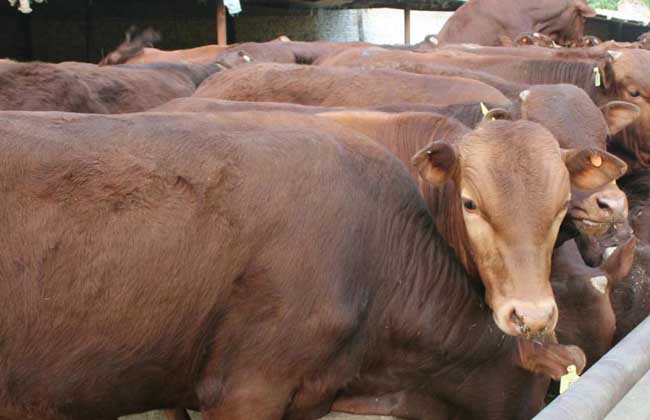
The Luxi Yellow Cattle is a herbivorous ruminant livestock belonging to the class Mammalia, order Artiodactyla, family Bovidae, genus Bos. The Luxi Yellow Cattle is renowned for its large body size, stable genetic performance, strong draft power, tolerance to coarse feed, ease of management, dry and elastic skin, and dual-purpose use for draft and meat. Before the 1980s, it was an important draft cattle for local farmers and a key means of production at the time, later phased out with the gradual popularization of agricultural mechanization. The Luxi Yellow Cattle has a tall and large body, well-developed forequarters, muscular build, strong constitution, well-proportioned structure, strong adaptability, thin skin, high meat production rate, and tender meat with fat evenly distributed among muscle fibers, forming distinct marbling patterns. It has the reputation of “five-layer streaky meat” and is one of the world's famous beef cattle breeds, having been listed in the National Key Protected Livestock and Poultry Genetic Resources Catalogue.
Feeding and Management of Luxi Yellow Cattle Breeding Bulls
1. Selection of breeding bulls: Luxi Yellow Cattle breeding bulls are generally selected from young bulls aged 6 to 8 months. Bulls selected for retention must have a large build, strong constitution, robustness, a large head and thick neck showing masculinity; large and spirited eyes, large and alert ears, a large mouth for fast feeding; vigorous spirit, broad forechest, straight and firm back and loin, broad and straight rump; appropriate space in the rear, good at walking, steady when mounting; two evenly developed testicles, no cryptorchidism, no defects in the reproductive system, no diseases, strong libido, and conformity to the breed characteristics. The normal growth and development and breeding lifespan of breeding bulls are directly related to feeding and management, with feeding during the young stage being especially important.
2. Mating time for breeding bulls: The mating age of breeding bulls must be controlled at over 1.5 years, and appropriate utilization intensity must be well managed. Generally, a 1.5-year-old breeding bull should mate 1 to 2 times per week, at 2 to 3 years of age 2 to 3 times per week, from 3 to 7 years of age 3 to 4 times per week, and at around 7 to 8 years of age, replacement breeding bulls should be selected and retained in a timely manner.
3. Feed for breeding bulls: According to the characteristics of the nutritional needs of breeding bulls, the feed should be nutritionally complete, palatable, and easily digestible, with concentrates, roughage, and green feed reasonably matched. The daily ration volume should not be too large, and low-quality roughage should be fed less to avoid malnutrition. Feed three times a day, each time feeding green grass or hay first, then concentrates. Feed 0•4—0•6 kg of concentrates per kg of body weight per day. The approximate formula for breeding bull concentrate mix is barley and corn 30%, bran 35%, soybean cake and oil cake 25%, fish meal and blood meal 5%, bone meal 3%, salt 2%.
4. Disease prevention for breeding bulls: According to the requirements of the “Animal Epidemic Prevention Law of the People's Republic of China” and supporting regulations, combined with local actual conditions, preventive vaccination against epidemics should be carried out selectively, with attention to selecting appropriate vaccines, immunization procedures, and immunization methods. At least 2 vaccinations against anthrax and 2 vaccinations against foot-and-mouth disease are required each year.
Feeding and Management of Luxi Yellow Cattle Breeding Cows
Replacement heifers refer to female calves intended to be retained for breeding after birth. A good cow must first have well-developed hindquarters. A cow with good hindquarters also has a well-developed pelvis, which is beneficial for fetal growth and delivery. In addition, it should have a straight back and loin, a refined head, a broad, flat, and long face, upright and firm limbs, well-developed udder, and a large but not sagging belly.
The daily management of breeding cows is basically the same as that of breeding bulls, with differences only in feed.
During the sexual maturity period of cows, in addition to providing excellent pasture, green hay, silage, and succulent feed, some supplemental compound feed must also be appropriately added. From 9—10 months of age, some straw and grain bran roughage can be mixed in, accounting for 30%—40% of the total roughage.
During pregnancy, the cow's daily ration should be mainly roughage and succulent feed, accounting for about 75% of the total daily ration, with the remaining 25% being compound feed to supplement insufficient energy and protein.
Management of Luxi Yellow Cattle During the Calf Period
The lactation period of Luxi Yellow Cattle is usually 6 months, and the calf period refers to the period from birth to 6 months of age. Since beef calves are generally raised in scattered households with small numbers per household, extensive management is often adopted, which misses the optimal weight-gain window during the calf stage. Now let us look at the management of Luxi Yellow Cattle during the calf period.
1. Early supplemental feeding: Early supplemental feeding means providing supplemental feed to calves as early as possible. After birth, calves generally rely on mother's milk, and within one month of birth, breast milk can still meet the growth and development needs of the calf. However, after one month, breast milk alone can no longer meet its growth needs, and supplemental feeding must be provided in a timely manner. Calves at 6 months of age that have not received supplemental feeding generally weigh 100 to 120 kg, while calves that have received supplemental feeding can reach 160 to 180 kg. At 1 month of age, calves can basically eat a mixture of hay and concentrates. As calf feed intake increases, adequate drinking water must be ensured. When calves reach 60 days of age, silage begins to be added to the feed.
2. Exercise and grazing: From 8 to 10 days after birth, calves are generally allowed free exercise. Giving the calf some space will allow it to run a few laps whenever it wants to exercise. If the calf is born in a warm season, the following exercises can be done outdoors every day. If it is cold winter, activities must be indoors to prevent the calf from getting sick due to cold wind.
3. Brushing: During the calf period, since barn housing is basically adopted, the cow's skin will be contaminated with manure and dust, forming dirt. This not only reduces the insulation and heat dissipation capacity of the coat, deteriorates skin blood circulation, but also makes it prone to disease. Therefore, calves must be brushed every day.
4. Cleaning the pen: Cleaning must be thorough, manure should be removed in a timely manner, and the ground should be free of standing water in summer and ice in winter.
5. Disinfection: Disinfection is an important measure for purifying the environment. In order to improve the sanitary conditions of the calf barn and surrounding environment, a habit of regular disinfection must be developed. When disinfecting the calf pen, the calves must first be properly settled, then disinfection begins inside the pen. Disinfection must be thorough, including disinfection of surrounding walls, floors, fences, and other facilities. Only in this way can the calf barn be kept clean and pathogenic bacteria eliminated. For disinfection, 84 disinfectant can be used. 84 disinfectant is a highly effective disinfectant mainly composed of sodium hypochlorite and can kill many kinds of bacteria. 84 disinfectant has certain irritancy and corrosiveness and must be diluted before use. The general dilution concentration is 2 per thousand to 5 per thousand, that is, 2 to 5 ml of 84 disinfectant added to 1000 ml of water. When disinfecting the cattle barn and surrounding environment, pour the diluted disinfectant into a sprayer and use the sprayer to spray every corner evenly.
6. Injection of anti-diarrhea vaccine: Dysentery is the disease calves are most prone to. After birth, due to unhygienic nursing, licking dirty objects, drinking dirty water, exposure to cold, etc., calves are very susceptible to infection by Escherichia coli or Salmonella, which can cause enteritis and diarrhea accompanied by septicemic symptoms. When calves are 1 month old, it is very necessary to give an injection of anti-diarrhea vaccine. The anti-diarrhea vaccine should be purchased from a legitimate veterinary clinic and injected according to the dosage in the instructions.
7. Injection of foot-and-mouth disease vaccine: Foot-and-mouth disease is an acute, febrile, contagious disease shared by cloven-hoofed animals caused by foot-and-mouth disease virus infection. Animals suffering from foot-and-mouth disease will show symptoms such as fever, lameness, and vesicular rashes on the skin and mucous membranes. Malignant foot-and-mouth disease can also cause cardiac paralysis and rapid death in sick animals. When calves grow to 8 months of age, they must be injected with a dose of foot-and-mouth disease vaccine, with the injection referring to the dosage on the instructions.
Management of Luxi Yellow Cattle During the Fattening Period
The growth of Luxi Yellow Cattle follows a pattern: from 1 year to 1.5 years of age, they enter a rapid growth period. The period from 1 year to 1.5 years is the stage of most rapid growth and development. With careful feeding, rapid fattening can be achieved in a short time. Therefore, 1 year to 1.5 years is also called the rapid fattening period.
When Luxi Yellow Cattle reach about 1 year of age, their bodies are strong and their resistance is also stronger. At this time, the cattle barn can be changed to a relatively simple fence. The fence should preferably be oriented in a north-south direction, which is conducive to receiving sunlight. There is a rain shelter on top of the fence to shield against wind and rain. Inside the fence, there are feed troughs and water troughs. Fattening cattle are not tethered inside the fence but kept in loose housing, feeding freely, drinking freely, and exercising freely.
The stocking density of fence fattening is relatively high, with an average area of 4 sq m to 5 sq m per head of cattle. This fattening method is not only simple to operate but also improves management efficiency. Traditional barn feeding allows one person to manage only 15 to 20 cattle, while with fence fattening, one person can manage 200 to 300 cattle.
Fence fattening adapts to the habits of Luxi Yellow Cattle, reducing stimulation from environmental changes, thereby increasing feed intake and water intake, and improving daily weight gain and carcass quality.
1. Deworming before fattening
Because beef cattle consume roughage, pasture, etc., and frequently come into contact with the ground, they are susceptible to infection by various nematodes in the digestive tract and also susceptible to external parasites such as lice, mites, ticks, and fly maggots. After mild to moderate parasitic infection in cattle, feed conversion rate is affected, mainly through reduced appetite and decreased utilization of absorbed protein and energy. Carcass quality and weight gain also decline, further affecting the economic benefits of beef cattle farming. For this reason, beef cattle must be dewormed before fattening.
Antiparasitic drugs such as coccidiostat can be selected for deworming. The drug should be crushed into powder and evenly mixed into the feed. Deworming should be carried out when the beef cattle are on an empty stomach. Before administration, it is best to stop feeding for several hours and provide only drinking water to facilitate drug absorption and improve efficacy. Deworming is best arranged in the afternoon or evening, so that the cattle expel the parasites during the daytime the next day, making collection and disposal easier. After deworming, beef cattle should be isolated and raised for 2 weeks, and their manure should be disinfected and subjected to harmless treatment.
2. Feed formulation during the fattening period
Beef cattle during the fattening period are mainly fed silage, with a small amount of green hay and concentrates added for fattening. Attention must be paid to the quality of the silage. Moldy and deteriorated silage must not be fed to cattle, because the protein content in silage is relatively low, at only about 2%, so it must be matched with protein feed such as cottonseed meal.
Cottonseed meal is a by-product after extracting cottonseed oil, generally containing 32–37% crude protein. Its lysine and methionine contents are both relatively low, at 1.48% and 0.54% respectively, while its arginine content is too high, reaching 3.6–3.8%. Cottonseed cake and meal degrade relatively slowly in the rumen and are a good source of protein feed for beef cattle.
In addition to increasing the amount of cottonseed meal, corn flour and wheat bran, which beef cattle are accustomed to eating, are also indispensable every day. Cottonseed meal, corn flour, and bran are collectively called concentrates. The concentrate ratio is cottonseed meal 60%, corn flour 25%, and bran 15%.
The first 15 days after beef cattle enter the pen are the adaptation period. This period is mainly to let the cattle become familiar with the new environment, adapt to new forage conditions, eliminate stress reactions caused by transportation, and restore the cattle's physical strength and body weight. The daily ration should be mainly good roughage, with no or little concentrate. As the cattle's physical strength recovers, concentrates are gradually increased, with the ratio of concentrate to roughage at 30:70. After 20 days of the transition period, the proportion of concentrate in the daily ration increases from 30% to 60%, and the proportion of roughage decreases from 70% to 40%. The main task of this period is to let the cattle gradually adapt to a concentrate-type daily ration and prevent diseases such as bloat, diarrhea, and acidosis. The fattening period lasts 30 to 40 days, during which the proportion of concentrate in the daily ration further increases to 70% to 85%, and the proportion of roughage decreases from 40% to 15% to 30%. During this period, daily weight gain can reach two to three jin. In order for the cattle to consume large amounts of concentrate, the number of feedings can be increased during this period, and the number of waterings can also be increased. After each feeding, about half an hour later, the water trough should be cleaned and replaced with fresh clean water.
3. Brushing
Brushing beef cattle during the fattening period is very important. Cattle must be brushed twice a day for 5 to 10 minutes each time, using a method from front to back and from top to bottom. Why is brushing said to be very important? This is because brushing is not only for maintaining cleanliness; more importantly, brushing the entire body of the cattle can promote blood circulation and prevent fat deposition. Experienced farmers say that only beef cattle that are regularly brushed can grow good meat with marbling.
4. Maintaining hygiene
Because there are many cattle in the pen, cleaning must be done more frequently to keep the pen clean and hygienic. Every day around nine or ten in the morning, the fattening cattle will automatically move to places with sunlight. At this time, the keeper can just clean up the manure in the shaded areas and keep the cattle barn dry.
5. Caustic soda disinfection
Caustic soda is a relatively inexpensive chemical with excellent disinfecting effects. Dissolved into a 2% to 4% solution, it can kill reproducing bacteria and viruses. A 10% solution can kill Mycobacterium tuberculosis in 24 hours, and a 30% solution can kill anthrax spores in 10 minutes. Therefore, caustic soda is often used for disinfecting cattle barns, generally disinfecting the barn once a week.
After 2 to 3 months of fattening, beef cattle can reach 500 kg. The quality and yield of high-grade beef are closely related to the body weight of the cattle. If the live weight before slaughter does not reach 500 kg, the juiciness, marbling structure, and tenderness of the beef will not reach the grade of high-grade beef, and it will lose economic significance.