What are the treatment methods for nosebleeds in cattle?
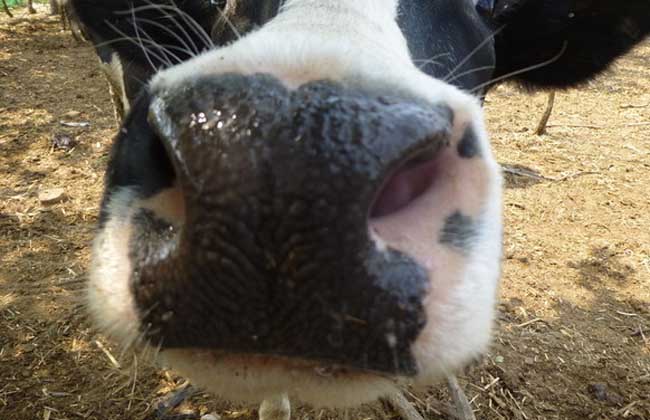
Nosebleeds in cattle fall under blood disorders and are a rare case in veterinary clinical practice, not commonly encountered. Minor small bleeds can be stopped with timely treatment, but frequent or prolonged malignant nosebleeds cannot be ignored, and they are relatively more difficult to manage. Below, let us take a look at the treatment methods for nosebleeds in cattle.
Symptoms of nosebleeds in cattle
1. Bright red blood flows from one or both nostrils of the affected cow, characterized by containing no air bubbles or only a small amount of air bubbles. With severe bleeding or relatively prolonged bleeding, the affected cow may show physical weakness and fatigue, listlessness, rough panting, accelerated heart rate, dilated pupils, pale visible mucous membranes, and even shock.
2. Nosebleeds can present in two forms: ordinary minor bleeding and malignant bleeding. Ordinary minor bleeding can be stopped with timely physical, surgical, and pharmacological hemostatic treatment, and the possibility of recurrence is small. Malignant bleeding often presents as intermittent bleeding, with the intervals becoming shorter and shorter, more and more frequent, and the bleeding becoming more and more severe. Conventional treatment is difficult to make effective, and the difficulty of treatment increases.
Causes of nosebleeds in cattle
1. Primary cases are often caused by trauma, foreign bodies, parasites, ulcers, tumors, and systemic diseases with hemorrhagic diathesis.
2. Blood heat causing reckless movement, and qi failing to keep blood in check. External contraction of heat pathogens, or internal generation of deficient fire, can both force blood to move recklessly, leave the vessels, and cause bleeding. Just as "Jingyue Quanshu" says: “Movement is mostly due to fire, and when fire is excessive it forces blood to move recklessly.” Insufficient nutrition, or damage from labor service, or after a serious illness or prolonged illness, the spleen and stomach become weak and lose their power of governing and containing, so blood leaves the meridians and vessels and causes bleeding. Also as "Jingyue Quanshu" says: “Damage is mostly due to qi, and when qi is damaged, blood has nowhere to be stored.”
3. Long-term dry climate with relatively few water molecules in the air, such as when cattle are kept under direct sunlight for long periods, the nasal mucosa becomes dry and cracked, which can cause capillary rupture and bleeding.
4. Weak and sickly, or after a serious illness or prolonged illness, cattle receiving long-term treatment with drugs that inhibit prothrombin synthesis and platelet adhesion and aggregation, or drugs that invigorate blood and remove stasis, may develop drug-induced bleeding.
Prevention and treatment of nosebleeds in cattle
1. Physical therapy: In the early stage of nosebleed onset, first place the affected cow quietly in a shaded and cool shed or yard, and let it stand or lie down quietly. For ordinary minor bleeding, first pour well water or cool tap water over the head and neck to lower the temperature, and apply cold compresses with ice bags on the forehead and bridge of the nose until the bleeding decreases and stops.
2. Surgical hemostasis: When physical methods have little effect or no effect on nosebleeds, surgical methods should be taken promptly to stop the bleeding. First, examine and determine the bleeding site: whether it is unilateral or bilateral nosebleed, whether the site is deep or shallow, and what the condition of the wound on the nasal mucosa at the bleeding focus is. If the bleeding site is shallow and the nasal mucosal laceration is not large, use hemostatic forceps to hold disinfected cotton or gauze and press the wound for 5-10 min each time, repeatedly stopping the bleeding until the bleeding stops completely. If the bleeding site is relatively shallow and the nasal mucosal laceration is relatively large, consider measures such as wound suturing, packing, and closure to stop the bleeding. If the bleeding site is relatively deep and conventional surgical methods cannot be used, consider dripping 1:50000 epinephrine hydrochloride solution into the nasal cavity or using gauze strips soaked with hemostatic medicinal solution to pack deep into the nasal cavity up to the bleeding focus until the bleeding stops completely, only then gently remove the gauze strips.
3. Pharmacological hemostasis: While combining physical and surgical hemostasis, intramuscular injection of hemostatic drugs such as etamsylate, adrenochrome, and Vk can achieve a good hemostatic effect. For those with prolonged bleeding time, relatively large blood loss, and affected cattle showing physical weakness, fatigue, listlessness, and other signs tending toward collapse, timely supplementation of body fluids and energy should be given, along with intravenous injection of 10% calcium chloride, Vc, and other drugs.
4. Clearing heat and stopping bleeding: For affected cattle with external contraction of heat pathogens, or blood heat and reckless movement due to internal generation of deficient fire, and intermittent frequent malignant bleeding, traditional Chinese medicine treatment should be combined, and timely administration by treatment course should clear heat and purge fire, cool blood and stop bleeding. The traditional Chinese medicine formula can use Shihei San (Anemarrhenae rhizoma 30g, Phellodendri chinensis cortex 30g, Sanguisorbae radix 30g, Typhae pollen 30g, Gardeniae fructus 20g, Sophorae flos 20g, Platycladi cacumen 20g, Crinis carbonisatus 20g, Eucommiae cortex 20g, Trachycarpi petiolus 15g; except for Crinis carbonisatus, stir-fry each medicine until black, grind together into powder, mix with boiling water, and administer warm after it cools).
5. Preventive measures: During the recovery period of affected cattle, according to actual conditions, preventive treatment can be given by adding Jinweita (containing Vk3, VD3, folic acid, etc.), rhubarb sodium bicarbonate powder, calcium agents, etc. to the diet or drinking water, strengthen daily feeding and care, rest quietly, and provide shade and prevent heatstroke, etc.