Beef cattle farming cost and profit analysis, investment and returns at a glance
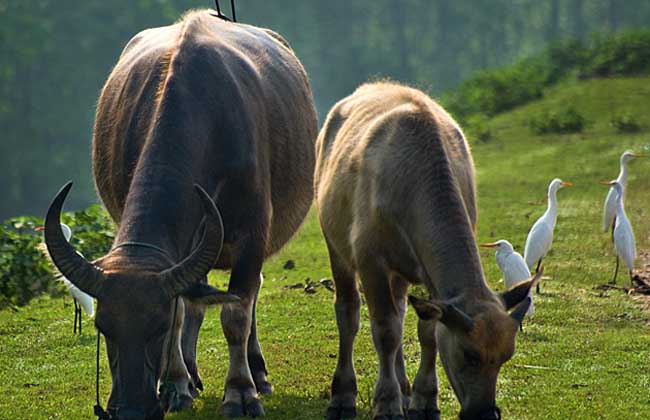
Cattle farming is relatively good and secure within the livestock and poultry industry. Currently, pigs and chickens are the most unstable on the market, while cattle and sheep have remained stable all along, with no extremely abnormal inflation effects ever appearing. At present, cattle farming is being vigorously promoted nationwide, especially in impoverished areas, and its stable market returns and other factors have led everyone to be very optimistic about the market prospects and the scale of farming development.
Beef cattle farming benefit analysis
1. Beef cattle have always been in short supply. Globally, beef accounts for more than half of meat in developed regions of the world, while in our country it accounts for only about 10%. As for per capita beef availability, developed countries in the world are above 50 kg, the world average is 10 kg, while our country has less than 5 kg, and in particular some areas in the south have less than 2 kg. Our country has entered the stage of building a moderately prosperous society in all respects, and beef is a component of the moderately prosperous indicators. People are paying more and more attention to improving the quality and structure of their diet, and the demand for beef, especially high-quality beef, will grow day by day.
2. Cattle are herbivores, with high feed utilization and a conversion rate that ranks first among livestock. They have low costs and a high return rate. Because they eat grass, they do not compete with humans for grain, and their safety and hygiene indicators are relatively high, making them close to a natural green food. The cattle farming industry is an ancient, long-standing and stable industry. Numerous examples and practices have already proven that some far-sighted businessmen and engineering contractors, after completing their basic capital accumulation, all invest their surplus funds into the livestock cattle farming industry.
Cost calculation and profit analysis for beef cattle farming
1. During the young cattle stage, each cow needs 5-8 jin of silage corn stalks per day, and a small amount of distillers' grains or other weeds can be used. It needs 3-5 jin of fine feed. Hereford cattle include 60% cornmeal, 30% wheat bran, and 10% of any one chosen from soybean cake, cottonseed cake or rapeseed cake. 30 cattle need one jin of salt per day, the cattle shed is disinfected once every two weeks, and regular prevention is carried out. After the cattle enter the pen, deworming begins at an interval of one week; the first and second treatments must be four days apart, and both treatments can use deworming medicine for cleaning. Fattening stage: each cow needs 8-12 jin of grass and 5-8 jin of fine feed per day; in the later stage of fattening, each cow needs 12-15 jin of grass and 8-10 jin of fine feed per day, with the amount of green grass increased by 30%.
2. A crossbred beef bull calf weighing about 300 jin requires an investment of about 3000 yuan. It uses an average of about 300 jin of grass per month, equivalent to about 30 yuan in cash. It uses about 240 jin of fine feed per month, equivalent to about 150 yuan in cash. If disease prevention for the cattle and salt are included, this is calculated at 30 yuan per month. Raising 200 cattle requires 2 keepers, and 2 people for preparing forage and management. If the average wage is calculated at 600 yuan per person per month, the total wages for half a year of raising are 14,400 yuan. The wage cost per cow is no more than 80 yuan. If it gains an average of 120 jin per month, then in half a year it can gain 720 jin, and adding the original 300 jin purchased, the total can reach more than 1000 jin.
The raising cost per cow can then be calculated as follows:
① Each cow requires an investment of about 3000 yuan.
② Various costs such as transportation and quarantine are estimated at about 100 yuan.
③ Raising and management wages are about 100 yuan.
④ Grass plus fine feed totals about 1100 yuan.
⑤ Disease prevention and salt are about 200 yuan.
⑥ The total cost per cow up to slaughter is between 3500 and 4700 yuan.
3. Raising for six months, plus the body weight at the time of purchase, calculated at 1200 jin, each cow can sell for about 8400 yuan. After deducting all the above costs per cow of 5000-5700 yuan, the net profit per cow is 3400-2700 yuan, and even under poor management it is not less than 2700 yuan.