How to raise Simmental cattle? A detailed explanation of key farming techniques
Simmental cattle originated in Switzerland and are a world-famous dual-purpose milk and beef breed. After being introduced to China, they are mainly used as a crossbreeding sire line, and the effect on improving local breeds in various parts of China is very obvious. Especially after crossbreeding with local yellow cattle, the hybrid offspring show improvements over the parents in adaptability, disease resistance, stress resistance and production performance.
To date, more than 30 countries around the world have introduced Simmental cattle. China introduced Simmental cattle breeds successively from the 1950s to the 1980s, and after many years of breeding and propagation, local populations with distinctive characteristics have now formed in most areas of the country.
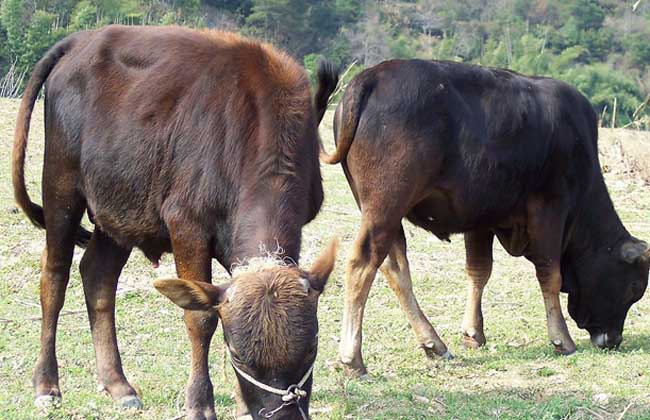
Introduction to the Simmental cattle breed
1. Appearance characteristics: Simmental cattle have a coat color of yellow-white or light red-white patterns. They have a large frame, full muscles, a large head and broad forehead, a broad and deep chest, a straight back and loin, long and sturdy limbs, and hard hooves. Their maternal and beef cattle characteristics are extremely good. An adult bull weighs 1000-1200 kg, and a cow weighs 650-750 kg.
2. Physiological habits: Simmental cattle have strong adaptability and can tolerate dry and cold conditions, adapting to arid and semi-arid climate conditions. In most areas north of the Yangtze River in China, they are suitable for raising Simmental cattle. They have strong feeding ability, make wide use of feed, and tolerate roughage. Simmental cattle have a relatively long lifespan, with a typical utilization period of 6-8 years.
Barn preparation
As the saying goes, "Only with a secure home can one work happily." In the artificial breeding of Simmental cattle, the first step is to build them a comfortable home. The basic requirements for a cattle barn are ventilation and dryness, hygiene and cleanliness, and warmth in winter and coolness in summer. Simmental cattle are generally raised under housed feeding, with feeding and milking both carried out in the barn. It is generally designed as a semi-enclosed cattle barn. Inside the barn, a row of cattle stalls is arranged along the longitudinal axis of the building. A exercise yard should be set up outside the barn so the cattle can move freely. The area of the exercise yard is about 2-3 times the area of the barn.
Selecting breeding cattle
After the barn is built, it is time to introduce breeding cattle. Selecting breeding cattle is intended to further improve herd quality and production performance and increase herd productivity. Simmental cattle are an excellent beef cattle breed, but when selecting breeding stock, careful selection is still needed.
1. Body type: Adult breeding bulls are required to have an average withers height of 145 cm, and cows 132 cm. The coat is yellow, red, purplish-red and white, often with strip-like continuous white patches on the shoulders and loins, and more white appears on the head, underbelly, legs and tail. The head is moderate in length, and the horns are slender. The neck-shoulder junction is good. The chest is broad and deep, the body is cylindrical, and the back muscles are well developed. In addition, breeding bulls are also required to have moderately sized testicles, firm and rounded leg muscles, sturdy limbs, and solid hooves. Breeding cows should have well-developed udders, with teats of fairly uniform thickness, basically between 2-3 cm.
2. Pedigree: We can judge whether a breeding animal meets the standard based on indicators recorded in its pedigree, such as bloodline, grade, body weight, parity and age.
Management during the transition period
In order to help newly introduced breeding cattle adapt to the environment better, we must first raise them for a period of transition.
1. Salt supplementation and drinking water: Breeding cattle that have undergone long-distance transport may be dehydrated and need some livestock salt supplementation. Loose livestock salt can be placed in the drinking trough for the cattle to lick freely. Breeding cattle that have undergone long-distance transport need a relatively large amount of water, so a water trough should be set up in the pen, and the drinking water should be kept fresh, clean and sufficient.
2. Diet: In terms of diet, the principle of feeding less should be maintained. Feed half of the normal daily ration each day for two consecutive days, then gradually increase the frequency and amount.
3. Increase exercise: After a period of adaptive feeding, the physical strength of the breeding cattle gradually recovers. At this time, arrange a certain amount of time each day to drive the cattle out for activity, which can strengthen their physique. After 7 days of transition-period feeding, the breeding cattle can enter routine feeding and management.
Routine feeding and management of breeding bulls and breeding cows
1. Feeding and management of breeding bulls
In order to ensure that breeding bulls are strong, have strong libido, produce a large amount of high-quality semen, and have a longer service life, correct feeding and management methods are essential.
① Feeding of breeding bulls: In terms of feeding, the nutritional needs of breeding bulls must first be ensured. For adult breeding bulls, the feeding amount can be calculated as per 100 kg of body weight, feeding kg of roughage and 1 kg of concentrate per day, split into two feedings. Feeding times are: 5-6 a.m. and 4 p.m.; in winter it can be moved forward by 1 hour. When feeding, feed less but more frequently, and feed roughage first, then concentrate. The concentrate formula is: corn 38%, soybean meal 30%, wheat bran 26%, fish meal 2.5%, calcium phosphate 1.5%, salt 1.5%, stone powder 0.5%. The roughage is mainly a mixture of dried alfalfa and Northeast sheep grass. Among this, dried alfalfa accounts for 20%, and Northeast sheep grass accounts for 80%. However, in actual feeding, it is best to make full use of local resources to reduce feeding costs. In addition to feeding concentrate and roughage, in order to improve semen quality, it is best to supplement some vitamins. For example, feed some fresh carrots, at 0.5 kg per day per 100 kg of body weight. If there are no carrots, compound vitamins can also be added, calculated at 200 grams per ton of concentrate. During the breeding period, if a breeding bull is too fat, it will cause difficulties in semen collection or mating. Therefore, body weight should also be checked once every 2-3 months to adjust the feed ratio. When a breeding bull is overweight, the concentrate can be reduced by about 15%, while increasing roughage and increasing the bull's exercise.
② Management of breeding bulls: In addition to doing routine work well, insisting on brushing the cattle body is also important. It is best to brush twice a day, 2-3 minutes each time. When brushing, start from the hindquarters, then move to the abdomen, neck, and finally the head. This has a very good effect on promoting blood circulation, maintaining cattle body hygiene and ensuring safe production. While insisting on brushing the cattle body twice a day for 2-3 minutes each time, the hooves should also be trimmed regularly to keep the hooves clean. Just trim the hooves flat; do not trim too deep, and even more importantly, do not injure the blood vessels and nerves in the hooves. In addition, breeding bulls should insist on exercising 1-2 hours every day and can be allowed to move freely, so as to promote blood circulation, maintain a strong physique, and ensure that breeding bulls can produce normally. Breeding bulls should exercise 1-2 hours every day to ensure normal production. The barn and exercise yard should also be kept clean, and manure and foreign matter should be removed in time.
③ Use of breeding bulls: The utilization period of Simmental cattle is about 6-8 years. Only by using bulls correctly can their service life be extended. When a breeding bull grows to 16-18 months of age and reaches a body weight of more than 560 kg, training for mating or semen collection can begin. Young bulls can be used twice a week, and at 2 years of age they can shift to normal mating or semen collection, 2-3 times a week. When the density is above 800 million/mL, 3 collections can be made as appropriate.
2. Feeding and management of breeding cows (non-pregnant period)
The breeding cows mentioned here refer to cows in the non-pregnant period. During this period, cows lose weight relatively quickly and need increased feeding amounts in order to improve nutrition and promote estrus. Calculated per 100 kg of body weight, feed 0.5 kg of concentrate and 2 kg of roughage per day. The concentrate formula is: corn 30%, barley 20%, sorghum 8%, wheat bran 30%, soybean cake 10%, salt 1%, calcium phosphate 1%. The roughage can be silage or yellow silage, also fed twice a day.
Breeding techniques for Simmental cattle
After a period of raising, Simmental cattle enter the breeding period. Below, we introduce the breeding techniques for Simmental cattle.
1. Sexual maturity and estrus identification
Bulls reach sexual maturity at about 14 months, and cows at about 16 months. Simmental cattle come into estrus year-round, with an estrous cycle of 18-22 days. When a cow shows behavioral characteristics such as mental excitement, restlessness, mounting, and circling around the tethering post, it can be determined that the cow is in estrus.
2. Mating
Simmental cattle generally reproduce by artificial insemination. One bull can, on average, provide semen for 6000 cows to be fertilized each year. After confirming that a cow is in estrus, artificial insemination should be carried out promptly. Below, we introduce the artificial insemination technique for Simmental cattle. First, semen must be collected from the breeding bull.
① Artificial semen collection: For artificial semen collection, a fixed semen collection room should be set up near the breeding bull pen. The site should be clean, hygienic and firm, and covered with anti-slip mats to prevent the bull from slipping during semen collection. The training personnel should be fixed, and the training time is best fixed in the early morning every day when the breeding bull is energetic; in midsummer it should be carried out in the cool morning. Before semen collection, the abdomen and prepuce of the breeding bull should be washed in advance. Then select a healthy, docile and disease-free cow or bull as a teaser animal, and restrain the teaser animal in the semen collection rack. In addition, semen collection gloves should be worn. Take out the sterilized artificial vagina and semen collection cup, cover the outside with a protective sleeve, and finally apply a layer of Vaseline inside the artificial vagina. Once prepared, the breeding bull can be trained and collected. The semen collector must be bold and careful, and pay attention to the safety of people and animals. The semen collector stands at the right rear of the breeding bull. When the bull jumps and mounts the teaser animal, quickly move forward and guide the bull's penis into the opening of the artificial vagina. The bull thrusts forward and completes the ejaculation action, then immediately dismounts. The semen collector quickly moves to the semen processing room, where staff carefully remove the semen collection tube for testing. Finally, it also goes through a series of procedures such as weighing, testing, dilution, packaging and refrigeration, which we will not introduce in detail here. In short, sperm motility is required to be above 0.8 before use. Adult bulls can be collected twice a week. Young bulls can be collected once a week.
② Artificial insemination: Before artificial insemination of a cow, the frozen semen must first be thawed. It can be thawed by soaking in 40°C warm water for 30 seconds, and then inserted into a special insemination device. The outside of the insemination device should be covered with a protective membrane, and the inseminator should also wear insemination gloves. Select the cow to be inseminated and restrain it in the breeding rack. Have a designated person pull the cow's tail to one side, then wash the cow's vulva with potassium permanganate solution at a concentration of one-thousandth, and then insemination can begin. The insemination dose is generally required to be 0.5-1 mL. The semen collector forms the left hand into a cone shape, slowly inserts it through the anus into the rectum, holds the cervix, and with the right hand inserts the insemination device through the vulva and injects the semen. After injecting the semen, pull out the insemination device.
3. Pregnancy examination
After mating, Simmental cattle will soon enter the gestation period. To determine whether a cow is pregnant, observing certain signs is enough. For cows with a normal estrous cycle before mating, if they no longer come into estrus 3-4 weeks after mating, and at the same time show increased appetite, stable movement, a gentler temperament, and sleepiness, they can basically be judged pregnant. It is also possible, when the cow is three months pregnant, to touch the cow's uterus by hand; if it is found to be about the size of a fist, this confirms that it has indeed entered the gestation period. The average gestation period of a cow is 284 days. After confirming pregnancy, the expected calving date should be calculated as soon as possible. Generally, calculate based on 280 days: subtract 3 from the mating month, and add 7 to the mating date. For example: if mating occurs on August 4, the expected calving date is May 11.
4. Management during gestation
After confirming that the cow has entered the gestation period, the pregnant cow needs careful care from the raiser to prepare for the birth of the calf. The gestation period can be divided into two management stages: early gestation and late gestation.
① Early gestation (the first 6 months of gestation), that is, the first 6 months of gestation. Because fetal development is relatively slow and nutrient requirements are low, ordinary feeding can generally meet the needs. Since the cow barn has no drinking trough, attention should be paid during feeding: feed concentrate first, and when the concentrate is almost finished, feed roughage. The amounts of concentrate and roughage can follow the feed formula for the non-pregnant period. After the cattle finish eating for 3-4 hours, the cows should be quickly let out of the pen so they can drink water freely.
② Late gestation (the last 2-3 months of gestation), that is, the last 2-3 months of gestation. The fetus grows and develops very quickly, and 80%-90% of the birth weight is formed during this period, so the proportion of concentrate should be increased, preferably with a ratio of 30% concentrate and 70% roughage. The daily ration is: 4 kg of concentrate per head per day, and 12 kg of silage per head per day, fed in two meals a day. The concentrate formula can be prepared according to: corn 50%, wheat bran 10%, cakes 30%, sorghum or barley 7%, bone meal 2%, salt 1%, plus 1 million units of vitamin A.
Note that cows must be prevented from eating moldy and rotten feed. When cows exercise, avoid frightening them or letting them run suddenly, so as to prevent miscarriage.
5. Parturition
As the fetus gradually develops and matures, the cow undergoes a series of prepartum changes before giving birth. In the week before calving, a pregnant cow's labia swell; transparent mucus flows from the vulva; if the muscles on both sides of the tail base are found to be obviously sunken, and there are signs such as nervousness and restlessness, lying down and getting up from time to time, and frequent defecation and urination, preparations for assisted calving should be made immediately. Under normal circumstances, the cow can deliver the fetus naturally.
7. Feeding and management of calves
After birth, calves have relatively poor adaptability to the outside world, and their development is closely related to the production performance of adult cattle later. Therefore, attention must be paid to the feeding and management of calves. The entire calf period is 6 months.
1. Feeding
Calves should receive colostrum promptly after birth. Newborn calves are generally raised in the same pen as the cow. When the calf is about one month old, a separate calf pen can be set up in the corner, which can also be used as a supplementary feeding pen. At this time, the keeper can train the calf to eat milk replacer. Feed some green hay and a small amount of concentrate and allow them to eat freely. At the same time, sufficient drinking water should also be provided to the calf.
2. Preventing diarrhea
Because calves have just been born and their immunity is still low, their disease resistance is relatively poor, and they are most prone to diarrhea. Therefore, when diarrhea is found in a calf, promptly give the affected calf an injection of berberine, which can prevent and treat intestinal diseases.
3. Moderate exercise
Appropriate exercise for calves can strengthen their physique and improve disease resistance. After half a month from birth, calves can move freely in a sunny exercise yard. At first, expose them to the sun for half an hour to 1 hour, then gradually increase.
4. Early weaning
When calves are 3-4 months old, they should be scientifically weaned at the appropriate time according to their growth and development. After weaning, calves can be placed in small pens for group feeding, 10-15 head per group. In order to ensure that the feed consumed can meet the growth and development needs of calves, the ratio of concentrate to roughage in the calf diet should be maintained at about 1:1. Calculated per 100 kg of body weight, feed 1 kg of roughage and 1 kg of concentrate per day, split into two feedings. The roughage is best fed as hay, and after 4 months of age, straw feed can be gradually added.
5. Dehorning
When calves are 4 months old, they should be dehorned promptly. First cut off the horns with a sterilized knife, then burn the growth point with a hot branding iron.
Feeding and management of growing cattle
When calves reach 6 months of age, they can be transferred from the calf barn to the growing cattle barn and enter the growing cattle stage. The growing cattle stage lasts from 6-18 months of age. This stage is the period of overall growth and development for calves. If feeding is poor, it will affect their lifelong production performance. We divide this period into two stages.
1. Feeding and management at 6-8 months of age
6-8 months is the period of fastest growth and development for growing cattle. In order to take into account the nutritional needs of growth and development and promote further development and improvement of the digestive organs, the roughage fed during this period should be high-quality hay and silage, and at the same time some concentrate must be appropriately supplemented. Generally speaking, 75% of the dry matter in the diet should come from roughage, and 25% from concentrate. Calculated per 100 kg of body weight, feed 2 kg of roughage and 0.75 kg of concentrate per day, split into two feedings. It should be noted that some growing bulls come into estrus relatively early, already beginning estrus at 8 months of age. To prevent unwanted mating, bulls and cows should be separated into different pens in time.
2. Feeding and management after 8 months of age
After 8 months of age, the rumen function of growing cattle is basically complete, so the diet only needs to meet their growth needs. Calculated per 100 kg of body weight, feed 2.5 kg of roughage and 1.5 kg of concentrate per day. Basically, the daily weight gain of each head should reach 800-1200 grams. If roughage is insufficient, then an additional 0.5 kg of concentrate per head per day must be fed.
Routine management
In order to prevent disease in the herd, attention should be paid to and the routine management of the cattle barn should be strengthened. The routine management work of the cattle barn is mainly carried out in the following aspects:
1. Always keep the cattle barn and exercise yard clean. At the same time, in order to prevent the invasion of epidemics, vehicles and staff entering the cattle farm must be disinfected. When vehicles enter the farm, they need to be disinfected through a disinfection pool spread with quicklime. At the entrance of the cattle barn, there should be a special disinfection room. The disinfection room is equipped with a disinfection pool and ultraviolet lamps to disinfect staff entering the cattle barn.
2. The cattle barn and exercise yard should also be disinfected regularly. Generally, two-thousandths caustic soda and 1:130 Yikang disinfectant are used. These two medicinal liquids should be used alternately. Spray the prepared disinfectant directly on the floors and walls inside the cattle barn and the exercise yard outside. Once a week is sufficient.
Disease prevention and control
Carrying out planned health and epidemic prevention work for healthy cattle can effectively resist the invasion of corresponding infectious diseases. Generally, cattle are injected once with foot-and-mouth disease vaccine in May and November each year, which can prevent the occurrence of foot-and-mouth disease; tuberculosis quarantine is carried out once every autumn; in addition, health deworming should be carried out once each in spring and autumn. Ivermectin can be mixed into the concentrate eaten by the cattle, generally 2 kg of ivermectin per ton of concentrate.