A Detailed Guide to Cattle Age Determination Methods: How to Judge the Age of Dairy Cattle
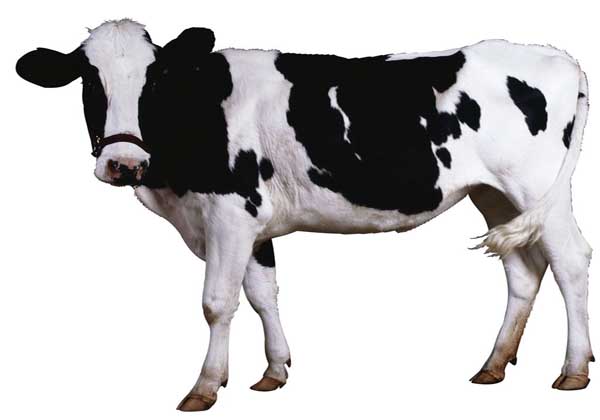
The age of dairy cattle is an important indicator for assessing their economic value and breeding value, and an important basis for feeding management and breeding. When breeders buy dairy cattle from other places, in the absence of detailed cattle records, they can estimate the age of the cattle based on appearance, horn rings and teeth, among which tooth determination is relatively accurate.
Appearance Determination
Young cattle generally have glossy hair that is moderately coarse and stiff, supple and elastic skin, full eye sockets, bright eyes and lively behavior; while old cattle have dry skin, coarse, messy and dull hair, sunken eye sockets, dull eyes, many wrinkles around the eyes and slow movement. Based on these features, old and young dairy cattle can be roughly distinguished, but the age of the cattle still cannot be accurately determined.
Horn Ring Determination
Because dairy cattle are affected by nutritional levels throughout the year, the length and thickness of the horns change in growth degree, thus forming alternating long and short, thick and thin rings. In regions with four distinct seasons, when cattle are naturally grazed or rely on natural forage, during the green grass season with rich nutrition, the horns grow faster; while during the dry grass season with insufficient nutrition, the horns grow slower. Therefore, one horn ring is formed each year. Thus, the age of the cattle can be estimated based on the number of horn rings, that is, the number of horn rings plus the number of years of growth of the unringed horn tip area (about 2 years), which equals the actual age of the cattle.
Tooth Determination
This is usually based on the emergence, replacement and wear of the incisors. Dairy cattle have a total of 32 teeth, including 4 pairs of front teeth (no upper incisors), 8 in total. The 1st pair is called the incisors, the 2nd pair is called the middle internal incisors, the 3rd pair is called the middle external incisors, and the 4th pair is called the corner incisors; the molars are divided into premolars and molars, with 3 pairs on each side, 24 in total. Newborn calves have 1 to 2 pairs of milk teeth; generally by 3 weeks of age all milk teeth have grown out, 20 in total, and are complete by 3 to 4 months of age, but there are no posterior molars. Differences between milk teeth and permanent teeth: milk teeth are small and white, have gaps between them, a smooth surface, are thin and fine, and have a distinct neck; permanent teeth are large and thick, brownish-yellow and rough.
Age of Dairy Cattle Tooth Condition 1.5 to 2.5 years: the 1st pair of incisors is replaced, and the 1st pair of permanent teeth emerges 2.5 to 3 years: the 2nd pair of incisors is replaced, and the 2nd pair of permanent teeth emerges 3 to 3.5 years: the 3rd pair of incisors is replaced, and the 3rd pair of permanent teeth emerges 4 to 4.5 years: the 4th pair of incisors is replaced, and the 4th pair of permanent teeth emerges 5 years: the 1st pair of incisors is worn 6 years: the 2nd pair of incisors is worn 7 years: the 3rd pair of incisors is worn 8 years: the 4th pair of incisors is worn 9 years: the 1st pair of incisors is depressed 10 years: the 2nd pair of incisors is depressed 11 years: the 3rd pair of incisors is depressed 12 years: the 4th pair of incisors is worn and depressed, and the dental stars are all nearly roundComparison Table of Dairy Cattle Age and Teeth