What are the prevention and treatment methods for bovine rumen impaction?
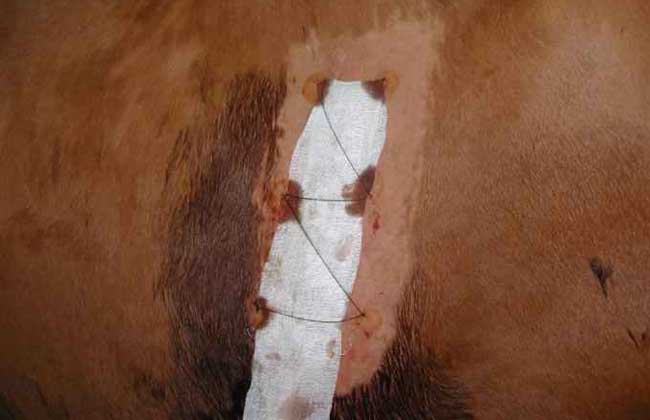
Bovine rumen impaction, also called acute rumen dilation, is a disease caused by excessive accumulation of coarse feed in the rumen, which leads to an increase in stomach volume, expansion of the rumen wall, and disruption of the normal digestion and motility functions of the rumen. On palpation it is hard, and rumen motility sounds are weakened or absent. Let us take a look together below at the prevention and treatment methods for bovine rumen impaction!
Symptoms of Bovine Rumen Impaction
In the early stage of the disease, appetite, rumination, and belching decrease or stop, and the nasal speculum is dry, with manifestations of arching the back, turning the head to look at the abdomen, kicking the abdomen with the hind legs, wagging the tail, and restlessness while lying down or standing. On palpation, the rumen is distended and firm, presenting a sandbag-like feel, and there is pain. Percussion gives a dull sound. On auscultation, rumen motility sounds are initially weakened and later disappear. In severe cases, there is difficulty breathing, groaning, vomiting of fecal water, sometimes flowing out from the nasal cavity. If not treated in time, death often results from dehydration, poisoning, exhaustion, or suffocation.
Causes of Bovine Rumen Impaction
1. Eating too much feed that easily swells, such as beans, grains, and so on.
2. Eating a large amount of semi-dry sweet potato vines, peanut vines, soybean straw, and so on that have not been chopped.
3. Suddenly changing feed, especially changing from coarse feed to concentrate feed without limiting the amount, easily causes this disease.
4. Caused by weak constitution, poor digestive capacity, insufficient exercise, eating a large amount of feed, and also insufficient drinking water.
5. Rumen atony, omasum obstruction, traumatic reticuloperitonitis, true abomasitis, and heat-related diseases can also cause it secondarily.
Treatment of Bovine Rumen Impaction
1. Massage therapy: Use the palm to massage the rumen at the left flank of the cow, 5-10 minutes each time, once every 30 minutes. Combined with drenching a large amount of warm water, the effect is better.
2. Diarrhea therapy: Magnesium sulfate or sodium sulfate 500-800 grams, add water 1000 milliliters, liquid paraffin oil or vegetable oil 1000-1500 milliliters, drench the cow to accelerate the discharge of rumen contents.
3. Motility-promoting therapy: Drugs that excite rumen motility can be used, such as 10% hypertonic sodium chloride 300-500 milliliters, intravenous injection, and at the same time neostigmine 20-60 milliliters, intramuscular injection, can achieve good therapeutic results.
4. Stomach lavage therapy: Use a rubber tube or plastic tube with a diameter of 4-5 cm and a length of 250-300 cm, insert it through the cow's oral cavity into the rumen, then move it back and forth to stimulate rumen contraction so that the liquid contents in the rumen flow out through the tube. If the rumen contents cannot flow out on their own, a funnel can be connected to the other end of the tube, and 3000-4000 milliliters of warm water can be poured into the rumen. When all the liquid in the funnel has flowed into the tube, remove the funnel and lower the cow's head and the tube, using the siphon method to draw the rumen contents out of the body. Repeat this, and the concentrate feed can be washed out.
5. Intravenous fluid therapy: When the sick cow's appetite and drinking are completely lost and dehydration is obvious, intravenous fluids should be given, along with alkali supplementation, such as 25% glucose 500-1000 milliliters, compound sodium chloride solution or 5% glucose saline 3-4 liters, 5% sodium bicarbonate solution 500-1000 milliliters, and so on, for a single intravenous injection.
6. Rumenotomy therapy: For severe and stubborn impaction, when drugs show no effect, rumenotomy can be performed to remove the rumen contents.