Key Technical Points for Free-Range Management of Calves in Winter and Spring
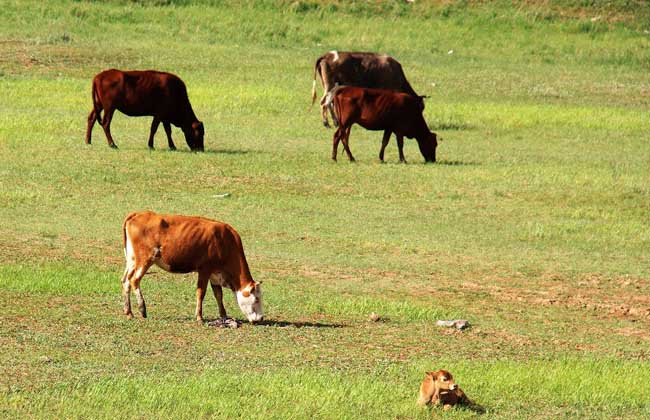
A normal calf can stand on its own within half an hour after birth and seek out the cow's teats to suckle colostrum, but some cows, due to poor physical condition during pregnancy and other reasons, often give birth to weak calves, which then require enhanced artificial care.
After the calf is born, before it suckles, use a clean cloth dipped in warm water to wipe away dirt from the udder, gently massage the udder, and let the calf suckle once the milk is about to drip.
For weak calves, assist the calf manually to stand and suckle. If the calf cannot stand, squeeze out the colostrum, smear it on your finger to entice the calf to lick it; or feed the calf with a bottle once every 1 hour until the calf can suckle on its own.
Supplement feed at the right time. At 14 days after birth, the calf can begin training to eat supplementary dried green grass; after 1 month, begin training it to eat concentrated feed, moistened with warm water and placed in a small feed trough for introduction to eating, or it can be fed as porridge.
Master the feed amount. A 1-month-old calf can be fed 50 grams of feed per day, increasing to 500 grams at 2 months of age; at 3 months of age, an appropriate amount of fresh green grass or silage forage can be added to the feed, after which weaning can take place.
In winter, the cattle shed should be protected from darkness and dampness. On fine days, lead the adult cattle to the yard and let the calves move freely and get more sunlight.
If you plan to raise the calf as a reserve draft animal, interact with and get close to the calf more often. Brushing the calf's body keeps it clean; brush from front to back and from top to bottom. But be careful not to touch the top of its head too much, to avoid developing a habit of butting people.