What are the key technical points for spring cattle farming and management?
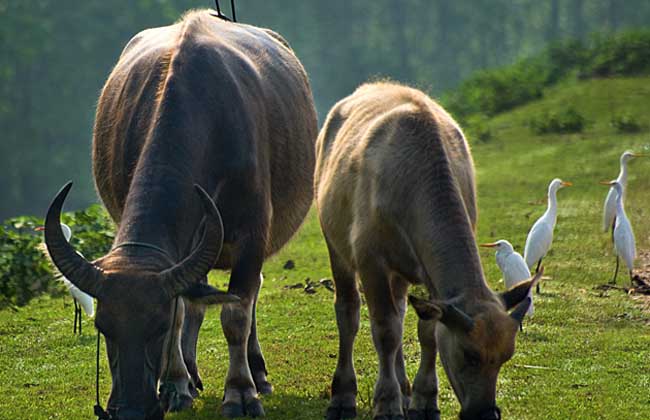
Spring is the peak season for breeding farming cattle, but with unpredictable climate changes, the illness and mortality rates of cattle are extremely high. Therefore, feeding management should be strengthened in spring, with scientific breeding and conception, to ensure the safety of both mother and offspring and improve the reproduction rate.
Feeding of non-pregnant cows
Each cow should be supplement-fed about 50 grams of salt and 1-2 kg of a mixed concentrate of barley, corn and soybean soaked in water and crushed. Water should be given before feeding grass; after the cow is 50-60% full, feed the mixed concentrate, then let it drink lightly salted water, and after the cow rests for 15-20 minutes, take it out to graze. After grazing and returning to the shed, prepare sufficient drinking water and night grass so the cow can drink and feed freely. If the cow is too fat, increase the amount of work and feed more roughage and succulent feed. If too thin, supplement more concentrate and green feed, striving to reach medium body condition before breeding.
Timely breeding of cows in estrus
After a cow comes into estrus, it is restless and excited, keeps mooing, raises its tail high, and a white translucent mucus flows from the vulva, which can be stretched into a 7-8 cm thread when pinched by hand. The estrus period of cattle lasts 18 hours, generally 12-22 hours, and ovulation occurs 10-15 hours after the end of estrus. Therefore, the suitable breeding time for cows is: if estrus occurs in the morning, breed at 8-10 pm that day, and breed once more at 7-8 am the next day; if estrus occurs in the afternoon, breed the next morning, and breed once more in the afternoon or evening.
Inducing estrus and ovulation in cows
If a cow's reproductive organs are normal but it does not come into estrus or misses the estrus period, pregnant woman's urine, diethylstilbestrol triple hormone, estradiol, etc. can be used to induce estrus and ovulation, so as to breed and conceive in time and prevent non-pregnancy.
Careful feeding of pregnant cows
Pregnant cows must meet the nutritional needs of themselves and the fetus, so high-quality compound feed should be provided, with a formula of 30% corn, 20% soybean cake, 15% rice grain, 15% cottonseed cake, 5% rapeseed cake, 15% rice bran, and an appropriate amount of bone meal and salt. 1-2 kg of concentrate per day, with sufficient green feed and ammoniated feed. Feed at fixed times, give small amounts frequently, and provide warm water for drinking. On sunny days, choose a leeward and sunny place for grazing to enhance the cow's exercise.
Prevent miscarriage and keep both mother and offspring safe
In mid-pregnancy, the cow's work intensity should be gradually reduced, and it is strictly forbidden to crack a cold whip, do rushed work, make sharp turns, or do heavy work. Stop working 1 month before calving to prevent miscarriage. If in the early stage of pregnancy the cow has mucus flowing from the vagina, keeps looking back at its abdomen, and is restless when lying down and getting up; in the later stage the mammary glands are swollen, it assumes an arched-back posture with frequent urination, has obvious abdominal pain, and fetal movement stops, these are signs of miscarriage and should be treated promptly. Progesterone 0.5-1 g can be injected intramuscularly, once a day, for 4-6 consecutive days. For mild dystocia in cows due to insufficient exercise, subcutaneous injection of 60-100 units of oxytocin or 10-20 mg of diethylstilbestrol has a good labor-inducing effect.
Strengthen daily feeding environment management
The shed should have its holes plugged, face the sun and avoid wind, not leak rain, and not be damp. Remove cow dung frequently and change the soil frequently, and frequently sun-dry and change the bedding straw. Regularly disinfect with quicklime or plant ash. After the cattle go out to graze, open the doors and windows of the pen for ventilation, brush the cow's skin every day to keep it clean, and enhance disease resistance.