How are beef cattle fattening feed formulas determined? Scientific ratios for fast fattening
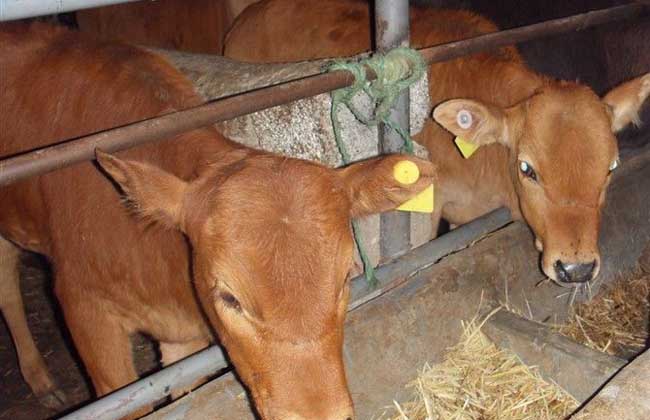
To fatten cattle as quickly as possible, on the premise of not affecting the cattle's normal digestion and absorption, within a certain range, the more nutrients fed, the higher the daily weight gain obtained, the less feed consumed per unit of weight gain, and the date of leaving the pen can also be advanced. The protein content in the feed can be lower, while the energy should be high. Let's take a look at the beef cattle fattening feed formula below!
Beef cattle fattening feed formula
1. Concentrate formula for fattening cattle under one year of age: corn 60%, soybean cake 12%, wheat 13%, fish meal 3%, oil and fat 10%, bone meal 10%, salt 0.5%.
2. Concentrate formula for fattening adult cattle: corn 67%, soybean cake 5%, wheat bran 10%, sorghum 8%, stone powder and shell powder 7% each, salt 7%, baking soda 2%, oil and fat 3%, appropriate amount of vitamin A.
3. Daily ration formula for fattening cattle: silage 25 kg, hay 4 kg, with the concentrate determined according to the condition of the fattening cattle. Calcium phosphate or calcium carbonate 0.0038 kg; if the cattle's body weight is large, it can be appropriately increased in proportion.
4. For thin cattle, weak cattle, or old cattle, forced fattening should be carried out. Under normal daily ration supply, rapid fattening is carried out as follows: soak 1-2 kg of rice in 10 kg of warm water (the amount for one cow), and after 12 hours, administer it to the cow by drenching together with the water 3 times a day for 3 consecutive days. During these 3 days, additionally soak 1.5 kg of soybeans until swollen and grind them into slurry for the cow to drink freely. After 3 days, take 0.5 kg of crab or yellow eel or loach, cook and mash it, mix it with 1.5 kg of distiller's grains, and let the cow take it once a day for 3 consecutive days. During these 6 days, choose one day, dissolve 20 tablets of trichlorfon in warm water, and then administer it to the cow in one drench to expel internal parasites.
Feeder cattle raising and management
1. Isolation: After newly purchased feeder cattle enter the farm, they should be raised in isolation for more than 15 days to prevent the introduction of diseases along with the cattle.
2. Drinking water: Because drinking water is difficult during transport, feeder cattle often suffer from severe dehydration, so after feeder cattle enter the pen, water supply must be well controlled. The first drinking amount should preferably be 10-15 kg, and industrial salt can be added (100 g per head). The second drinking should be 3-4 hours after the first drinking; during drinking, some wheat bran can be added to the water.
3. Feeding
① Roughage: First feed high-quality green hay, straw, and silage. The first feeding amount should be limited, 4-5 kg per head. After the second and third days, the feeding amount can be gradually increased to 8-10 kg per head per day. After the fifth and sixth days, they can feed freely.
② Concentrate feeding: After feeder cattle enter the farm, mixed concentrate can be fed 4-5 days later. The amount of mixed concentrate should go from less to more, gradually added; after 10 days, the normal supply amount can be fed.
4. Grouping: Raise in groups according to size and strength. The number of cattle per group is preferably 10-15 head. Grouping in the evening is easier to succeed. On the day of grouping, dedicated personnel should be on duty to observe, and fighting should be dealt with promptly. The cattle pen should be dry, and straw should be spread in the pen before grouping. Each head of cattle occupies 4-5 sq m of pen area.
5. Deworming: External parasites can reduce cattle feed intake, inhibit weight gain, and increase during the fattening period. Internal parasites absorb nutrients from intestinal chyme, affecting the growth and fattening effect of fattening cattle. Generally, avermectin can be selected, and one treatment can simultaneously kill multiple internal and external parasites. Deworming can be carried out from the 5th-6th day after the cattle enter the farm. Three days after deworming, each head of cattle is orally given 350-400 g of "stomach-strengthening powder" to strengthen the stomach. Deworming can be carried out once every 2-3 months. If cattle are purchased in autumn, fenthion should also be injected to prevent and control cattle grubs.
Fattening cattle raising and management
1. Feed formulas should be formulated according to the cattle's fattening stage, body weight, and local feed conditions.
2. Beef cattle are raised in groups according to body weight, size, strength, etc., and the feeding amount is given quantitatively as required.
3. Feed processing personnel must be serious and responsible. All types of beef cattle feed, especially additives, must be fully stirred and mixed evenly before being fed to cattle.
4. Under free-feeding conditions, there should be feed in the trough 24 hours a day and free drinking water, with water in the trough 24 hours a day. If beef cattle are fed at fixed meals, a feeding plan should be made and feeding should be on time, avoiding being sometimes early and sometimes late.
5. Do not add too much feed at one time. Feed must not be mixed with foreign matter such as wire and iron nails. Do not feed cattle with moldy and spoiled feed. After cattle leave the trough, clean the trough promptly to prevent residual forage from becoming moldy and spoiled in the trough. Pay attention to drinking water hygiene and avoid contamination of drinking water by toxic and harmful substances.
6. Keep the cattle shed clean, hygienic, dry, and quiet. Do a good job of environmental hygiene to reduce mosquitoes and flies disturbing the cattle and affecting the weight gain of fattening cattle.
7. For open-air fattening cattle farms (more than 100 cattle per pen), remove cattle manure once every 2-3 months. For fattening cattle farms with cattle sheds and pens (10-20 cattle per pen), remove cattle manure twice a day. On rainy days, do a good job of drainage in the exercise yard.
8. Feeding, disinfection, manure cleaning, etc. by caretakers should be carried out according to operating procedures, with gentle movements, maintaining a quiet environment.
9. Beef cattle should be protected from heat in summer and from freezing and kept warm in winter. Reduce stress.
10. Implement the principle of prevention being more important than treatment, and regularly do a good job of vaccine injection and epidemic prevention and health care.
11. Caretakers should constantly observe whether the cattle's feeding, drinking, feces and urine, rumination, and mental state are normal.
12. Brush the cattle's body once in the morning and once in the afternoon every day to promote blood circulation and increase appetite.
13. Cattle sheds and equipment should be repaired frequently. Easily damaged items such as halters and pens should be frequently inspected, repaired, and replaced.
14. Caretaker compensation adopts a system of basic wage plus bonus. The basic wage is 10 yuan per person per day, and the bonus wage is calculated based on the daily weight gain of fattening cattle. The content of the bonus wage can also include feed consumption (feed conversion), labor discipline, veterinary drug costs (per head of cattle), attendance rate, etc. Each item is refined into measurable grades, so that caretakers feel that the reward system can be achieved through effort, and the more effort, the higher the reward.
Notes: At different growth and development stages of the beef cattle fattening period, the main parts of cattle weight gain are muscle, internal organs, and bones, so the protein content in the feed can be lower, while the energy should be high. For cattle of any age, once fat deposition reaches a certain level, their vitality decreases, appetite decreases, feed conversion rate also decreases, and daily weight gain decreases. If fattening is continued, it is no longer worthwhile.