Detailed Explanation of Key Technical Points for Rural Dairy Cattle Farming
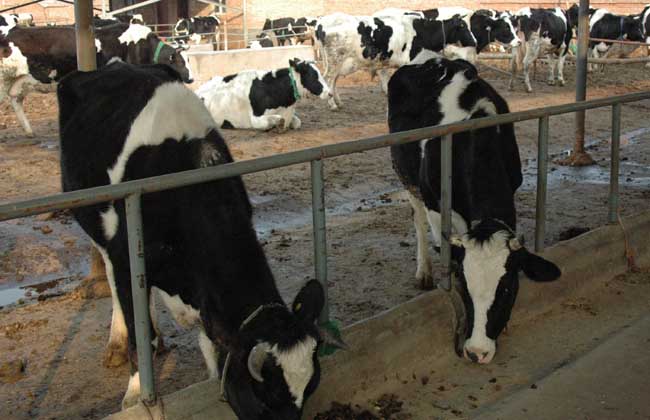
A few years ago in rural areas, it was nothing new for dairy farmers to raise dairy cows like yellow cattle, with extremely extensive feeding and management. Although dairy cows are also a type of yellow cattle, their farming differs greatly from that of ordinary yellow cattle. At the same time, scientific management was neglected, resulting in very low quality and yield of dairy cows. Let us now take a look at the common problems in rural dairy cattle farming technology!
Small scale of dairy cattle farming
There are many free-range households raising dairy cows in rural areas, with small scale, unable to raise by groups or manage centrally, and a very low degree of intensification. Without mechanized milking equipment, milking is done by hand, and milk quality cannot be guaranteed.
Single type of roughage
60% of rural free-range households mainly use dry corn stalks, with no corn silage; 90% of households do not feed hay; 95% of households do not feed alfalfa hay; 30%-40% of households lack knowledge about corn silage; and 70% of households do not sufficiently understand whole-plant silage, with most making silage after harvest, accounting for about 80%.
Poor awareness of scientific feeding
Awareness of scientific feeding is relatively poor, the ratio of concentrate to roughage is inappropriate, and the physiological laws of dairy cows are violated. Under a daily ration of corn “stalks + concentrate,” dairy cows are severely deficient in nutrition and milk yield is low. To increase milk yield, dairy farmers blindly increase the amount of concentrate fed, with the concentrate-to-roughage ratio reaching 50:50-60:40, causing many metabolic diseases. Treating these diseases requires a considerable expense, causing unnecessary economic losses and reducing the economic benefits of dairy cattle farming.
Unbalanced nutrition in dairy cows
In the supplemental concentrate, the amount of energy feed (corn) fed is too large, while the amounts of protein feed, vitamins and mineral feed are seriously insufficient. Milk yield cannot increase, and to raise milk production the amount of concentrate fed is increased further, creating a vicious cycle, wasting feed and increasing costs.
Poor quality of dairy cattle breeds
More than 40% of the dairy cows currently on hand were purchased at high prices from other places during the peak of dairy cattle development a few years ago, with mixed sources, no numbering, no pedigree and no breeding records. After farmers buy them, their awareness of breed improvement is poor, and they casually use frozen semen from Holstein cattle for breeding. Some are culled cows from dairy farms elsewhere, with reproductive tract diseases. After repeated artificial insemination failures, they switch to natural mating with local Holstein bulls. The breeds are relatively mixed, seriously affecting the improvement of dairy cow milk yield.
Relatively poor drinking water quality
More than 90% of milk is composed of water, so sufficient clean drinking water is especially important for dairy cows. Rural dairy cattle farming is mainly tethered, with water supplied at fixed times. Dairy cows cannot get sufficient drinking water, which affects their milk yield. In places short of water, domestic water or swill is used to water the cattle, which easily spoils in summer and causes digestive tract diseases. Drinking cold water or ice water in winter consumes body heat, and water intake is restricted, reducing the milk yield of dairy cows.
Disregard for disease prevention measures
In rural dairy cattle farming, except for a few large-scale households, most communities and almost all free-range households do not implement strict hygiene measures. Humans and livestock share the same yard, sanitation conditions are poor, and dairy cattle manure is not treated in time, piled in the cattle pen or in front of or behind the household yard, polluting the environment. The incidence of mastitis is high, reaching 10%-15%.
Severe predatory milking
A lactation period of a dairy cow is generally 305 days, after which it enters a 60-day dry period. Affected by factors such as milk yield, age, parity, body condition and feeding level, the dry period should be appropriately extended or shortened, and should be no less than 45 days at minimum. Some farmers, regardless of the circumstances, keep milking until there is no milk left, even until 1 day before calving. The negative effects this brings are serious: first, the dairy cow excessively consumes internal nutrients, affecting fetal development and the improvement of milk yield in the next lactation; second, it causes late or inconspicuous postpartum estrus, disordered sexual cycles, and difficulty in conceiving. The dry period is essential for dairy cows, and for cows in poor body condition it should be appropriately extended, so as to give the dairy cow sufficient rest and buffering time, make up for nutrients lost in the body, and lay the foundation for smooth calving and improved milk yield.