Key Points and Practical Methods of Dairy Cattle Breeding Technology Explained
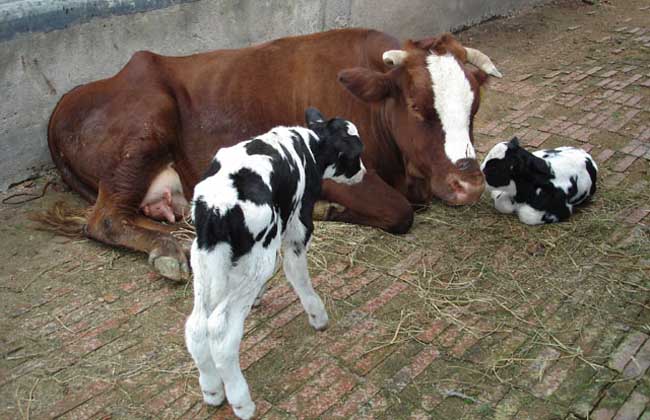
Dairy cattle are excellent breeds developed through highly selective breeding. In China, dairy cattle are mainly Holstein-Friesian. In order to enable cattle to reproduce normally, it is necessary to understand the reproductive physiology of dairy cattle and to carry out scientific feeding and management in production practice to ensure normal estrus and mating. Let us take a look at dairy cattle breeding technology below!
Age of Sexual Maturity in Dairy Cattle
1. Sexual maturity: Sexual maturity refers to the full development of the reproductive organs and secondary sexual characteristics of livestock, when the ovaries of a cow can produce mature eggs. The testes of a bull can produce mature sperm and it has normal sexual behavior. After mating, the cow can conceive and complete the process of pregnancy and embryonic development. The age of sexual maturity in dairy cattle is generally 8 to 12 months. However, cattle cannot be mated immediately after sexual maturity, because they are still in the process of growth and development themselves. Mating at this time not only affects the cattle's own growth and development and the subsequent performance of production traits, but also affects the healthy growth of the calf. Mating can only be carried out after the cattle have reached physical maturity.
2. Physical maturity: Physical maturity refers to the bones, muscles and internal organs of bulls and cows having basically completed development, and having the form and structure they should have at maturity. Physical maturity is later than sexual maturity. When the body weight of a cow reaches about 70% of the body weight of an adult cow, physical maturity is reached and mating can begin. The sexual maturity and physical maturity of cattle depend, on the one hand, on age, and at the same time are related to breed, feeding and management, climatic conditions, sex and individual development. Generally, small breeds mature earlier than large breeds, and those with good feeding and management conditions mature earlier than those with poor conditions. Warm climate regions mature earlier than cold regions, so determining the first mating of cows must be handled flexibly. The first mating age of dairy cattle is generally 1.5 to 2 years, but mating should not be too late either, as being too late often causes difficulties in later mating and also affects production.
The Estrous Cycle of Cows
1. Characteristics of estrus: After sexual maturity, cows begin to undergo a series of cyclical sexual activity phenomena, such as congestion and edema of the reproductive tract mucosa, discharge of mucus, mental excitement, appearance of sexual desire, acceptance of mounting by other cattle, and follicular development and ovulation in the ovaries. These internal and external physiological activities are called estrus. The stage in which the signs of estrus are concentrated is called the estrous period. The period from the beginning of one estrous period to the beginning of the next estrous period is called an estrous cycle.
2. Duration: The duration of estrus refers to the time from when a cow accepts mounting to when it avoids mounting. The duration of estrus in cows is short, generally averaging 18 hours, with a range of 6 to 36 hours, and individual cows reaching as long as 48 hours. Because the duration of estrus in cows is short, and artificial insemination is now used, attention must be paid to observing the estrus of cattle so as not to miss the estrous period and lose the opportunity for mating. Ovulation in cows occurs mostly at night. It is necessary to grasp its characteristics, seize the appropriate time for insemination, and improve the success rate of a single insemination.
3. Estrous cycle: The estrous cycle of cows averages 21 days. The estrous period is affected by factors such as light, temperature, feeding and management, and individual conditions, and has a range of variation, with the range of variation being 17 to 25 days. The estrous period consists of proestrus, estrus, metestrus and diestrus.
① Proestrus: Proestrus is the preparatory period of estrus. The vaginal secretions gradually change from a dry and sticky state to thin, and secretions increase. The reproductive organs begin to become congested, but the cow does not accept mounting by other cattle. The duration of this period is 4 to 7 days.
② Estrus: Estrus is the period of strong sexual desire in cows, manifested by decreased appetite, mental excitement, frequent mooing, raising of the tail base, and willingness to accept mounting by other cattle. The vulva is red and swollen, and a large amount of viscous transparent fluid flows from the vulvar opening. The vaginal mucosa is flushed and glossy, and mucus secretion increases. In the herd, some cattle often sniff the vulva of cows in estrus.
③ Metestrus: Metestrus is the period when the signs of estrus gradually disappear. The cow's sexual desire disappears and it refuses mounting. Vaginal secretions decrease, and the congestion and swelling of the vaginal mucosa gradually subside. The duration of metestrus is 5 to 7 days.
④ Diestrus: Diestrus is also called the interestrous period. During this period, the corpus luteum gradually disappears and the follicles gradually develop to the next sexual cycle. The duration of diestrus in cows is 6 to 14 days. If the cow becomes pregnant after mating, this period is called the gestation period, and the cyclic corpus luteum turns into the corpus luteum of pregnancy, and estrus no longer occurs until calving.
Estrus Identification in Cows
1. External observation method
① Duration of estrus: In the early stage, the cow is restless and excited, howls, walks about, has reduced appetite, and mounts and runs. At this time, mating is still too early. In the middle stage, the cow accepts mounting and spreads its hind legs. At this time, mating should be done every other day. In the final stage, the cow gradually becomes quiet, the bull still follows and sniffs, and when the bull mounts, the cow swings its rump to refuse mounting, but rarely runs. At this time, mating is just right.
② Degree of external swelling: In the early stage of estrus, the vulva begins to swell and redden. In the middle stage of estrus, the vulva is swollen and obviously glossy. At this time, mating is still too early. When the swelling basically disappears and wrinkles appear on the vulva, this is exactly the time for mating.
③ Characteristics of mucus: The mucus flowing from the vagina during estrus in cows can be called estrous fluid. From its production to its end, in terms of color, it goes from blue to yellow or clear white; in terms of viscosity, its stringiness goes from small to large, and then from large to small. The result is that when a short yellow thread or short white thread is seen, mating is carried out.
④ Changes in the cervix: During diestrus, the cervix of a cow is relatively hard, feeling like a rubber stick when touched rectally. As the duration of estrus lengthens, the cervix changes from hard to soft and becomes thicker. At the end of estrus, when the external opening of the cervix changes from soft to hard, but the internal opening is still soft and loose, mating is most suitable.
⑤ During estrus, cows often appear excited and restless, with reduced appetite and milk yield, raise the tail base, chase and mount other cows and accept mounting by other cattle. The difference between the two is: if the cow being mounted is in estrus, it stands still and raises its tail; if it is not a cow in estrus, it often arches its back and runs away. When a cow in estrus mounts other cattle, the vulva twitches and urine drips, with the mating action of a bull. The vulva is red and swollen, and mucus flows from the vulvar opening.
2. Teaser method: One way is to place a bull with a ligated vas deferens into the cow herd, put it among the herd for teasing during the day, and separate the bull and cows at night, judging the estrus of the cows according to the bull's chasing and mounting behavior and the degree to which the cows accept mounting. Another way is to bring a teaser bull close to the cow. If the cow likes to stay close to the bull and assumes a bent-waist, arched-back posture, it indicates that it may be in estrus.
3. Vaginal examination method: The vaginal examination method uses a vaginal speculum to observe changes in the vaginal mucosa, secretions and the opening of the cervix to determine whether the cow is in estrus. In a cow in estrus, the vaginal mucosa is congested and flushed, and the surface is smooth and moist. The external opening of the cervix is congested, relaxed, soft and open, and a large amount of transparent stringy mucus is discharged, like a glass rod (commonly known as hanging thread), which is not easy to break. The mucus is initially thin, and as the duration of estrus progresses, it gradually becomes thicker, and the amount also changes from little to much. By the late stage of estrus, the amount gradually decreases and the viscosity becomes poor, the color is not transparent, and sometimes it contains light yellow cell debris or a trace of blood. Cows not in estrus have a pale, dry vagina and a tightly closed cervix, so no mucus flows out.
4. Rectal examination method: The estrous period of cows is short (12 to 18 hours). Generally, 1 to 2 matings during the estrous period are sufficient, and it is not necessarily required to use the rectal examination method to determine the time of ovulation. However, some cows with malnutrition have declining reproductive function and slow follicular development, so the time of ovulation will be delayed. The ovulation time of some cows may also be earlier, with no regularity. But in most cases, follicular development is slow and ovulation is delayed. For these cows, without rectal examination, their ovulation time cannot be correctly judged. In order to correctly determine the suitable time for mating, in addition to external observation, it is also necessary to carry out rectal examination. Through rectal palpation, the follicular development situation is examined and can be divided into four stages.
① Stage of follicular appearance: The follicle is slightly enlarged, with a diameter of 0.5 to 0.75 cm. On palpation, it is a softened point with no obvious fluctuation. In this stage, cattle generally have already begun to show estrus.
② Stage of follicular development: The follicle enlarges to 1 to 1.5 cm, presenting a small spherical shape with obvious fluctuation. In the latter half of this stage, the signs of estrus are no longer very obvious.
③ Stage of follicular maturity: The follicle no longer enlarges, but the follicular wall becomes thinner and tension increases. During rectal examination, there is a feeling that it will rupture at a touch.
④ Ovulation stage: The follicle ruptures and ovulates, and the follicular fluid is lost, so the follicular wall becomes soft and loose, forming a small depression. Six to 8 hours after ovulation, the corpus luteum begins to form, and the depression can no longer be felt. Ovulation mostly occurs 10 to 15 hours after the disappearance of sexual desire. Ovulation at night is more common than during the day, and ovulation from the right ovary is more common than from the left.