Methods and Technical Key Points for Building a Dairy Cattle Farm
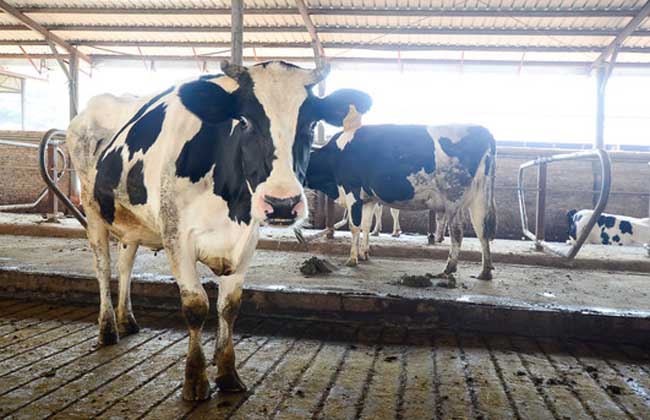
With the demand for dairy products rising rapidly today, there is a large market space, and dairy cattle farming is now a very promising farming project. Local governments in various places also strongly support dairy cattle farming, making it one of the projects for farmers to get rich. However, before raising dairy cattle, you need to have a detailed plan for the dairy cattle farm. Below, let us take a look at the methods for building a dairy cattle farm!
Site Selection for a Dairy Cattle Farm
The site selection for a dairy cattle farm should comply with the local land use development plan and the village and town construction development plan. It should be at least 300 m away from residential areas, with high and dry, flat terrain and a slope of less than 20°, easy drainage, ventilation and sun exposure, and sufficient sunlight. There should be no pollution sources nearby, and the soil quality of the farm area should comply with the provisions of GB15618. It should be at least 1000 m away from major traffic roads, factories and mines, enterprises, other pastures, and livestock product processing plants. The power supply should be sufficient, the communication infrastructure should be good, and there should be sufficient clean water sources nearby that are convenient to access. Note that farms must not be built in water protection areas, tourist areas, nature reserves, severely environmentally polluted areas, areas where livestock and poultry diseases occur frequently, valley lowlands, and other areas threatened by flooding.
Planning of a Dairy Cattle Farm
A large-scale dairy cattle farm should have facilities such as a disinfection room, disinfection pool, veterinary room, adult dairy cow barn, maternity barn, calf barn, growing heifer barn, observation cattle barn, isolation cattle barn, feed room, silage pit, ammoniation pit, manure storage yard, manure and sewage treatment facilities, cattle loading platform, garage, office, and dormitory. These facilities are laid out according to their functional zones, and the whole farm forms 3 functional zones: the living and management zone, the production zone, and the isolation zone. According to the prevailing wind direction throughout the year and the topography, the management zone and living zone should be placed in the upwind direction and on higher ground, while the manure and sewage treatment site and sick animal barn should be placed in the most downwind direction and on the lowest ground, with the production zone in the middle. The long axis of the cattle barn buildings should be oriented east-west, and the cattle barns should face south or within 15 degrees south by east.
Construction of a Dairy Cattle Farm
1. Management zone: The buildings and facilities in the management zone should meet the needs of community management, technical archive and data management, reproduction technical services, veterinary drug technical services, epidemic prevention technical services, feeding technical services, and feed processing.
2. Production zone: The buildings and facilities in the production zone should be able to meet the needs of raising various types of cattle and storing feed. In the pasture production zone, several lactating cow raising units and centrally managed maternity barns, transition-period cow barns, calf barns, growing cattle barns, growing heifer barns, dry cow barns, silage facilities, and roughage storage and processing facilities, etc., should be set up.
3. Milking zone: The milking zone should be equipped with a milking parlor and raw milk cooling and storage facilities, with unified milking operation standards and dedicated milking personnel.
4. Isolation zone: The isolation zone should be equipped with a sick cattle barn and a veterinary room, which can meet the needs of diagnosis, treatment, and isolation of sick cattle.
5. Manure and urine treatment zone: The manure and urine treatment zone should have the functions of high-temperature composting treatment of manure and sewage treatment. When conditions permit, a solid-liquid separation system and manure and urine biogas treatment facilities should be established.