Algae in a planted aquarium hard to control? Get these 4 points right and it is easily solved
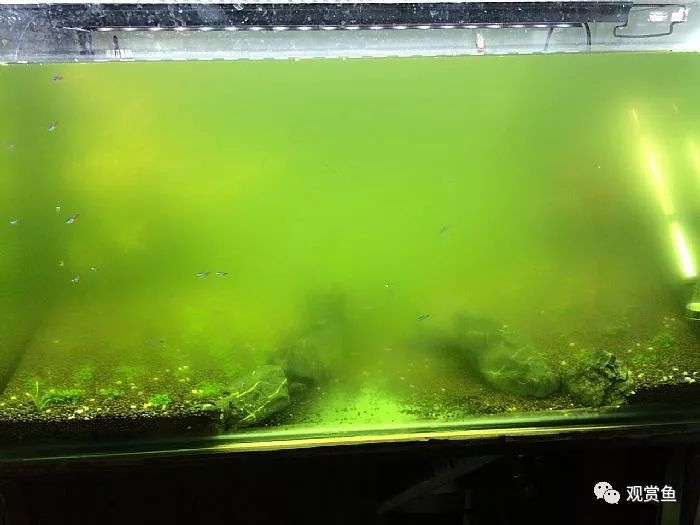
Anyone who keeps fish knows that algae can be called the bane of the aquarium. It is remarkably tenacious and even adapts to whatever conditions it finds, able to attach to and grow on the surface of leaves or on the glass, and once it takes root, it becomes hard to remove, making it one of the difficult problems in keeping aquatic plants. So how exactly should we prevent algae?
1. Early prevention is better than cautious treatment
1. You can use an anti-algae agent
Before aquascaping a new fish tank, you can set up defenses in advance. Before planting and cultivating aquatic plants, you can put an anti-algae agent into the water as a first round of prevention; then, before arranging the layout, disinfect the plants that will go in, to prevent algae from entering the tank and growing.
2. Check whether algae is present
When selecting aquatic plants, observe whether there is algae on the surface of the plants. If the amount of algae on the leaf surface is rather large, it is best to give up on that plant; if you have already chosen a plant but find some algae on it, you can gently wipe its surface with your hand.
3. Carry out a safety step
Then use a 50% ratio to adjust the anti-algae agent for the removal step. For plants you have just selected, whether or not there is algae on their surface, it is recommended that before putting them in, you prepare a 20% solution of anti-algae agent mixed with water as a preventive step; this is safer.
2. Issues related to light exposure
1. Adjust the intensity of the light
In addition, pay attention to the lighting situation. If the light is too strong or lasts too long, it can also become a factor in algae growth. So remember to arrange a reasonable light intensity according to the size and condition of your own planted tank.
2. Natural light tends to grow it easily
Algae tends to appear more easily with natural lighting, so try to avoid natural light and switch to artificial lighting; after all, the intensity of artificial lighting is easier to control. The usual lighting duration for a normal planted tank is around 4 hours.
3. Pay attention to the number of fish in the tank
1. Feces breed algae
The number of fish kept must also be controlled. In a planted tank, aquatic plants are the main feature of the layout, and the fish only play a supporting role, so fewer but finer is best. This is because the excretions and secretions of ornamental fish also easily cause algae to grow.
2. Do not feed too much
Of course, fresh fish food and live worms are also one of the important causes of algae appearing. In addition, try to mainly use prepared feed, with appropriate feeding frequency and amount. It is recommended not to overdo it; just make sure the fish can survive.
4. Fish species that can clean the aquarium environment
1. Water flow needs to be stable
The fertilizer required by the aquatic plants in the aquarium can be added in proportions calculated according to the plants' growth condition, and decaying or damaged branches and leaves should be trimmed frequently. Normally, clean the inner glass of the fish tank more often so that algae cannot settle on the glass, and be sure to maintain a certain water flow.
This is because most aquatic plants grow in flowing water environments; a relatively strong water flow makes the plants stand more upright and can also keep the leaf surfaces clean.
2. Algae-cleaning fish species
In addition, the owner can keep some fish species in the aquarium that feed on algae, such as the golden algae eater, the Siamese algae eater and the red-tailed black shark, and so on, to help keep the inside of the fish tank clean.
You can also keep black ball fish or black mollies, because these fish will also eat the algae growing on leaf surfaces, though algae is not their main food.