The edible pothos-like plant grows everywhere in the wild, and as a potted plant at home it grows extremely fast, ready to pick and eat whenever you like.
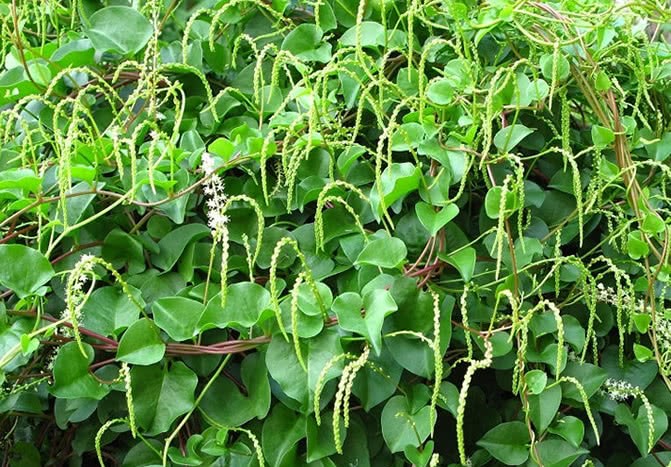
When I was little, a kind of climbing vine vegetable grew in our yard, called Tengqi (Anredera cordifolia, known as Madeira vine or mignonette vine). Its green leaves and slender stems could climb everywhere, looking from afar like a cascade of lush green. I wonder if you have ever seen it? Actually, it is somewhat similar to the pothos we keep at home, but it is a very delicious vegetable.
Tengqi, also called Tengsanqi (Anredera cordifolia, Madeira vine), is a wild vegetable used both as food and medicine, and it also looks very similar to another leafy green called tofu vegetable. In the countryside and in the wild you can see them anytime, all growing wild, and without any care they will climb and grow along courtyard walls and fences, so whenever you want to eat some you can simply pick it.
When eating Tengsanqi, you can pick its tender leaves to make dumplings and soup, and the taste is tender and delicious. You can also eat its bulbils and the dug-up tubers, which are starchy, soft and fragrant and can be used in stews. It is rich in nutrients and has tonic properties, and also has effects such as dispersing blood stasis and relieving pain, dispelling wind and dampness, lowering blood lipids and blood pressure.
Because Tengsanqi is easy to cultivate, has few pests and diseases, and grows extremely fast, it is very suitable for growing in pots at home. You can pick it for use as a vegetable, and it can also beautify the environment just like pothos, achieving two things at once.
Notes on potting Tengsanqi
Potted Tengsanqi has strong adaptability and does not demand much from the soil; loose soil is enough. It is easy to plant and easy to care for, and roots easily. Generally, a newly potted Tengsanqi will grow rapidly after about 10 days of adapting to the environment, so you should set up a trellis for it in advance.
Tengsanqi can adapt to dry environments, but in summer it should be given more water and must not lack water; keeping the potting soil slightly moist is best.
Tengsanqi is very shade-tolerant and does not demand much sunlight, so a moderate amount of light is enough, and it is best not to expose it to strong sun in midsummer.