How to treat grass carp hemorrhagic disease for good results?
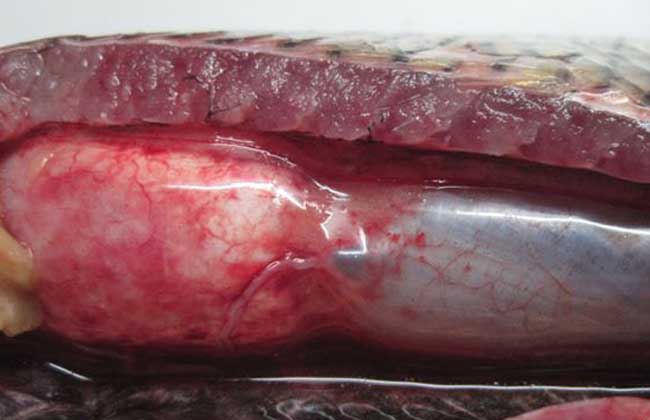
Grass carp hemorrhagic disease is a viral fish disease that occurs during the fingerling rearing stage of grass carp. It has a wide epidemic area, a long epidemic season, a high incidence rate, a high mortality rate and great harmfulness. It mainly infects grass carp with a body length of 15 cm and one-year-old black carp. The pathogen is aquareovirus, belonging to the family Reoviridae and the genus Aquareovirus. Let's take a look below at how to treat grass carp hemorrhagic disease.
Epidemic situation of grass carp hemorrhagic disease
1. Epidemic areas: The epidemic season of grass carp hemorrhagic disease is from June to September. It was first discovered in 1970, and thereafter it became epidemic successively in major fish farming areas of Hubei, Hunan, Guangdong, Guangxi, Jiangsu, Zhejiang, Anhui, Fujian, Shanghai, Sichuan and other provinces, municipalities and autonomous regions.
2. Susceptible species: Both grass carp and black carp can develop the disease, but it mainly harms grass carp. Grass carp ranging from 2.5 to 15 cm in size can all develop the disease, and the mortality rate can reach more than 80%. Sometimes large grass carp over two years old also develop the disease. In recent years, because various places have neglected immunization work, the incidence of viral disease in grass carp has shown an upward trend.
3. Water temperature for onset: It becomes epidemic when the water temperature is 20 to 33°C, and the most suitable epidemic water temperature is 20 to 28°C. When water quality deteriorates, dissolved oxygen in the water is low, transparency is low, total nitrogen, organic nitrogen, nitrite nitrogen and organic matter oxygen consumption rate in the water are high, water temperature changes greatly, fish body resistance is low, and the amount of virus is large, it is prone to become epidemic. It also occurs when the water temperature is 12°C and 34.5°C.
Pathogenesis of grass carp hemorrhagic disease
Artificially infecting healthy grass carp, it takes 4 to 15 days from infection to onset and death, generally 7 to 10 days. The disease course is divided into three stages: incubation period, prodromal period and developmental period.
1. Incubation period: The incubation period of grass carp hemorrhagic disease is 3 to 1 day. During this period, the fish shows no symptoms in appearance, and its activity and feeding are normal. The length of the incubation period is closely related to water temperature and virus concentration. The higher the water temperature and the higher the virus concentration, the shorter the incubation period; conversely, the longer the incubation period.
2. Prodromal period: The prodromal period of grass carp hemorrhagic disease is short, only 1 to 2 days. The fish body color becomes dark and black, it swims alone away from the group, and stops feeding.
3. Developmental period: The developmental period of grass carp hemorrhagic disease varies in length, generally 1 to 2 days. Sick fish show symptoms of congestion and hemorrhage.
Symptoms of grass carp hemorrhagic disease
1. "Red muscle" type: Tear open the skin of the sick fish or inspect the fish body against sunlight or lamplight, and subcutaneous muscle congestion can be seen. In severe cases, the muscles all appear red. It is generally more common in smaller grass carp fingerlings (body length 10 cm).
2. "Broad red fins and red gill covers" type: The gill covers, fin bases, top of the head, oral cavity and eye sockets of the sick fish are obviously congested. It generally appears in larger grass carp fingerlings (body length 13 cm or more).
3. "Enteritis" type: The intestines of the sick fish are congested, often accompanied by loose scales and muscle congestion. It can be seen in grass carp fingerlings of all sizes.
Prevention and treatment methods for grass carp hemorrhagic disease
1. Inject or soak with inactivated grass carp hemorrhagic disease tissue pulp vaccine or attenuated cell vaccine for prevention.
2. During the disease season, splash disinfectants such as chlorine dioxide and surfactants over the whole pond.
3. Apply the antiviral Chinese herbal medicines rhubarb or scutellaria over the whole pond, with a dosage of 1 to 2.5 mg/L of water body.
4. For each mu with a water depth of 1 m, use 75 g of honeysuckle, 75 g of chrysanthemum, 375 g of rhubarb and 225 g of phellodendron, grind them into fine powder, add 150 g of table salt, mix them, add an appropriate amount of water and splash over the whole pond.
5. For every 100 kg of fish body weight per day, use 8 to 10 kg of water peanut, 500 g each of garlic bulbs and table salt, beat them into a pulp, mix in 3 kg of rice bran, and feed continuously for 5 days.
6. For every 100 kg of fish body weight, use 10 kg of water peanut, mash it, mix it with 500 g of table salt, 1 kg of rhubarb powder, 2 kg of Chinese chives or 500 g of raw garlic, then mix with 10 to 20 kg of rice flour, wheat bran or duckweed to make medicated bait, and feed continuously for 7 to 10 days.