Detailed Explanation of Key Points in Channel Catfish Farming Techniques
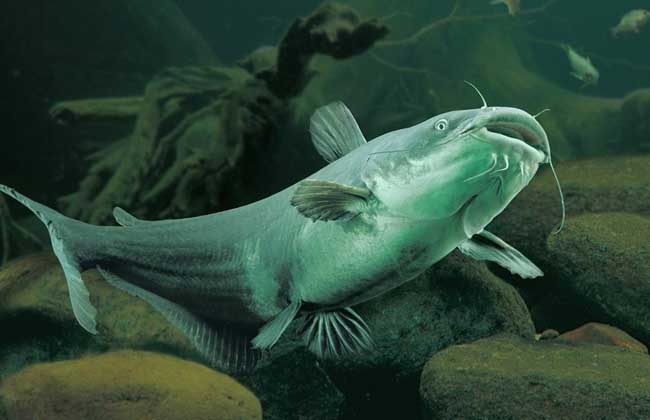
Channel catfish, also known as channel cat, spotted catfish, etc., is a large freshwater fish of the order Siluriformes, family Ictaluridae. It has the advantages of omnivorous feeding habits, fast growth, wide adaptability, strong disease resistance, and superior meat quality. It is native to North America and was introduced from the United States for domestication in 1985, with successful breeding achieved in 1989. Let's take a look at channel catfish farming techniques below!
Growth Habits of Channel Catfish
Channel catfish can spawn in rivers, lakes, reservoirs, and ponds beneath rock protrusions, or under submerged trees, stumps, roots, or in burrows of river channels. They like to gather and feed under dim light conditions and have a habit of feeding at night and resting by day. They begin feeding at water temperatures of 4-5°C and stop feeding at 39°C. The growth temperature range is 5-36.5°C, with the optimal growth temperature being 18-30°C. Dissolved oxygen above 3 mg/L is preferable; when it drops below 0.8 mg/L, they surface for air, and at 0.34 mg/L they suffocate and die. The normal growth pH range is 6.5-8.9. Under pond culture conditions, they grow to 13-35 cm in the first year, 35-45 cm in the second year, and 45-57 cm in the third year.
Water Quality Requirements for Channel Catfish
1. Water source requirements: The commonly used water sources for channel catfish fry rearing are groundwater and surface water. Generally speaking, groundwater is the best water source for channel catfish breeding and hatching because groundwater usually has no suspended solids, is unpolluted, contains no pathogens, and has relatively stable water temperature and chemical composition. Surface water includes streams, rivers, ponds, lakes, and reservoirs. Unpolluted surface water as a water source is superior to groundwater.
2. Water temperature requirements: The suitable temperature for egg hatching and fry rearing is 26-28°C. If the water temperature is too low, the egg hatching period will be prolonged, and at low temperatures fungi will proliferate massively, affecting normal egg development. If the water temperature is too high, the fry deformity rate will increase, and when the water temperature exceeds 28°C, eggs and fry are highly susceptible to bacterial and viral diseases. Therefore, the hatching water temperature should preferably be controlled at around 27°C.
3. Dissolved oxygen requirements: The dissolved oxygen content of hatching water should be maintained above 4 mg/L. In addition to fully aerating the water source before it enters the hatching pond, aeration equipment should also be installed in the hatching pond to continuously aerate and keep the hatching pond water circulating.
Broodstock Cultivation of Channel Catfish
1. Broodstock selection: During the broodstock cultivation period for channel catfish, select 4-5 year old fish with robust physique and good growth performance as broodstock, paired at a female-to-male ratio of 1:1. The broodstock pond area is 3-5 mu, with 60-80 broodstock per mu, about 150-200 kg, and a small number of silver carp and bighead carp fingerlings are also stocked to improve pond water quality.
2. Overwintering management: Before overwintering, channel catfish broodstock should receive intensified cultivation measures to allow them to accumulate certain nutrients. This is both the material basis for broodstock egg development and helps the broodstock overwinter smoothly. In winter, as long as the water temperature is above 10°C, broodstock can still feed in small amounts, so some feed should be provided in appropriate quantities.
3. Pre-spawning cultivation: Pre-spawning cultivation of channel catfish is the most important, which means strengthening feeding and careful management after the beginning of spring. First, partially replace the pond water and add fresh water. After the water temperature rises, broodstock feeding becomes increasingly vigorous, so the feeding amount should be gradually increased, and some animal-based feed should be appropriately added, such as livestock and poultry viscera, small fish and shrimp, etc. To raise the water temperature in the broodstock pond, the water level can be appropriately lowered, while attention should be paid to strengthening water flushing.
Fry Cultivation of Channel Catfish
1. Temporary rearing management: Channel catfish fry can be temporarily reared 2-3 days after hatching. The temporary rearing pond is preferably a cement pond with an area of 1-2 sq m, and 10,000-15,000 fry can be temporarily reared per sq m. The pond needs a slight water flow. After 2-3 days, some suitable feed should be provided, with rotifers being the best; when insufficient, artificial powdered compound feed can also be fed.
2. Summer fingerling cultivation: After 5-6 days of temporary rearing, channel catfish fry can be transferred to a dedicated pond for summer fingerling cultivation. Summer fingerling cultivation can use cement ponds with flowing water or smaller earthen ponds, with a water depth of 0.7-1 m. Disinfect using conventional methods, and after the drug toxicity disappears, apply base fertilizer to cultivate zooplankton. Before fry are stocked into the pond, bathe them in 8 g/cubic m copper sulfate solution for 10-20 minutes for disinfection.
3. Stocking density: In flowing water cement ponds, 8,000 fry can be stocked per cubic m of water; in earthen ponds, 50,000-80,000 fry per mu. Two to three days after fry are stocked into the pond, since the pond has abundant natural food, feeding is generally not needed; afterward, artificial feed is provided. The main components of artificial compound feed are fish meal, corn meal, soybean meal, vitamins, and minerals, etc., with a protein content requirement of 35-40%.
4. Feeding management: The daily feeding amount for channel catfish should be determined based on weather, water temperature, and fish feeding conditions, preferably consumed within half an hour after feeding. Throughout the fry rearing period, fresh water should be frequently added, and all incoming water must be filtered. Dissolved oxygen in the water should be maintained above 4 mg/L. After about 20 days of cultivation, the fry can grow into summer fingerlings with a body length of about 4 cm.
Fingerling Rearing of Channel Catfish
1. Fingerling cultivation: The fingerling rearing stage of channel catfish is to raise the summer fingerlings for a further period to cultivate them into large-sized and robust fingerlings. The fingerling pond is preferably 3-5 mu, with a water depth of 1.3-1.5 m. Stocking methods are divided into two types: primary culture and polyculture.
2. Stocking methods: For primary culture of channel catfish, stock 6,000-8,000 summer fingerlings per mu, and about 1,000 silver carp summer fingerlings. For polyculture, stock 1,000-2,000 summer fingerlings per mu, about 2,000 silver carp summer fingerlings, 500 bighead carp summer fingerlings, and 1,000-1,200 grass carp summer fingerlings. Polyculture is generally preferred because silver carp and bighead carp mainly feed on plankton. Polyculture with catfish fingerlings can both prevent plankton from overproliferating and affecting water quality, and improve water body utilization, increasing total fingerling production.
3. Feed feeding: Feed is mainly artificial feed, supplemented with a small amount of organic fertilizer. Feed should be processed into fine granules with a crude protein content of about 35%. The daily feeding amount is generally 3-5% of the total fish body weight, fed once in the morning and once in the afternoon. During the rearing period, attention should be paid to appropriately adding or changing water to improve water quality and maintain pond water dissolved oxygen above 3 mg/L.
Adult Fish Rearing of Channel Catfish
1. Pond culture: Channel catfish adult fish culture has a high survival rate, a relatively short time, and is not very demanding on culture conditions. It is mainly pond culture, with an area of 3-6 mu and a water depth of 1.5-2 m being suitable. It can be cultured alone or in polyculture; generally, polyculture results are better. The fish species suitable for polyculture with channel catfish mainly include silver carp, bighead carp, grass carp, bream, and tilapia.
2. Feed formulation: In channel catfish farming, feed formulation and feeding techniques are very important for their growth. There has been in-depth research both domestically and internationally, and various feed formulations have been designed. The main raw materials for feed processing in China include fish meal, soybean meal, wheat meal, and corn meal, etc., with a crude protein content of 25-35%.
3. Feed feeding: Channel catfish feed is best processed into both sinking and floating pellets. When the water temperature is above 15°C, feed floating pellets; when the water temperature is below 15°C, feed sinking pellets. Feed twice daily, once in the morning and once in the afternoon. The feeding area should be expanded as much as possible. Observe fish feeding conditions daily and adjust the feeding rate promptly.
4. Water quality management: Channel catfish has relatively poor tolerance to low oxygen. To prevent surfacing and pond turnover, the pond water should be frequently changed to maintain fresh water quality. The dissolved oxygen in the fish pond water should be consistently maintained above 3 mg/L.
Cage Culture of Channel Catfish
1. Cage setup: Select water areas with clear, lean water quality and a transparency of about 100 cm. The cage specifications are 3.0*4.0*2.5 m, with an effective depth of 2 m, double-layer open-top structure. The outer layer is made of knotted mesh with a mesh size of 2 cm, and the inner layer is made of 7-mesh rubber thread netting. Hang 5 kg sandbags at each of the four corners inside the cage. Cover the top of the cage with shade cloth, leaving a feeding opening. A feeding frame for floating feed is installed inside the cage.
2. Fry stocking: After the cage is set up, soak the netting 7 days before stocking fry. Stock 21,900 fish per cage. Before fingerlings are placed into the cage, soak them in 3% salt water for 5 minutes, with aeration provided by an air pump during soaking. The fingerlings had already been trained to eat floating extruded feed before purchase.
3. Feed feeding: Start feeding on the evening of the day fingerlings are stocked, feeding full-price pellet feed. During the training period, tap with a wooden stick to create sound, so that the fingerlings form a conditioned feeding reflex. Adjust the feed particle size according to fingerling growth. The feeding amount transitions from 10-12% in the first two weeks to 6-8%, and the feeding frequency transitions from 4 times/day initially to 2 times/day.
4. Daily management: Persist in inspecting the cage every morning and evening, clean up leftover feed and dead fish. When rat traces are found or feeding suddenly decreases, promptly lift the cage for inspection to prevent fish escape. If disease is found, treat it promptly. If mesh is clogged, clean it promptly to ensure water exchange inside the cage, and keep records of water temperature, feeding amount, etc.
Disease Prevention and Treatment of Channel Catfish
1. Viral diseases
[Symptoms] The skin and fin bases of diseased fish bleed, the abdomen swells, and there is pale yellow exudate (ascites). Gills are pale or bleeding, and one or both eyeballs protrude. Upon dissection, bleeding areas can be seen in muscle tissue, liver, kidney, and spleen. The spleen is light red and enlarged, the stomach is distended with mucous secretions. The intestine is grayish-white with no food. Diseased fish swim in a spiral pattern, are sluggish, and hang vertically in the water with the head up. This disease is highly contagious through contact. It occurs at a water temperature of 30°C and mainly harms fingerlings under 10 cm; juveniles of 3-4 months old can also be infected. The disease course is generally 3-7 days. Mortality can reach 95-100%, and surviving fish grow slowly.
[Prevention and treatment] There is no effective drug treatment for viral diseases of channel catfish. Lowering the water temperature can reduce mortality, but it is not practical in production. Therefore, prevention should be the starting point, paying attention to stocking density and strengthening feeding management.
2. Hemorrhagic septicemia
[Symptoms] Diseased fish swim sluggishly and convulsively in the water, stop feeding, and have circular sparse ulcers on the body surface (skin and muscle necrosis). The abdomen swells, eyeballs protrude, and the body cavity is filled with blood-tinged fluid. The kidney becomes soft and enlarged, the liver is grayish-white with small bleeding points, the intestine is filled with blood-tinged or pale red mucus, and the posterior intestine and anus often show bleeding symptoms and swelling. This disease occurs mostly in spring or early summer.
[Prevention and treatment] Splash 2 PPM oxytetracycline solution onto the pond water. Mix 50 mg oxytetracycline per kg of fish per day, or 0.5 kg garlic and 0.1 kg salt per kg of fish per day, into the feed and feed continuously for 5 days.
3. Edwardsiella disease
[Symptoms] In the early stage, diseased fish have lesions with a diameter of 3-5 mm on the side of the pectoral fin, with needle-like wounds externally that penetrate deep into the muscle. Within 10-15 days, the lesion area gradually expands, and bacteria frequently invade the diseased fish's blood or infect the kidney. Infected adult fish have a foul odor within the damaged muscle. Death of diseased fish is clearly related to weakened kidney and liver function. In the late stage of the disease, treatment is difficult.
[Prevention and treatment] Refer to hemorrhagic septicemia.
4. Columnaris disease
[Symptoms] In the early stage, lesions appear on the trunk and head of diseased fish, or fin rays have grayish-white spots with slight congestion. When the symptoms expand, they become grayish-white ulcers. The skin is completely eroded and muscles are exposed. As the infection deepens, it leads to fish death. In addition, after the fins of infected fish are corroded, the pathogen spreads to other parts of the body. Usually, brown necrotic tissue begins at the tips of gill filaments and extends to the base of gill filaments. Fungi can invade these lesion sites as secondary pathogens.
[Prevention and treatment] Bathe in 1-3% salt water until the fish show signs of discomfort.
5. Saprolegniasis
[Symptoms] After infection, fish grow small or large clusters of grayish-white cotton-like mycelium on any part of the body. Injuries caused by fishing, spawning operations, or lesions caused by other diseases usually allow Saprolegnia to invade and infect. This disease can occur year-round.
[Prevention and treatment] There is currently no effective prevention and treatment method. Try not to injure fish during fishing, transportation, and stocking. Bathe in 2% salt water and 2% baking soda for 10-15 minutes, or bathe in 3% salt water for 15-20 minutes.
6. Ichthyobodo disease
[Symptoms] Parasitizes the gills and body surface. The parasitized area forms a layer of grayish-white or bluish membrane due to excessive mucus secretion. Secondary bacterial infections sometimes occur. This disease can occur year-round, but is more harmful at lower water temperatures.
[Prevention and treatment] Use 15-25 PPM formalin, or splash 0.7 PPM copper sulfate and ferrous sulfate (5:2) over the entire pond.
7. Trichodinosis
[Symptoms] Parasitizes the gills. In severe cases, gill tissue swells, becomes anemic, and sometimes rots. It can cause great harm to both fingerlings and adult fish.
[Prevention and treatment] Splash 0.7 PPM copper sulfate and ferrous sulfate (5:2) over the entire pond.
8. Ichthyophthiriasis (white spot disease)
[Symptoms] Ichthyophthiriasis is the most serious disease. If environmental conditions are suitable for this disease, it can kill all fish within a few days. After Ichthyophthirius multifiliis invades the skin and gill tissue of fish, it forms small white spots the size of pinheads, visible to the naked eye. This disease is seasonal, and water temperatures of 20-25°C in spring are suitable for the growth and reproduction of Ichthyophthirius multifiliis.
[Prevention and treatment] Use 15 PPM formalin mixture, or splash a decoction made from ginger and chili pepper over the entire pond, splashing once every 2 days for 1-3 treatment courses.